


Cardiovascular outcomes using doxazosin vs. chlorthalidone for the treatment of hypertension in older adults with and without glucose disorders: a report from the ALLHAT study
- PMID: 15010644
- PMCID: PMC8109632
- DOI: 10.1111/j.1524-6175.2004.03216.x
Cardiovascular outcomes using doxazosin vs. chlorthalidone for the treatment of hypertension in older adults with and without glucose disorders: a report from the ALLHAT study
Abstract
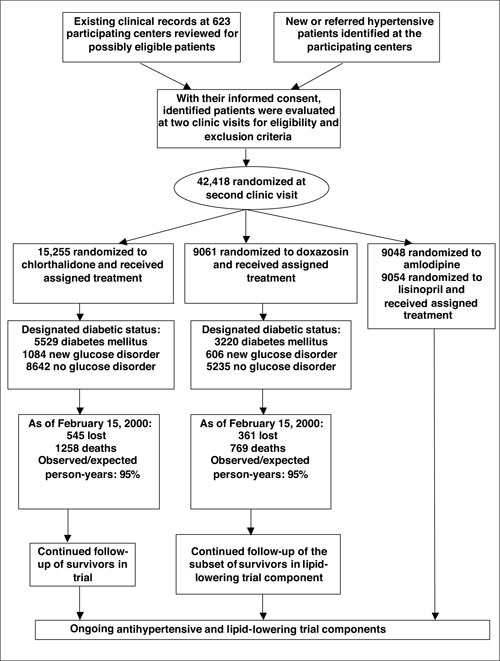
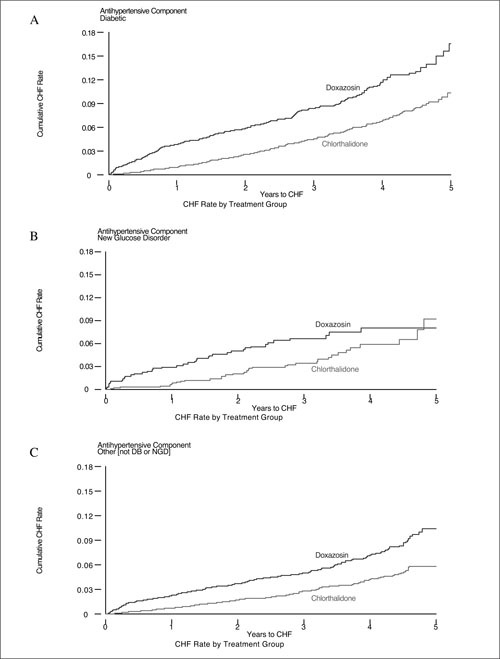
Insulin resistance underlies most glucose disorders in adults and is associated with an increased risk of cardiovascular disease. Alpha blockers decrease insulin resistance, whereas diuretics increase insulin resistance. The authors studied the effects of these two classes of hypertension medications (doxazosin, an a blocker, and chlorthalidone, a diuretic) on cardiovascular disease outcomes in adults aged >55 years with hypertension and glucose disorders who were participants in the Antihypertensive and Lipid Lowering Treatment to Prevent Heart Attack Trial (8749 had known diabetes mellitus and 1690 had a newly diagnosed glucose disorder [fasting glucose >/=110 mg/dL]). There was no difference in either group between the chlorthalidone- and doxazosin-based treatments with regard to fatal or nonfatal myocardial infarction or all-cause mortality. There was, however, a difference for combined cardiovascular disease (myocardial infarction, revascularization procedures, angina, stroke, heart failure, and peripheral arterial disease) in favor of the diuretic. This difference was due primarily to an increased heart failure risk in those treated with doxazosin (relative risk, 1.85; 95% confidence interval, 1.56-2.19) in the known diabetes mellitus group and a relative risk of 1.63 (95% confidence interval, 1.05-2.55) in those with a newly diagnosed glucose disorder despite lower glucose levels on follow-up in those treated with a blockers. The authors conclude that treatment of hypertension with doxazosin in adults with glucose disorders incurs the same risk of coronary heart disease as treatment with chlorthalidone; however, treatment with doxazosin increases the risk of combined cardiovascular disease and heart failure despite lower glucose levels.
Figures
References
-
- Giordano M, Matsuda M, Sanders L, et al. Effects of angiotensin‐converting enzyme inhibitors, Ca2+ channel antagonists, and α‐adrenergic blockers on glucose and lipid metabolism in NIDDM patients with hypertension. Diabetes. 1995;44:665–671. - PubMed
-
- Glanz M, Garber AJ, Mancia G, et al. Meta‐analysis of studies using selective alpha 1‐blockers in patients with hypertension and type 2 diabetes. Int J Clin Pract. 2001;55:694–701. - PubMed
-
- Julius S. Are different hemodynamic patterns of antihypertensive drugs clinically important? Eur J Clin Pharmacol. 1990;38:S125–S128. - PubMed
-
- Grimm RA Jr, Flack JM, Schoenberger JA, et al. Alpha‐blockade and thiazide treatment of hypertension. A double‐blind randomized trial comparing doxazosin and hydrochlorothiazide. Am J Hypertens. 1996;9:445–454. - PubMed
-
- Maheux P, Facchini F, Jeppesen J, et al. Changes in glucose, insulin, lipid, lipoprotein, and apoprotein concentrations and insulin action in doxazosin‐treated patients with hypertension. Comparison between nondiabetic individuals and patients with non‐insulin‐dependent diabetes mellitus. Am J Hypertens. 1994;7:416–424. - PubMed
Publication types
MeSH terms
Substances
Grants and funding
LinkOut - more resources
Full Text Sources
Medical
