Review
doi: 10.1371/journal.pbio.0020068.
Epub 2004 Mar 16.
Endosymbiosis: lessons in conflict resolution
Affiliations
- PMID: 15024418
- PMCID: PMC368163
- DOI: 10.1371/journal.pbio.0020068
Item in Clipboard
Review
Endosymbiosis: lessons in conflict resolution
PLoS Biol.
2004 Mar.
Abstract
Endosymbiotic bacteria live within a host species. There are many and diverse examples of such relationships, the study of which provides important lessons for ecology and evolution
Figures
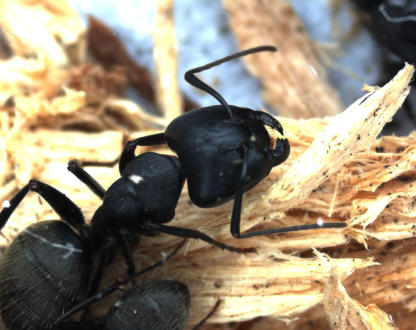
Like all species of the ant genus Camponotus, the wood-nesting C. pennsylvanicus (shown here) possesses an obligate bacterial endosymbiont called Blochmannia. The small genome of Blochmannia retains genes to biosynthesize essential amino acids and other nutrients (Gil et al. 2003), suggesting the bacterium plays a role in ant nutrition. Many Camponotus species are also infected with Wolbachia, an endosymbiont that is widespread across insect groups. (Photo courtesy of Adam B. Lazarus.)
References
-
- Akman L, Yamashita A, Watanabe H, Oshima K, Shiba T. Genome sequence of the endocellular obligate symbiont of tsetse flies, Wigglesworthia glossinidia . Nat Genet. 2002;32:402–407. - PubMed
-
- Aksoy S, Maudlin I, Dale C, Robinson AS, O'Neill SL. Prospects for control of African trypanosomiasis by tsetse vector manipulation. Trends Parasitol. 2001;17:29–35. - PubMed
-
- Andersson SG, Kurland CG. Reductive evolution of resident genomes. Trends Microbiol. 1998;6:263–268. - PubMed
-
- Baumann P, Moran N, Baumann L. Bacteriocyte-associated endosymbionts of insects. In: Dworkin M, editor. The prokaryotes: A handbook on the biology of bacteria—Ecophysiology, isolation, identification, applications. New York: Springer-Verlag; 2000. Available at http://link.springer.de/link/service/books/10125 via the Internet.
Publication types
MeSH terms
Grants and funding
LinkOut - more resources
Full Text Sources
Other Literature Sources