


Comparative genomics of two Leptospira interrogans serovars reveals novel insights into physiology and pathogenesis
- PMID: 15028702
- PMCID: PMC374407
- DOI: 10.1128/JB.186.7.2164-2172.2004
Comparative genomics of two Leptospira interrogans serovars reveals novel insights into physiology and pathogenesis
Abstract
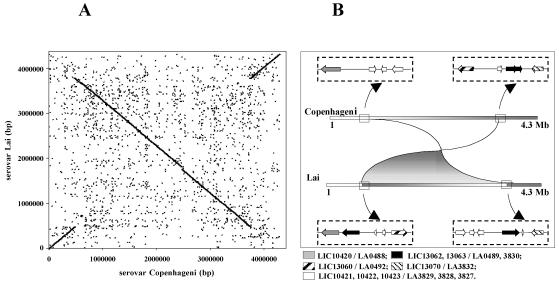
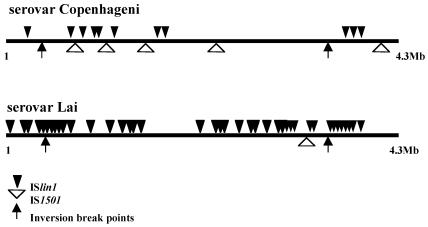
Leptospira species colonize a significant proportion of rodent populations worldwide and produce life-threatening infections in accidental hosts, including humans. Complete genome sequencing of Leptospira interrogans serovar Copenhageni and comparative analysis with the available Leptospira interrogans serovar Lai genome reveal that despite overall genetic similarity there are significant structural differences, including a large chromosomal inversion and extensive variation in the number and distribution of insertion sequence elements. Genome sequence analysis elucidates many of the novel aspects of leptospiral physiology relating to energy metabolism, oxygen tolerance, two-component signal transduction systems, and mechanisms of pathogenesis. A broad array of transcriptional regulation proteins and two new families of afimbrial adhesins which contribute to host tissue colonization in the early steps of infection were identified. Differences in genes involved in the biosynthesis of lipopolysaccharide O side chains between the Copenhageni and Lai serovars were identified, offering an important starting point for the elucidation of the organism's complex polysaccharide surface antigens. Differences in adhesins and in lipopolysaccharide might be associated with the adaptation of serovars Copenhageni and Lai to different animal hosts. Hundreds of genes encoding surface-exposed lipoproteins and transmembrane outer membrane proteins were identified as candidates for development of vaccines for the prevention of leptospirosis.
Figures
References
-
- Boursaux-Eude, C., I. Saint Girons, and R. Zuerner. 1995. IS1500, an IS3-like element from Leptospira interrogans. Microbiology 141:2165-2173. - PubMed
-
- Charon, N. W., and S. F. Goldstein. 2002. Genetics of motility and chemotaxis of a fascinating group of bacteria: the spirochetes. Annu. Rev. Genet. 36:47-73. - PubMed
-
- Chen, C. W., C. H. Huang, H. H. Lee, H. H. Tsai, and R. Kirby. 2002. Once the circle has been broken: dynamics and evolution of Streptomyces chromosomes. Trends Genet. 18:522-529. - PubMed
Publication types
MeSH terms
Substances
Associated data
- Actions
- Actions
Grants and funding
LinkOut - more resources
Full Text Sources
Other Literature Sources
Molecular Biology Databases
