


Superspreading SARS events, Beijing, 2003
- PMID: 15030693
- PMCID: PMC3322930
- DOI: 10.3201/eid1002.030732
Superspreading SARS events, Beijing, 2003
Abstract
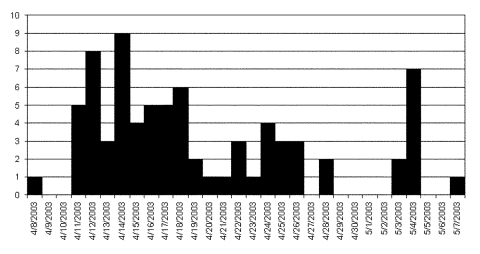
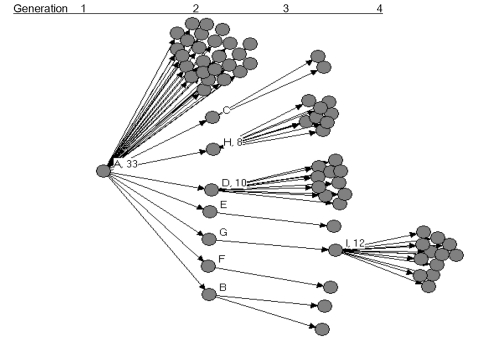
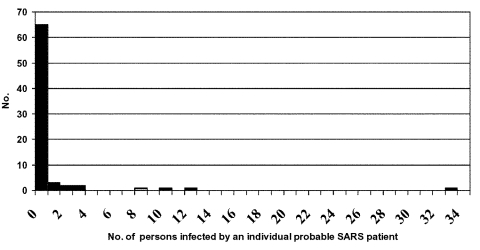
Superspreading events were pivotal in the global spread of severe acute respiratory syndrome (SARS). We investigated superspreading in one transmission chain early in Beijing's epidemic. Superspreading was defined as transmission of SARS to at least eight contacts. An index patient with onset of SARS 2 months after hospital admission was the source of four generations of transmission to 76 case-patients, including 12 healthcare workers and several hospital visitors. Four (5%) case circumstances met the superspreading definition. Superspreading appeared to be associated with older age (mean 56 vs. 44 years), case fatality (75% vs. 16%, p = 0.02, Fisher exact test), number of close contacts (36 vs. 0.37) and attack rate among close contacts (43% vs. 18.5%, p < 0.025). Delayed recognition of SARS in a hospitalized patient permitted transmission to patients, visitors, and healthcare workers. Older age and number of contacts merit investigation in future studies of superspreading.
Figures
References
-
- Centers for Disease Control and Prevention. Update: outbreak of severe acute respiratory syndrome—worldwide, 2003. MMWR Morb Mortal Wkly Rep. 2003;52:241–8. - PubMed
-
- Centers for Disease Control and Prevention. Severe acute respiratory syndrome—Singapore, 2003. MMWR Morb Mortal Wkly Rep. 2003;52:405–11. - PubMed
Publication types
MeSH terms
LinkOut - more resources
Full Text Sources
Miscellaneous