


Breaking into the epithelial apical-junctional complex--news from pathogen hackers
- PMID: 15037310
- PMCID: PMC3373727
- DOI: 10.1016/j.ceb.2003.12.002
Breaking into the epithelial apical-junctional complex--news from pathogen hackers
Abstract
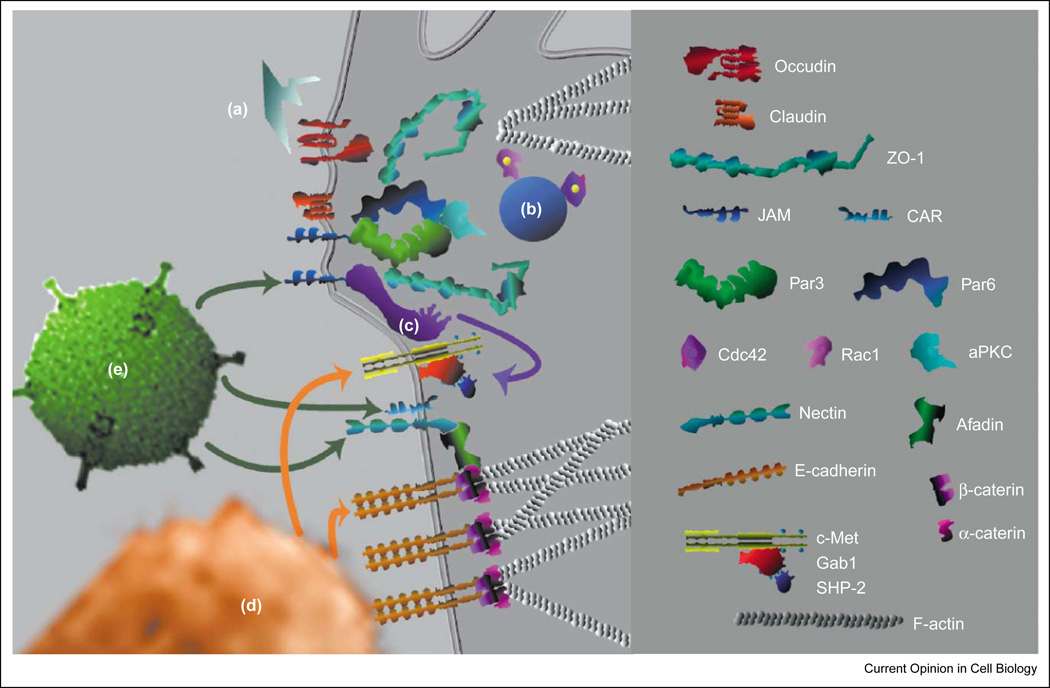
The epithelial apical-junctional complex is a key regulator of cellular functions. In addition, it is an important target for microbial pathogens that manipulate the cell to survive, proliferate and sometimes persist within a host. Out of a myriad of potential molecular targets, some bacterial and viral pathogens have selected a subset of protein targets at the apical-junctional complex of epithelial cells. Studying how microbes use these targets also teaches us about the inherent physiological properties of host molecules in the context of normal junctional structure and function. Thus, we have learned that three recently uncovered components of the apical-junctional complex of the Ig superfamily--junctional adhesion molecule, Nectin and the coxsackievirus and adenovirus receptor--are important regulators of junction structure and function and represent critical targets of microbial virulence gene products.
Figures


References
-
- Knust E, Bossinger O. Composition and formation of intercellular junctions in epithelial cells. Science. 2002;298:1955–1959. - PubMed
-
- Matter K, Balda MS. Signalling to and from tight junctions. Nat Rev Mol Cell Biol. 2003;4:225–236. - PubMed
-
- Humbert P, Russell S, Richardson H. Dlg, Scribble and Lgl in cell polarity, cell proliferation and cancer. Bioessays. 2003;25:542–553. - PubMed
-
- Etienne-Manneville S, Hall A. Cell polarity: Par6, aPKC and cytoskeletal crosstalk. Curr Opin Cell Biol. 2003;15:67–72. - PubMed
-
- Falkow S. Cellular microbiology is launched. Cell Microbiol. 1999;1:3–6. - PubMed
Publication types
MeSH terms
Substances
Grants and funding
LinkOut - more resources
Full Text Sources
