The balloon catheter induces an increase in contralateral carotid artery reactivity to angiotensin II and phenylephrine
- PMID: 15037520
- PMCID: PMC1574923
- DOI: 10.1038/sj.bjp.0705732
The balloon catheter induces an increase in contralateral carotid artery reactivity to angiotensin II and phenylephrine
Abstract
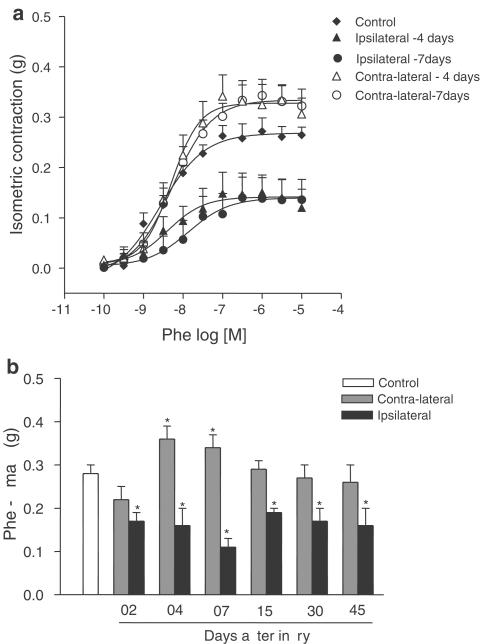
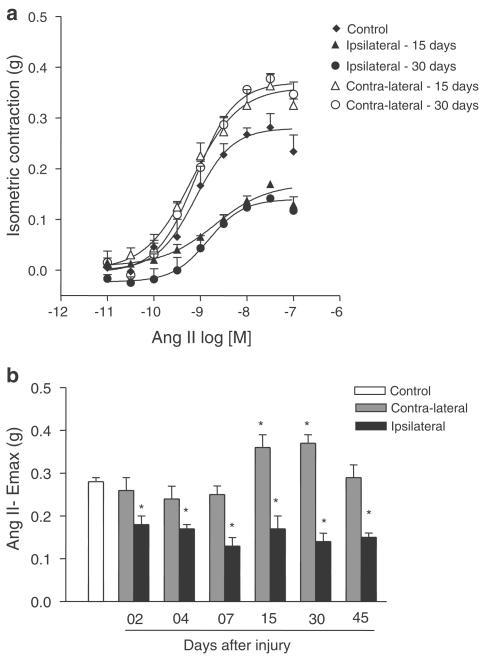
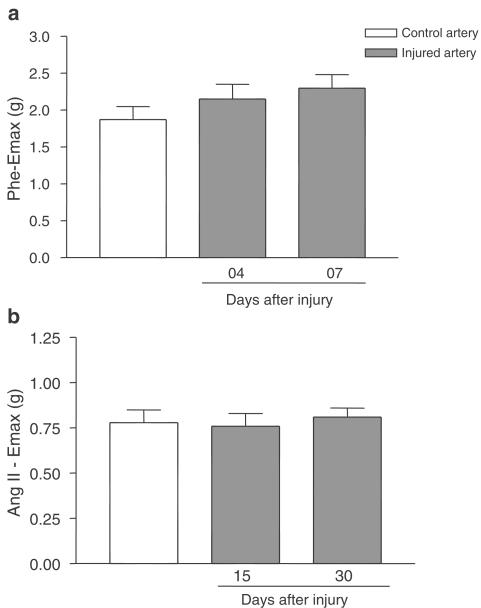
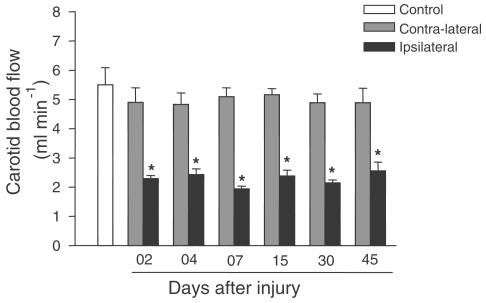
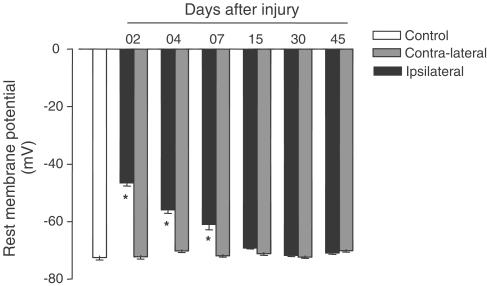
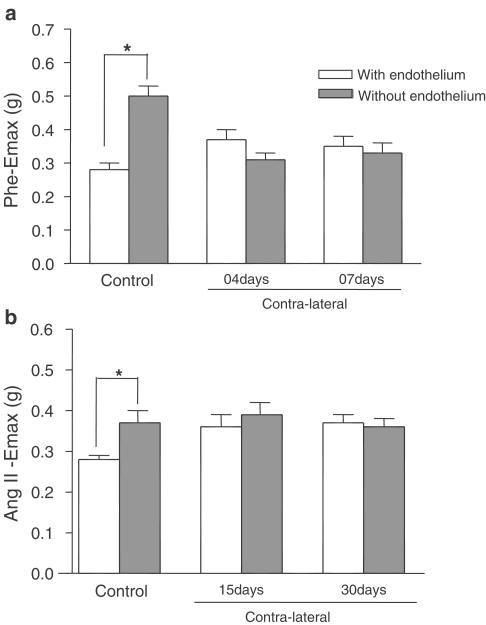
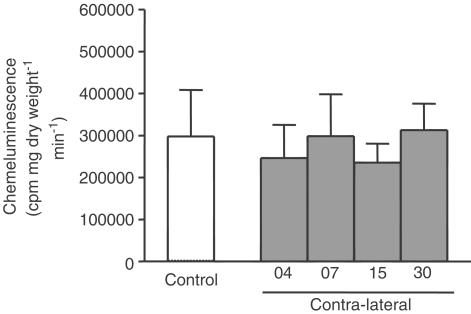
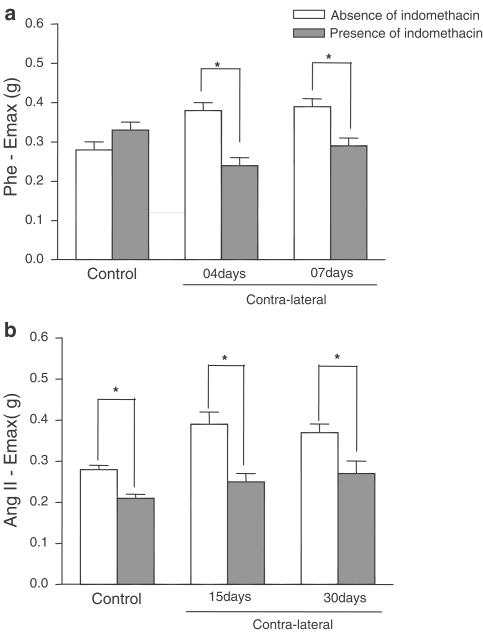
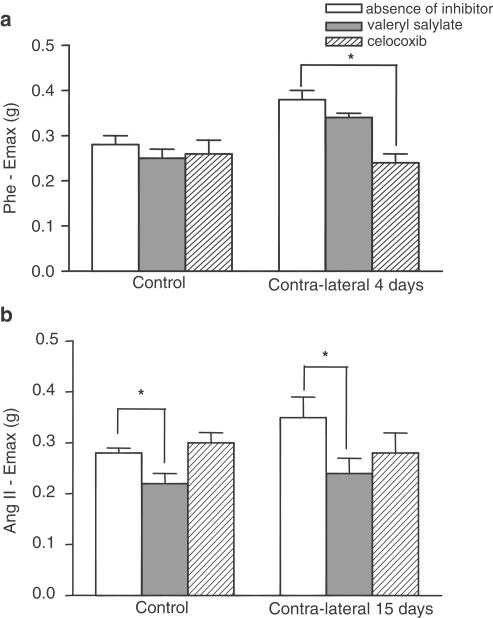
1. The effects of balloon injury on the reactivity of ipsilateral and contralateral carotid arteries were compared to those observed in arteries from intact animals (control arteries). 2. Carotid arteries were obtained from Wistar rats 2, 4, 7, 15, 30 or 45 days after injury and mounted in an isolated organ bath. Reactivity to angiotensin II (Ang II), phenylephrine (Phe) and bradykinin (BK) was studied. Curves were constructed in the absence or presence of endothelium or after incubation with 10 microm indomethacin, 500 microm valeryl salicylate or 0.1 microm celecoxib. 3. Phe, Ang II and BK maximum effects (Emax) were decreased in ipsilateral arteries when compared to control arteries. No differences were observed among pD2 or Hill coefficient. 4. Emax to Phe (4 and 7 days) and to Ang II (15 and 30 days) increased in the contralateral artery. In addition, Phe or Ang II reactivity was not significantly different in aorta rings from control or carotid-injured animals. 5. The increased responsiveness of contralateral artery was not due to changes in carotid blood flow or resting membrane potential. The endothelium-dependent inhibitory component is not present in the contraction of contralateral arteries and it is not related to superoxide anion production. 6. Indomethacin decreased contralateral artery responsiveness to Phe and Ang II. Valeryl salicylate reduced the Ang II response in contralateral and control arteries. Celecoxib decreased the Phe Emax of contralateral artery. 7. In conclusion, decreased endothelium-derived factors and increased prostanoids appear to be responsible for the increased reactivity of contralateral arteries after injury.
Figures
Comment in
-
Vascular hyper-reactivity following arterial balloon injury: distant and delayed effects.Br J Pharmacol. 2004 May;142(1):3-4. doi: 10.1038/sj.bjp.0705734. Epub 2004 Mar 22. Br J Pharmacol. 2004. PMID: 15037512 Free PMC article. Review.
References
-
- ACCORSI-MENDONÇA D., CORRÊA F.M.A., ANSELMO-FRANCI J.A., PAIVA T.B., de OLIVEIRA A.M. Angiotensin actions on the isolated rat uterus during the estrous cycle: influence of resting membrane potential and uterine morphology. Pharmacology. 2002;65:162–1689. - PubMed
-
- ANTONNACIO M.J., NORMANDIN D., FERRE P. Reduced contractile function after balloon denudation of rat carotid arteries. Eur. J. Pharmacol. 1994;256:17–21. - PubMed
-
- ASBÚN-BOJALIL J., CASTILLO EF, ESCALANTE B.A., CASTILLO C. Does segmental difference in α1-adrenoceptor subtype explain contractile difference in rat abdominal and thoracic aorta. Vasc. Pharmacol. 2002;38:169–175. - PubMed
-
- AZEVEDO L.C.P., PEDRO M.A., SOUZA L.C., SOUZA H.P., JANISZEWSKI M., LUZ P.L., LAURINDO F.R. Oxidative stress as a signaling mechanism of the vascular response to injury: the redox hypothesis of restenosis. Cardiovasc. Res. 2000;47:436–445. - PubMed
-
- BELTON O., BYRNE D., KEARNEY D., LEAHY A., FITZGERALD D.J. Cyclooxygenase-1 and -2-dependent prostacyclin formation in patients with atherosclerosis. Circulation. 2000;102:840–845. - PubMed
Publication types
MeSH terms
Substances
LinkOut - more resources
Full Text Sources
Miscellaneous