


Providing evidence-based information to patients in general practice and pharmacies: what is the acceptability, usefulness and impact on drug use?
- PMID: 15040790
- PMCID: PMC5060203
- DOI: 10.1046/j.1369-7625.2003.00226.x
Providing evidence-based information to patients in general practice and pharmacies: what is the acceptability, usefulness and impact on drug use?
Abstract
Background: A common and often integral method of delivering patient information is the use of patient guides. However, the acceptability, utility and impact of evidence-based therapeutic guides on physicians, pharmacists and patients have not been well evaluated.
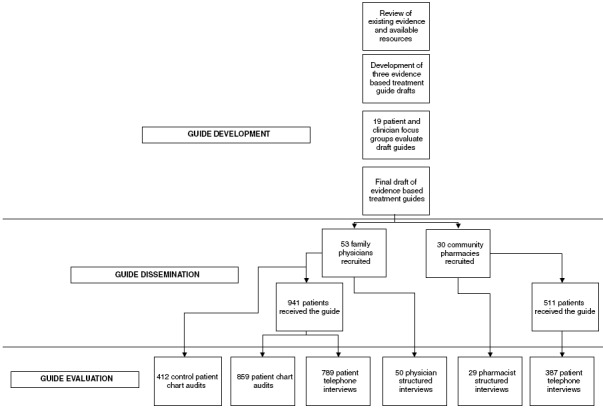
Methods: This study was a prospective evaluation of 53 general practitioners' offices and 30 community pharmacies from three locations in Canada. Evidence-based guides were provided to 1176 patients who presented to either a general practitioner or a community pharmacist and were interested in receiving information about sore throat, heartburn, or osteoporosis (http://www.ti.ubc.ca/canadadrugguide). The acceptability, utility and impact of the guides were assessed via structured patient telephone interviews, structured health professional interviews, and patient chart audits.
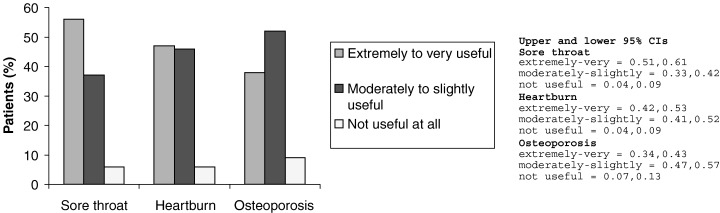
Results: Eighty to 90% of patients reported that the guides were 'very easy' to understand. Fifty six per cent/47%/38% (sore throat/heartburn/osteoporosis) of patients rated the guides as 'very' or 'extremely' useful. Seventy-two per cent/67%/58% of respondents reported that the information helped them make decisions about their treatment. Ninety eight per cent of physicians and 92% of pharmacists reported that the guides helped their patients understand the issues involved in their treatment. None of the analyses showed any significant differences in prescribing of medications between the intervention and control groups.
Interpretations: Patients found these evidence-based guides to be useful, easy to understand, and that they helped them in their understanding of treatment options and the decision-making process. Physicians and pharmacists reported that the guides helped their patients understand the issues involved in their treatment. Further research is required to determine the degree to which providing evidence-based guides to patients can impact on prescribing and patient outcomes.
Figures
References
-
- Mann KV, Lindsay EA, Putnam RW, Davis DA. Increasing physician involvement in cholesterol‐lowering practices. Journal of Continuing Education in the Health Professions,1996; 16: 225–240. - PubMed
Publication types
MeSH terms
LinkOut - more resources
Full Text Sources
