


Hyperthermia using magnetite cationic liposomes for hamster osteosarcoma
- PMID: 15040804
- PMCID: PMC400754
- DOI: 10.1186/1477-044X-2-3
Hyperthermia using magnetite cationic liposomes for hamster osteosarcoma
Abstract
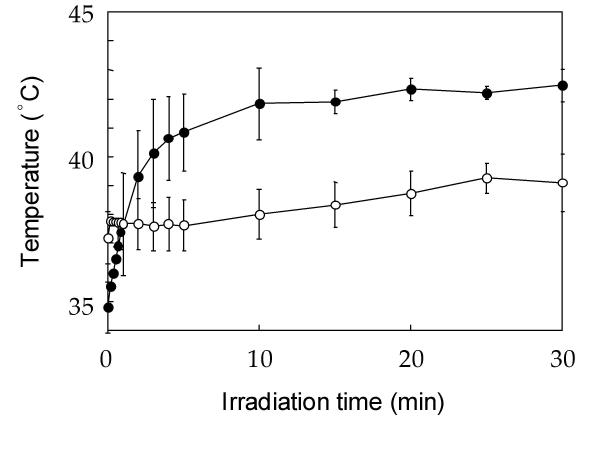
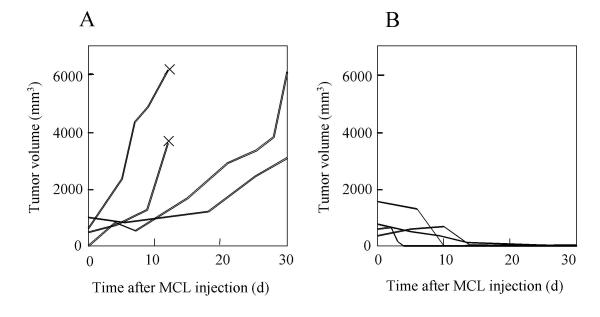
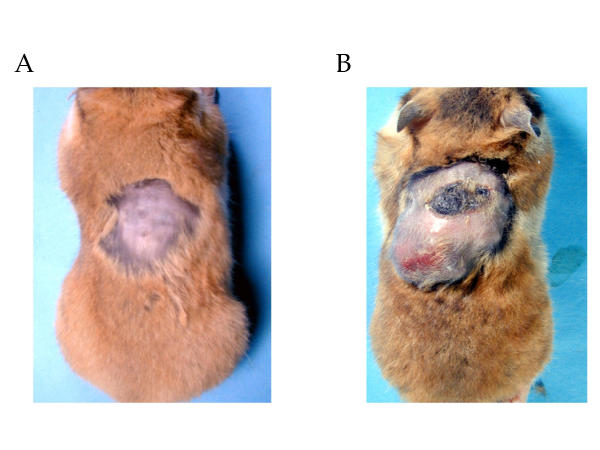
BACKGROUND: We have developed magnetite cationic liposomes (MCLs) and applied them to local hyperthermia as a mediator. MCLs have a positive charge and generate heat under an alternating magnetic field (AMF) by hysteresis loss. In this study, the effect of hyperthermia using MCLs was examined in an in vivo study of hamster osteosarcoma. METHOD: MCLs were injected into the osteosarcoma and then subjected to an AMF. RESULTS: The tumor was heated at over 42 degrees C, but other normal tissues were not heated as much. Complete regression was observed in 100% of the treated group hamsters, whereas no regression was observed in the control group hamsters. At day 12, the average tumor volume of the treated hamsters was about 1/1000 of that of the control hamsters. In the treated hamsters, no regrowth of osteosarcomas was observed over a period of 3 months after the complete regression. CONCLUSION: These results suggest that this treatment is effective for osteosarcoma.
Figures
References
-
- Safarikova M, Safarik I. The application of magnetic techniques in biosciences. Magn Electr Sep. 2001;10:223–252.
-
- Miltenyi S, Muller W, Weichel W, Radbruch A. High gradient magnetic cell separation with MACS. Cytometry. 1990;11:231–238. - PubMed
-
- Radbruch A, Mechtold B, Thiel A, Miltenyi S, Pfluger E. High-gradient magnetic cell sorting. Methods Cell Biol. 1994;42:387–403. - PubMed
LinkOut - more resources
Full Text Sources
Other Literature Sources
