Pseudomonas aeruginosa biofilms exposed to imipenem exhibit changes in global gene expression and beta-lactamase and alginate production
- PMID: 15047518
- PMCID: PMC375275
- DOI: 10.1128/AAC.48.4.1175-1187.2004
Pseudomonas aeruginosa biofilms exposed to imipenem exhibit changes in global gene expression and beta-lactamase and alginate production
Abstract
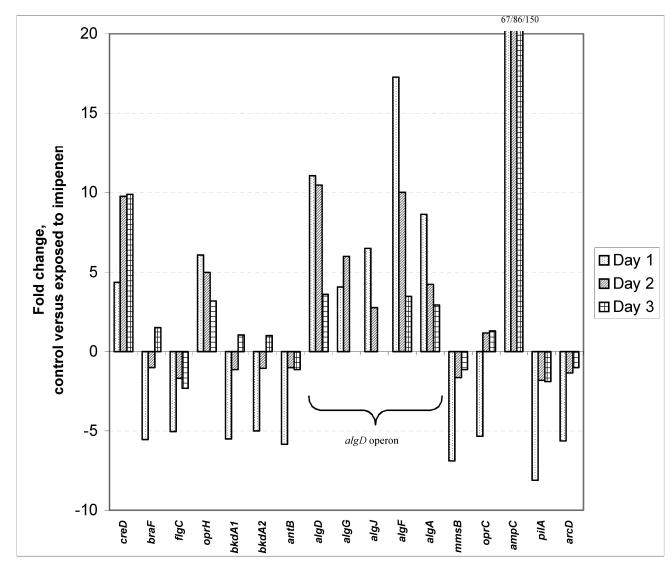
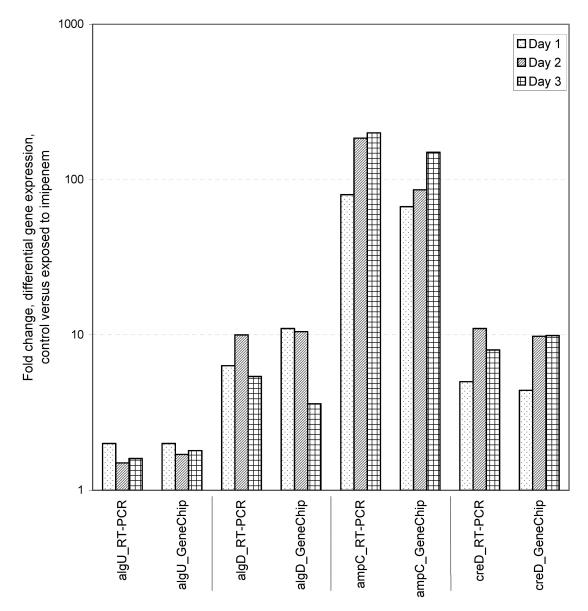
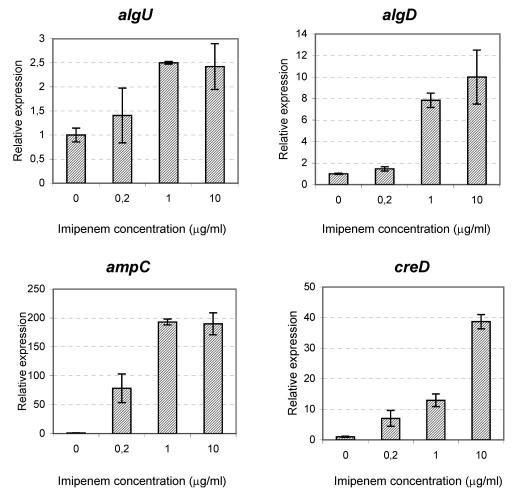
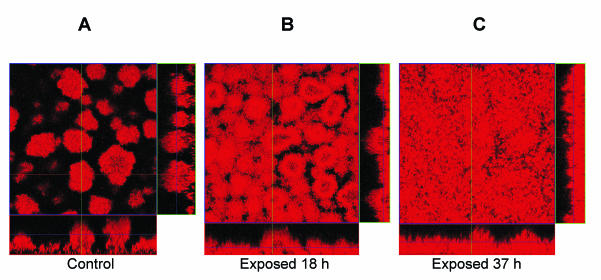
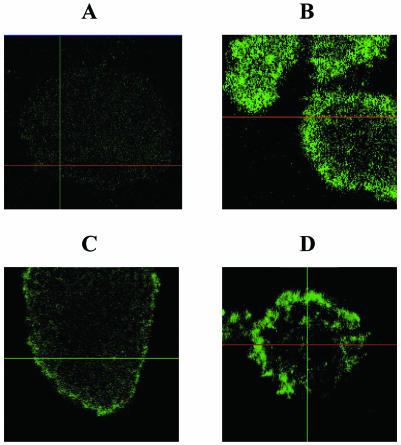
The lungs of cystic fibrosis (CF) patients are commonly colonized with Pseudomonas aeruginosa biofilms. Chronic endobronchial P. aeruginosa infections are impossible to eradicate with antibiotics, but intensive suppressive antibiotic therapy is essential to maintain the lung function of CF patients. The treatment often includes beta-lactam antibiotics. How these antibiotics influence gene expression in the surviving biofilm population of P. aeruginosa is not clear. Thus, we used the microarray technology to study the effects of subinhibitory concentrations of a beta-lactam antibiotic, imipenem, on gene expression in biofilm populations. Many genes showed small but statistically significant differential expression in response to imipenem. We identified 34 genes that were induced or repressed in biofilms exposed to imipenem more than fivefold compared to the levels of induction or repression for the controls. As expected, the most strongly induced gene was ampC, which codes for chromosomal beta-lactamase. We also found that genes coding for alginate biosynthesis were induced by exposure to imipenem. Alginate production is correlated to the development of impaired lung function, and P. aeruginosa strains isolated from chronically colonized lungs of CF patients are nearly always mucoid due to the overproduction of alginate. Exposure to subinhibitory concentrations of imipenem caused structural changes in the biofilm, e.g., an increased biofilm volume. Increased levels of alginate production may be an unintended adverse consequence of imipenem treatment in CF patients.
Figures
References
-
- Allison, D. G., and M. J. Matthews. 1992. Effect of polysaccharide interactions on antibiotic susceptibility of Pseudomonas aeruginosa. J. Appl. Bacteriol. 73:484-488. - PubMed
-
- Baynham, P. J., A. L. Brown, L. L. Hall, and D. J. Wozniak. 1999. Pseudomonas aeruginosa AlgZ, a ribbon-helix-helix DNA-binding protein, is essential for alginate synthesis and algD transcriptional activation. Mol. Microbiol. 33:1069-1080. - PubMed
-
- Bolister, N., M. Basker, N. A. Hodges, and C. Marriott. 1991. The diffusion of beta-lactam antibiotics through mixed gels of cystic fibrosis-derived mucin and Pseudomonas aeruginosa alginate. J. Antimicrob. Chemother. 27:285-293. - PubMed
-
- Boucher, J. C., M. J. Schurr, and V. Deretic. 2000. Dual regulation of mucoidy in Pseudomonas aeruginosa and sigma factor antagonism. Mol. Microbiol. 36:341-351. - PubMed
Publication types
MeSH terms
Substances
Grants and funding
LinkOut - more resources
Full Text Sources
Other Literature Sources