


Organization of lin genes and IS6100 among different strains of hexachlorocyclohexane-degrading Sphingomonas paucimobilis: evidence for horizontal gene transfer
- PMID: 15060023
- PMCID: PMC412113
- DOI: 10.1128/JB.186.8.2225-2235.2004
Organization of lin genes and IS6100 among different strains of hexachlorocyclohexane-degrading Sphingomonas paucimobilis: evidence for horizontal gene transfer
Abstract
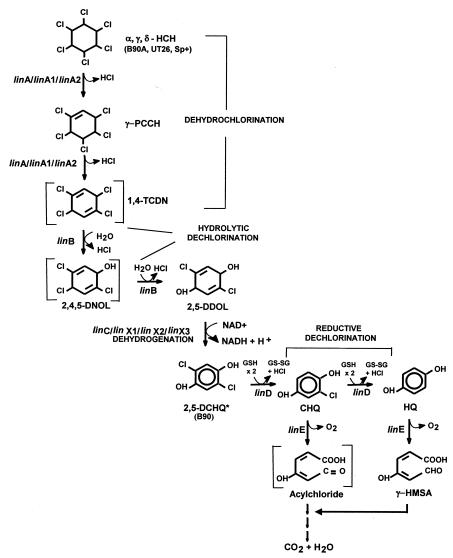
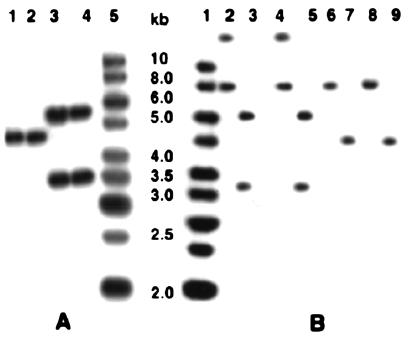
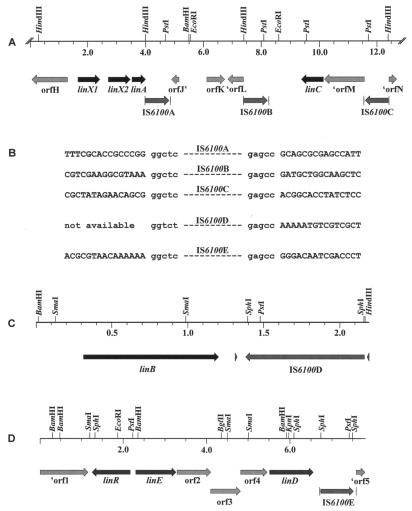
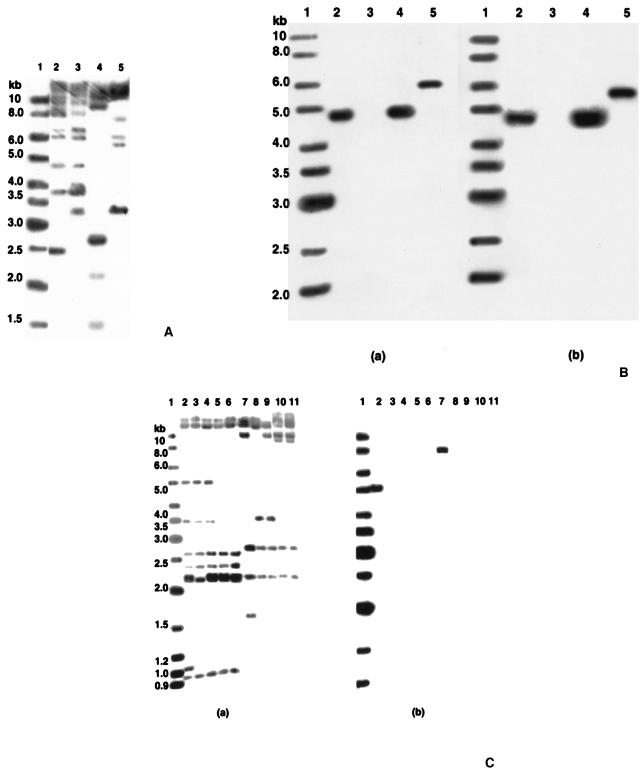
The organization of lin genes and IS6100 was studied in three strains of Sphingomonas paucimobilis (B90A, Sp+, and UT26) which degraded hexachlorocyclohexane (HCH) isomers but which had been isolated at different geographical locations. DNA-DNA hybridization data revealed that most of the lin genes in these strains were associated with IS6100, an insertion sequence classified in the IS6 family and initially found in Mycobacterium fortuitum. Eleven, six, and five copies of IS6100 were detected in B90A, Sp+, and UT26, respectively. IS6100 elements in B90A were sequenced from five, one, and one regions of the genomes of B90A, Sp+, and UT26, respectively, and were found to be identical. DNA-DNA hybridization and DNA sequencing of cosmid clones also revealed that S. paucimobilis B90A contains three and two copies of linX and linA, respectively, compared to only one copy of these genes in strains Sp+ and UT26. Although the copy number and the sequence of the remaining genes of the HCH degradative pathway (linB, linC, linD, and linE) were nearly the same in all strains, there were striking differences in the organization of the linA genes as a result of replacement of portions of DNA sequences by IS6100, which gave them a strange mosaic configuration. Spontaneous deletion of linD and linE from B90A and of linA from Sp+ occurred and was associated either with deletion of a copy of IS6100 or changes in IS6100 profiles. The evidence gathered in this study, coupled with the observation that the G+C contents of the linA genes are lower than that of the remaining DNA sequence of S. paucimobilis, strongly suggests that all these strains acquired the linA gene through horizontal gene transfer mediated by IS6100. The association of IS6100 with the rest of the lin genes further suggests that IS6100 played a role in shaping the current lin gene organization.
Figures
References
-
- Ahuja, A. K., and M. D. Awasthi. 1993. Contamination of rice and wheat grains with residues of HCH and DDT. Pestic. Res. J. 5:83-86.
-
- Akbar, N., A. Aleem, and A. Malik. 2003. Determination of organochlorine pesticides in agricultural soil with reference to γ-HCH degradation by Pseudomonas strains. Bioresource Technol. 88:41-46. - PubMed
-
- Altschul, S. F., W. Gish, W. Miller, E. W. Myers, and D. J. Lipman. 1990. Basic local alignment search tool. J. Mol. Biol. 215:403-410. - PubMed
-
- Bhuyan, S., B. Sreedharan, T. K. Adhya, and N. Sethunathan. 1993. Enhanced biological degradation of γ-hexachlorocyclohexane (γ-HCH) in HCH (commercial) acclimated flooded soil. Factors affecting its development and persistence. Pestic. Sci. 38:49-53.
-
- Boyd, D. A., G. A. Peters, L. Ng, and M. R. Mulvey. 2000. Partial characterization of a genomic island associated with the multidrug resistance region of Salmonella enterica typhymurium DT104. FEMS Microbiol. Lett. 189:285-291. - PubMed
Publication types
MeSH terms
Substances
Associated data
- Actions
- Actions
- Actions
LinkOut - more resources
Full Text Sources
