Comparative Study
. 2004 Apr;37(4):459-77.
doi: 10.1590/s0100-879x2004000400003. Epub 2004 Mar 23.

Genome features of Leptospira interrogans serovar Copenhageni

Affiliations
Comparative Study

Genome features of Leptospira interrogans serovar Copenhageni

A L T O Nascimento et al. Braz J Med Biol Res. 2004 Apr.

Abstract

We report novel features of the genome sequence of Leptospira interrogans serovar Copenhageni, a highly invasive spirochete. Leptospira species colonize a significant proportion of rodent populations worldwide and produce life-threatening infections in mammals. Genomic sequence analysis reveals the presence of a competent transport system with 13 families of genes encoding for major transporters including a three-member component efflux system compatible with the long-term survival of this organism. The leptospiral genome contains a broad array of genes encoding regulatory system, signal transduction and methyl-accepting chemotaxis proteins, reflecting the organism's ability to respond to diverse environmental stimuli. The identification of a complete set of genes encoding the enzymes for the cobalamin biosynthetic pathway and the novel coding genes related to lipopolysaccharide biosynthesis should bring new light to the study of Leptospira physiology. Genes related to toxins, lipoproteins and several surface-exposed proteins may facilitate a better understanding of the Leptospira pathogenesis and may serve as potential candidates for vaccine.


Figures
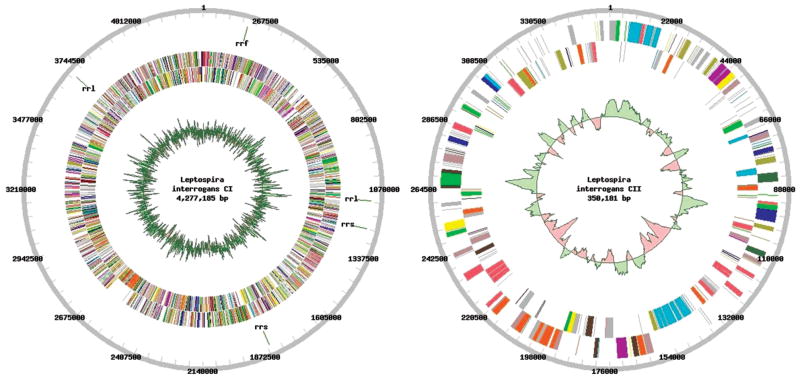
Figure 1
Figure 1
Circular maps of the two chromosomes in Leptospira interrogans. Circular representation of the L. interrogans serovar Copenhageni genome. The two large and small chromosomes are presented. Circles 1 and 2 (from the outside in), all predicted protein-coding regions (forward and reverse strand, respectively) color-coded by category role; circle 3: G + C content. Numbers on the outer circle are base pairs. rRNA genes, rrl, rrs and rrf are 23S, 16S and 5S, respectively. Note: the two replicons are not drawn to the same scale. Chromosome II (CII) is 12 times smaller than chromosome I (CI).
Figure 2
Figure 2
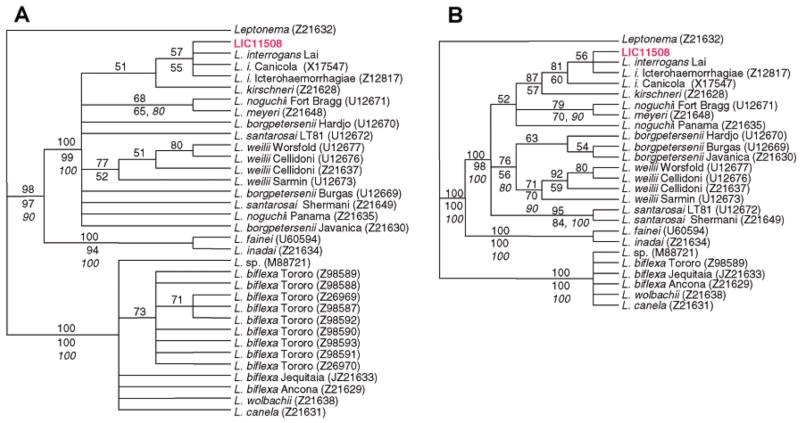
Phylogenetic analysis of Leptospira interrogans. Consensus phylogenetic distance tree constructed using 16S rDNA sequences. Numbers on the branches are bootstrap values (2000 replicates) for distance (top), parsimony (below the branch) and maximum likelihood (10 replicates, below the branch, italics). GenBank accession numbers are in parenteses. Leptonema is used as outgroup. A, Based on a matrix with 34 taxa and 1255 positions; B, based on a matrix with 24 taxa and 1375 positions.
Figure 3
Figure 3
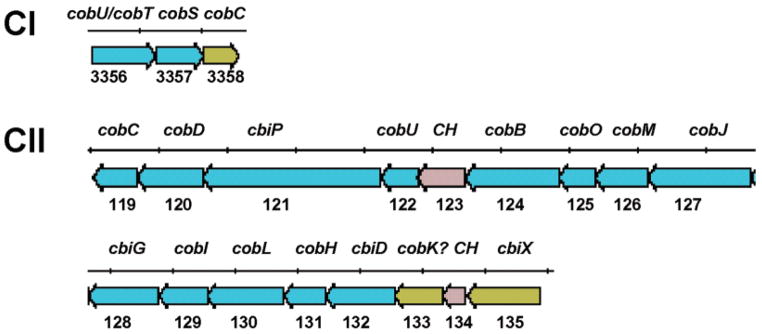
The cobalamin biosynthetic pathway of Leptospira interrogans. Genetic organization of the cobalamin biosynthetic locus in the two chromosomes (CI and CII) of L. interrogans serovar Copenhageni.
Figure 4
Figure 4
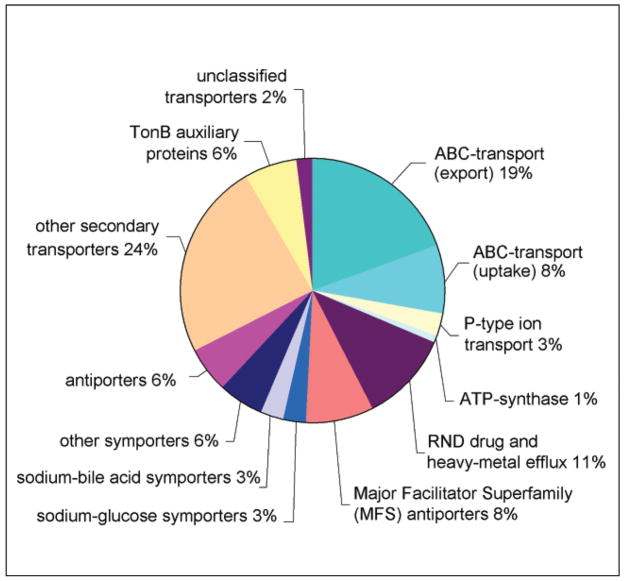
Major transporters of Leptospira interrogans. Major primary transporters are driven by ATP hydrolysis and include ABC-transporters, P-type ion transporters and the ATP-synthase. All other transporters indicated are the major secondary transporters, which are driven by the transmembrane electrochemical potential. RND = resistance-nodulation-cell division superfamily.
Figure 5
Figure 5
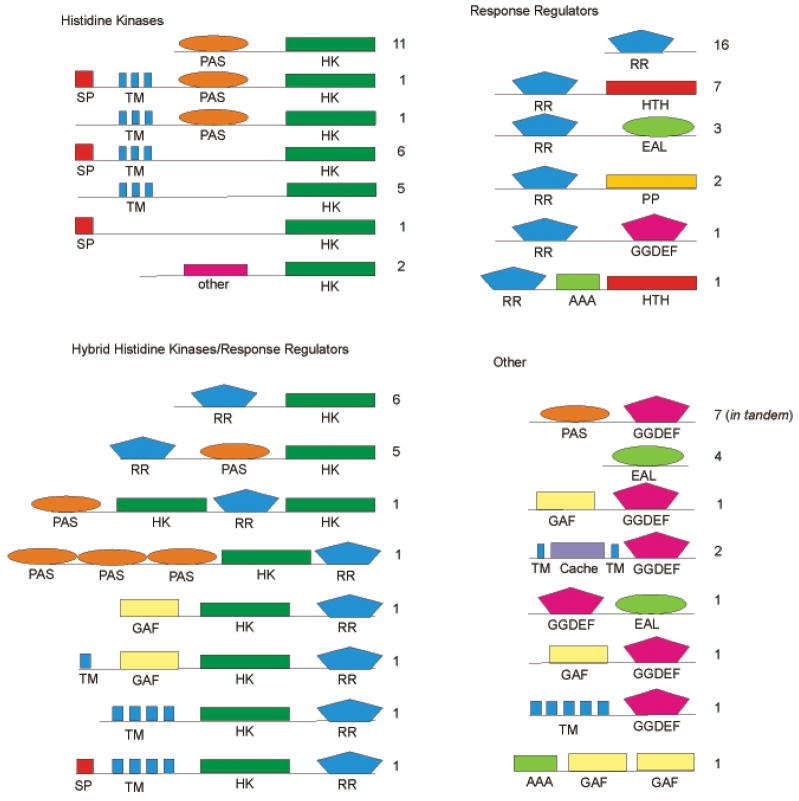
Domain architecture of putative signal transduction proteins from Leptospira interrogans. The domain organization of histidine kinases, response regulators, hybrid histidine kinase/response regulators and other peptides probably associated with signal transduction is shown schematically. The number of peptides containing each domain organization is shown on the right, and the genes are found distributed over the large or small replicons, except for the seven peptides containing the PAS/GGDEF arrangement, which are encoded by genes located in tandem in the large replicon. AAA = ATPase; Cache = small ligand binding domain; EAL = phosphodiesterase; GAF = cGMP-binding domain; GGDEF = diguanylate cyclase; HK = histidine kinase domain; HTH = helix-turn-helix; PAS = sensor domain (may include a PAS/PAC arrangement); PP = phosphatase; RR = response regulator domain; SP = signal peptide; TM = transmembrane region.
Figure 6
Figure 6
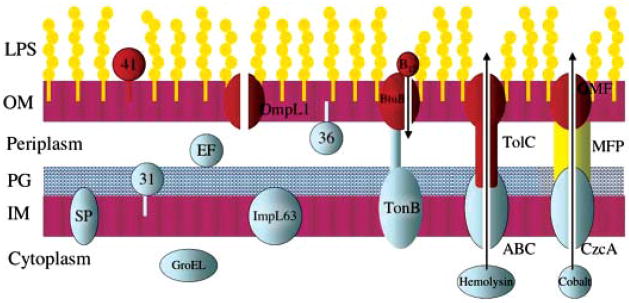
Model of leptospiral membrane architecture. Leptospires have two membranes, an outer membrane (OM) and a cytoplasmic or inner membrane (IM). As in Gram-positive bacteria, the peptidoglycan (PG) cell wall is closely associated with the IM. The leptospiral surface is dominated by lipopolysaccharide (LPS) carbohydrate side chains. Subsurface proteins include the cytoplasmic protein, GroEL, and the periplasmic endoflagella (EF). The IM contains lipoproteins such as LipL31 and transmembrane proteins such as signal peptidase (SP) and ImpL63. The OM contains lipoproteins including LipL41 and LipL36, and transmembrane proteins including the porin, OmpL1. Genomic sequence analysis reveals several novel types of outer membrane proteins (OMPs), including TonB-dependent OMPs involved in nutrient acquisition. BtuB is an example of a TonB-dependent OMP involved in uptake of vitamin B12. The type I efflux system is represented by TolC, which forms a complex with ATP-binding cassette (ABC) transporters to export hemolysins and other cytoplasmic components. The leptospiral genome also contains genes involved in a three-component efflux system consisting of an outer membrane factor (OMF), membrane fusion protein (MFP), and an inner membrane transporter, in this case CzcA, which is involved in heavy metal detoxification.
Figure 7
Figure 7
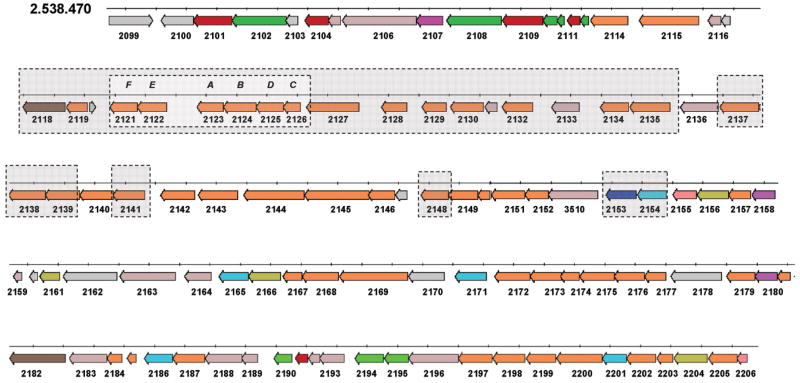
Lipopolysaccharide region of Leptospira interrogans. The 119-kb region of L. interrogans serovar Copenhageni genome with 108 predicted coding sequences transcribed in the same orientation. Orange arrows indicate predicted genes encoding polysaccharide biosynthesis-related proteins. Shaded regions indicate the homologous genes from L. borgpetersenii serovar Hardjobovis (53). The region containing the predicted coding sequences, indicated by the letters F, E, A, B, D, C, was first indicated as the rfb genes related to rhamnose biosynthesis in L. interrogans Copenhageni (54).

References

    1. Faine S, Adler B, Bolin C, Perolat P. Leptospira and Leptospirosis. MediSci; Melbourne, Australia: 1999.
    1. Bharti AR, Nally JE, Ricaldi JN, et al. Leptospirosis: a zoonotic disease of global importance. Lancet Infectious Diseases. 2003;3:757–771. - PubMed
    1. Romero EC, Bernardo CC, Yasuda PH. Human leptospirosis: a twenty-nine-year serological study in São Paulo, Brazil. Revista do Instituto de Medicina Tropical de São Paulo. 2003;45:245–248. - PubMed
    1. Ren SX, Fu G, Jiang XG, et al. Unique physiological and pathogenic features of Leptospira interrogans revealed by whole-genome sequencing. Nature. 2003;422:888–893. - PubMed
    1. Nascimento ALTO, Ko AI, Martins EAL, et al. Comparative genomics of two Leptospira interrogans serovars reveals novel insights into physiology and pathogenesis. Journal of Bacteriology. 2004 (in press) - PMC - PubMed

Publication types

MeSH terms

Substances