


Fatal infectious disease surveillance in a medical examiner database
- PMID: 15078596
- PMCID: PMC3322763
- DOI: 10.3201/eid1001.020764
Fatal infectious disease surveillance in a medical examiner database
Abstract
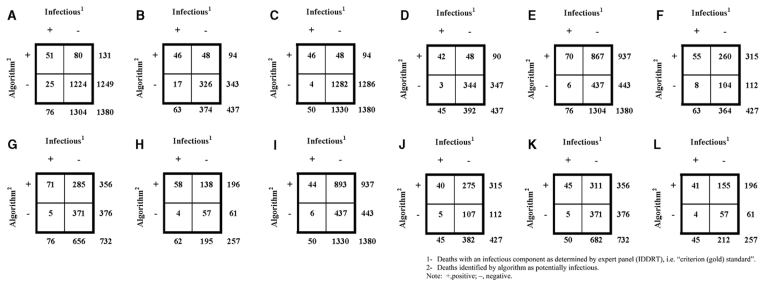
Increasing infectious disease deaths, the emergence of new infections, and bioterrorism have made surveillance for infectious diseases a public health concern. Medical examiners and coroners certify approximately 20% of all deaths that occur within the United States and can be a key source of information regarding infectious disease deaths. We hypothesized that a computer-assisted search tool (algorithm) could detect infectious disease deaths from a medical examiner database, thereby reducing the time and resources required to perform such surveillance manually. We developed two algorithms, applied them to a medical examiner database, and verified the cases identified against the opinion of a panel of experts. The algorithms detected deaths with infectious components with sensitivities from 67% to 94%, and predictive value positives ranging from 8% to 49%. Algorithms can be useful for surveillance in medical examiner offices that have limited resources or for conducting surveillance across medical examiner jurisdictions.
Figures
References
-
- Nolte KB, Wolfe MI. Medical examiner and coroner surveillance for emerging infections. In: Scheld WM., Craig WA, Hughes JM, editors. Emerging infections 3. Washington: American Society of Microbiology Press;1999. p. 201–17.
MeSH terms
LinkOut - more resources
Full Text Sources
Medical