


Controlling the enantioselectivity of enzymes by directed evolution: practical and theoretical ramifications
- PMID: 15079053
- PMCID: PMC395973
- DOI: 10.1073/pnas.0306866101
Controlling the enantioselectivity of enzymes by directed evolution: practical and theoretical ramifications
Abstract
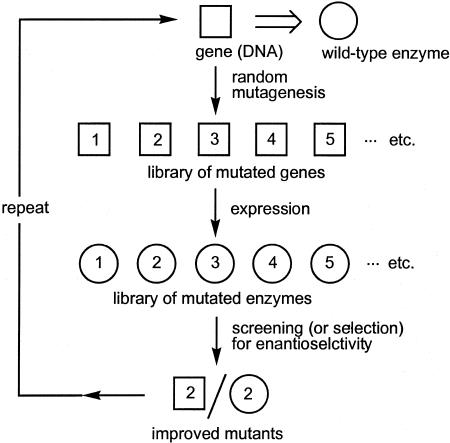
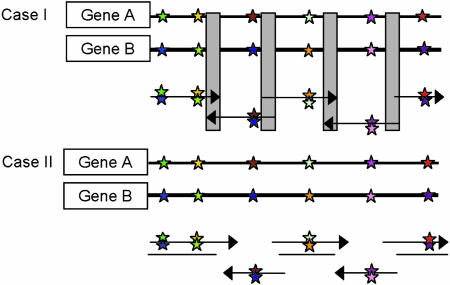
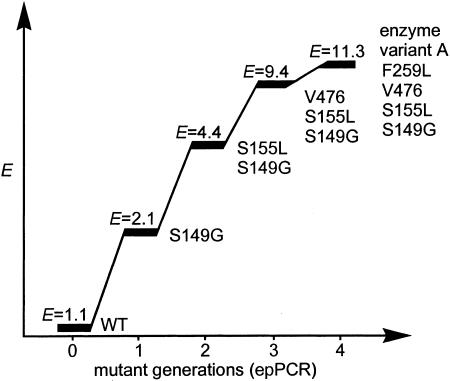
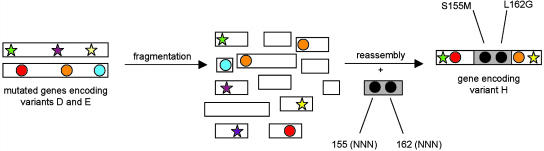
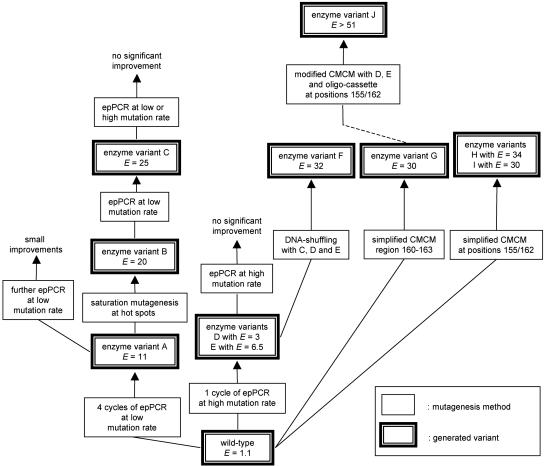
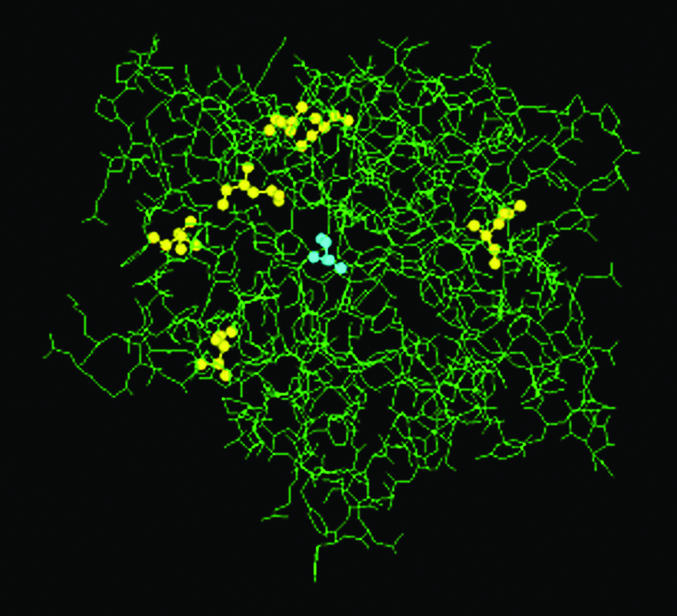
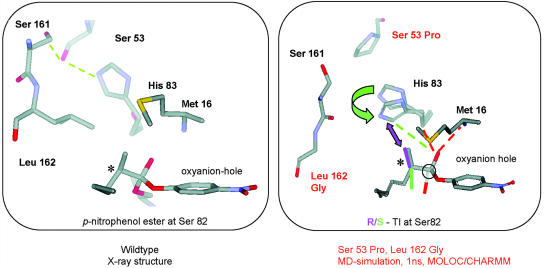
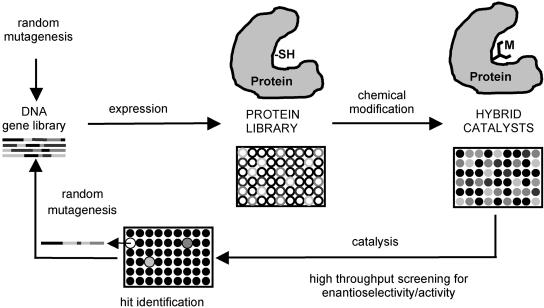
A fundamentally new approach to asymmetric catalysis in organic chemistry is described based on the in vitro evolution of enantioselective enzymes. It comprises the appropriate combination of gene mutagenesis and expression coupled with an efficient high-throughput screening system for evaluating enantioselectivity (enantiomeric excess assay). Several such cycles lead to a "Darwinistic" process, which is independent of any knowledge concerning the structure or the mechanism of the enzyme being evolved. The challenge is to choose the optimal mutagenesis methods to navigate efficiently in protein sequence space. As a first example, the combination of error-prone mutagenesis, saturation mutagenesis, and DNA-shuffling led to a dramatic enhancement of enantioselectivity of a lipase acting as a catalyst in the kinetic resolution of a chiral ester. Mutations at positions remote from the catalytically active center were identified, a surprising finding, which was explained on the basis of a novel relay mechanism. The scope and limitations of the method are discussed, including the prospect of directed evolution of stereoselective hybrid catalysts composed of robust protein hosts in which transition metal centers have been implanted.
Figures
References
-
- Knowles, W. S. (2002) Angew. Chem. Int. Ed. Engl. 41, 1998–2007.
-
- Noyori, R. (2002) Angew. Chem. Int. Ed. Engl. 41, 2008–2022. - PubMed
-
- Sharpless, K. B. (2002) Angew. Chem. Int. Ed. Engl. 41, 2024–2032. - PubMed
-
- Jacobsen, E. N., Pfaltz, A. & Yamamoto, H., eds. (1999) Comprehensive Asymmetric Catalysis (Springer, Berlin), Vols. 1–3.
-
- List, B. (2002) Tetrahedron 58, 5573–5590.
Publication types
MeSH terms
Substances
LinkOut - more resources
Full Text Sources
Other Literature Sources
Research Materials
