X-chromosome inactivation patterns in Korean women with idiopathic recurrent spontaneous abortion
- PMID: 15082900
- PMCID: PMC2822308
- DOI: 10.3346/jkms.2004.19.2.258
X-chromosome inactivation patterns in Korean women with idiopathic recurrent spontaneous abortion
Abstract
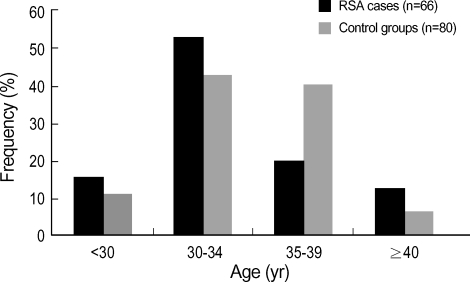
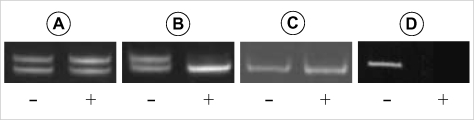
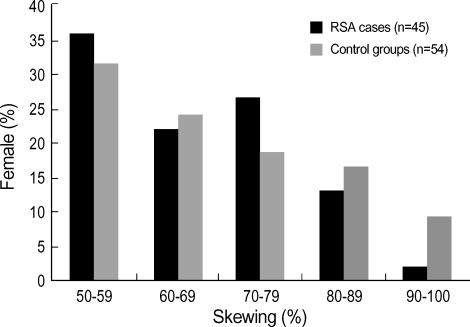
Recurrent spontaneous abortion (RSA) defines as two or more consecutive losses at < or = 20 weeks of gestation and affects an estimated 1 of every 100 couples wishing to have children. However, it remains a poorly understood phenomenon. Recent reports observed a significant association between highly skewed X chromosome and RSA, supporting that X chromosome inactivation might be an important and previously unknown cause of RSA. X-inactivation pattern, using polymeric X-linked women with idiopathic RSA and 80 control subjects with a single successful pregnancy and no history of spontaneous abortion. The ratio of heterozygotes was 68.2% (45/66) in women with RSA and 67.5% (54/80) in control group. Among 45 informative RSA cases, only 1 (2.2%) woman showed extreme skewed X inactivation (> or = 90%) and 4 (8.9%) had mild skewed inactivation (> or = 85%). In 54 heterozygous control subjects, 5 (9.3%) women showed extreme skewed X inactivation and 7 (13.0%) had mild one. The frequency of skewed X inactivation between RSA patients and control group was not significantly different (p>0.05). This finding suggests that skewed x chromosome be not associated with unexplained RSA patients.
Figures
References
-
- Stephenson MD. Frequency of factors associated with habitual abortion in 197 couples. Fertil Steril. 1996;66:24–29. - PubMed
-
- Hatasaka HH. Recurrent miscarriage: epidemiologic factors, definitions, and incidence. Clin Obstet Gynecol. 1994;37:625–634. - PubMed
-
- Uehara S, Hashiyada M, Sato K, Sato Y, Fujimori K, Okamura K. Preferential X-chromosome inactivation in women with idiopathic recurrent pregnancy loss. Fertil Steril. 2001;76:908–914. - PubMed
Publication types
MeSH terms
LinkOut - more resources
Full Text Sources
Medical