


Stage and treatment variation with age in postmenopausal women with breast cancer: compliance with guidelines
- PMID: 15083173
- PMCID: PMC2409727
- DOI: 10.1038/sj.bjc.6601742
Stage and treatment variation with age in postmenopausal women with breast cancer: compliance with guidelines
Abstract
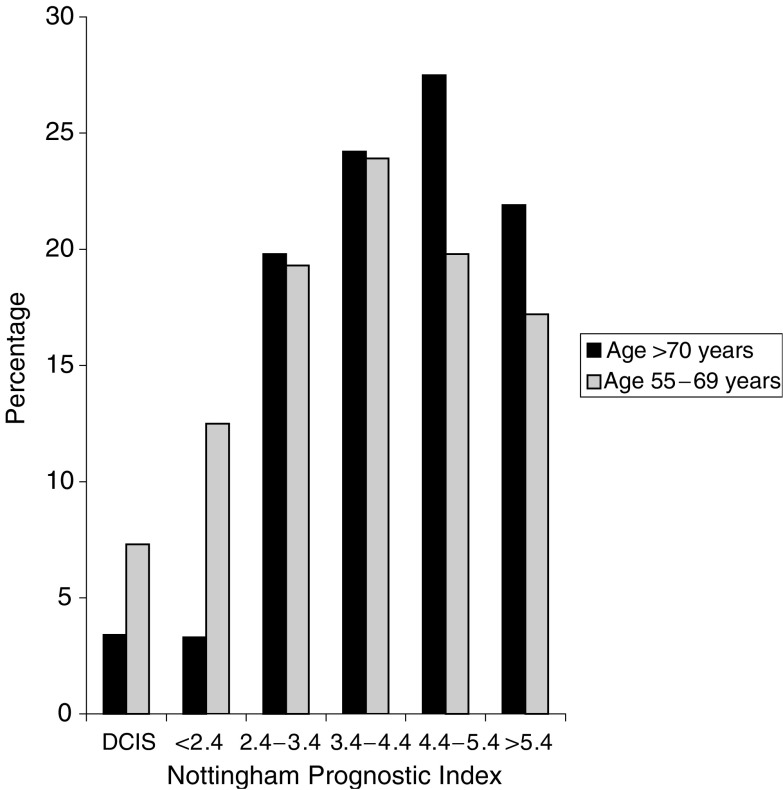
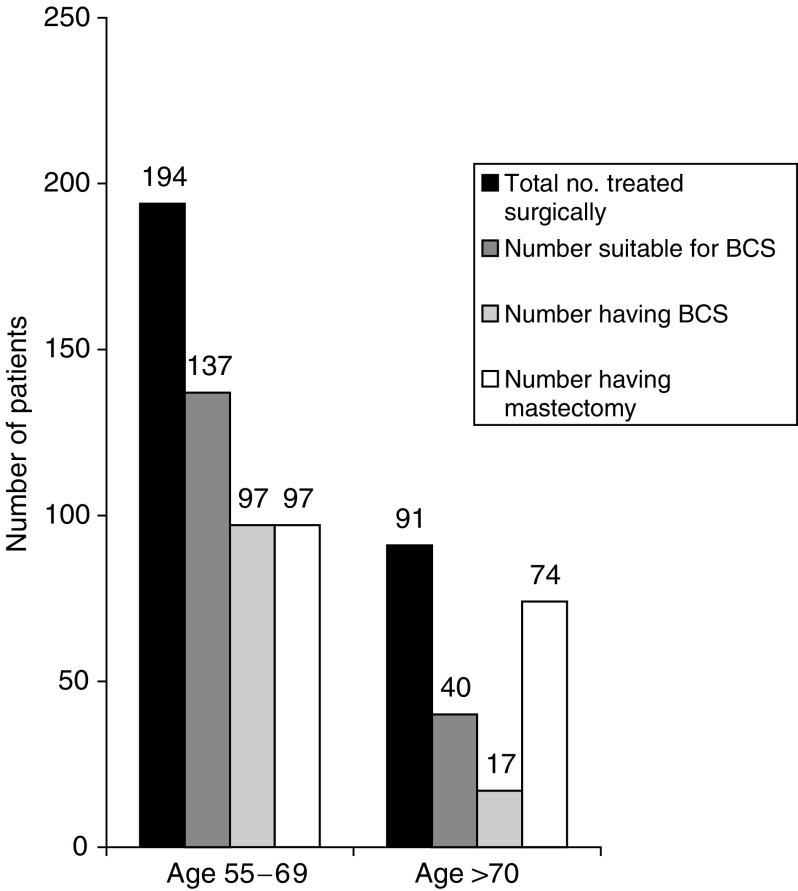
Breast cancer-specific mortality is static in older women despite having fallen in younger age groups, possibly due to lack of screening and differences in treatment. This study compared stage and treatment between two cohorts of postmenopausal women (55-69 vs >70 years) in a single cancer network over 6 months. A total of 378 patients were studied (>70: N=167, 55-69 years: N=210). Older women presented with more advanced disease (>70: metastatic/locally advanced 12%, 55-69 years: 3%, P<0.01). Those with operable cancer had a worse prognosis (Nottingham Prognostic Index (NPI) >70: median NPI 4.4, 55-69 years: 4.25, P<0.03). These stage differences were partially explained by higher screening rates in the younger cohort. Primary endocrine therapy was used in 42% of older patients compared with 3% in the younger group (P<0.001). Older women with cancers suitable for breast conservation were more likely to choose mastectomy (>70: 57.5% mastectomy rate vs 55-69 years: 20.6%, P<0.01). Nodal surgery was less frequent in older patients (>70: 6.7% no nodal surgery, 55-69 years: 0.5%, P<0.01) and was more likely to be inadequate (>70: 10.7% <4 nodes excised, 55-69 years: 3.4%, P<0.02). In summary, older women presented with more advanced breast cancer, than younger postmenopausal women and were treated less comprehensively.
Figures
References
-
- BASO (British Association of Surgical Oncology Breast Speciality Group) (1998) Guidelines for surgeons in the Management of Symptomatic breast disease in the Unitied Kingdom, 1998 revision, Eur J Surg Oncol 24(6): 464–476 - PubMed
-
- Bates T, Fennessy M, Riley DL, Baum M, Houghton J (2001) Breast cancer in the elderly: surgery improves survival. The results of a Cancer Research Campaign Trial. Eur J Cancer 37(Suppl 5): 7
-
- Benhaim DI, Lopchinski R, Tartter PI (2000) Lumpectomy with tamoxifen as primary treatment for elderly women with early stage breast cancer. Am J Surg 180: 162–166 - PubMed
-
- Diab SG, Elledge RM, Clarke GM (2000) Tumour characteristics and clinical outcome of elderly women with breast cancer. J Natl Cancer Inst 92: 550–556 - PubMed
Publication types
MeSH terms
Substances
LinkOut - more resources
Full Text Sources
Medical
