


Infiltrating lobular carcinoma of the breast: tumor characteristics and clinical outcome
- PMID: 15084238
- PMCID: PMC400666
- DOI: 10.1186/bcr767
Infiltrating lobular carcinoma of the breast: tumor characteristics and clinical outcome
Abstract
Introduction: Invasive lobular carcinoma (ILC) comprises approximately 10% of breast cancers and appears to have a distinct biology. Because it is less common than infiltrating ductal carcinoma (IDC), few data have been reported that address the biologic features of ILC in the context of their clinical outcome. In the present study we undertook an extensive comparison of ILC and IDC using a large database to provide a more complete and reliable assessment of their biologic phenotypes and clinical behaviors.
Methods: The clinical and biological features of 4140 patients with ILC were compared with those of 45,169 patients with IDC (not otherwise specified). The median follow-up period was 87 months.
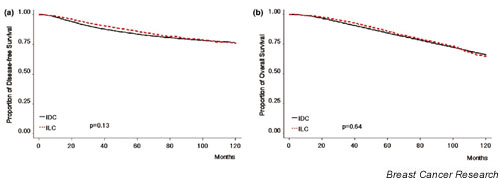
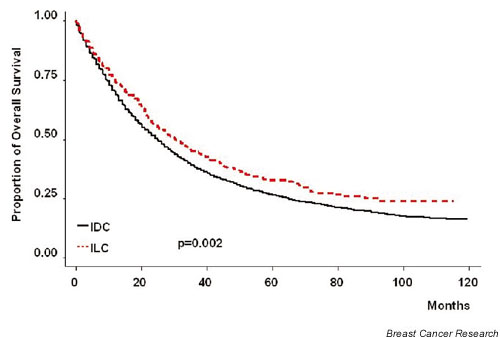
Results: In comparison with IDC, ILC was significantly more likely to occur in older patients, to be larger in size, to be estrogen and progesterone receptor positive, to have lower S-phase fraction, to be diploid, and to be HER-2, p53, and epidermal growth factor receptor negative. It was more common for ILC than for IDC to metastasize to the gastrointestinal tract and ovary. The incidence of contralateral breast cancer was higher for ILC patients than for IDC patients (20.9% versus 11.2%; P < 0.0001). Breast preservation was modestly less frequent in ILC patients than in IDC patients. The 5-year disease-free survival was 85.7% for ILC and 83.5% for IDC (P = 0.13). The 5-year overall survival was 85.6% for ILC and 84.1% for IDC (P = 0.64).
Conclusion: Despite the fact that the biologic phenotype of ILC is quite favorable, these patients do not have better clinical outcomes than do patients with IDC. At present, management decisions should be based on individual patient and tumor biologic characteristics, and not on lobular histology.
Figures
References
-
- Martinez V, Azzopardi JG. Invasive lobular carcinoma of the breast: incidence and variants. Histopathology. 1979;3:467–488. - PubMed
-
- Borst MJ, Ingold JA. Metastatic patterns of invasive lobular versus invasive ductal carcinoma of the breast. Surgery. 1993;114:637–641. discussion 641–632. - PubMed
-
- Fisher ER, Gregorio RM, Fisher B, Redmond C, Vellios F, Sommers SC. The pathology of invasive breast cancer. A syllabus derived from findings of the National Surgical Adjuvant Breast Project (protocol no. 4) Cancer. 1975;36:1–85. - PubMed
-
- Krecke KN, Gisvold JJ. Invasive lobular carcinoma of the breast: mammographic findings and extent of disease at diagnosis in 184 patients. AJR Am J Roentgenol. 1993;161:957–960. - PubMed
Publication types
MeSH terms
Substances
Grants and funding
LinkOut - more resources
Full Text Sources
Other Literature Sources
Medical
Research Materials
Miscellaneous
