


The endogenous cannabinoid system protects against colonic inflammation
- PMID: 15085199
- PMCID: PMC385396
- DOI: 10.1172/JCI19465
The endogenous cannabinoid system protects against colonic inflammation
Abstract
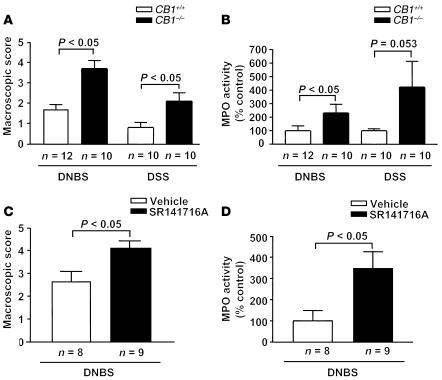
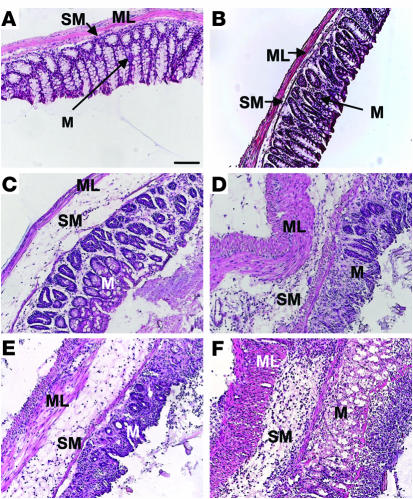
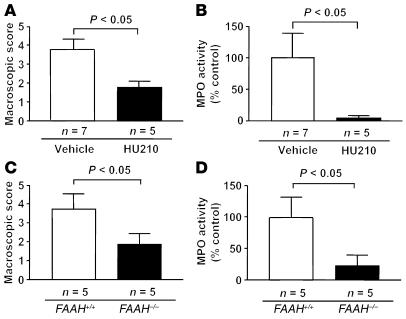
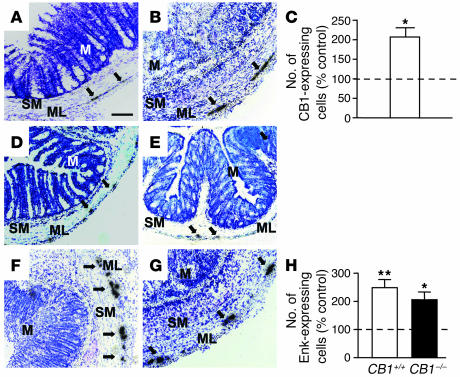
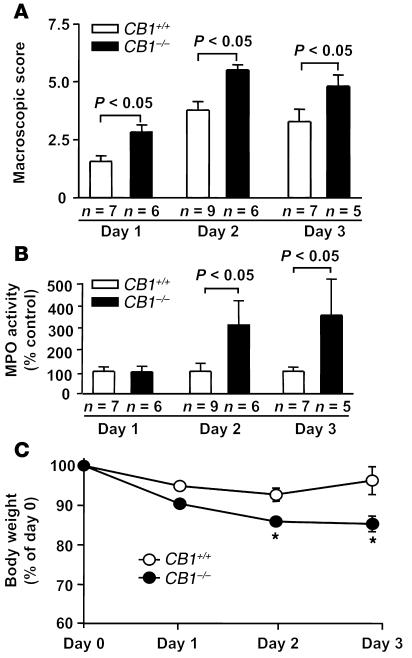
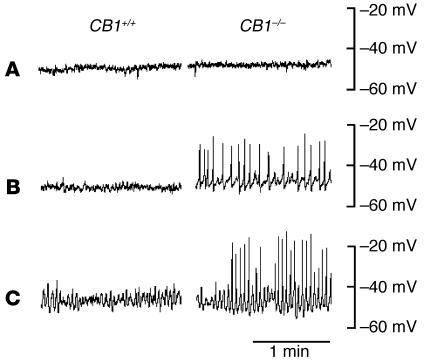
Excessive inflammatory responses can emerge as a potential danger for organisms' health. Physiological balance between pro- and anti-inflammatory processes constitutes an important feature of responses against harmful events. Here, we show that cannabinoid receptors type 1 (CB1) mediate intrinsic protective signals that counteract proinflammatory responses. Both intrarectal infusion of 2,4-dinitrobenzene sulfonic acid (DNBS) and oral administration of dextrane sulfate sodium induced stronger inflammation in CB1-deficient mice (CB1(-/-)) than in wild-type littermates (CB1(+/+)). Treatment of wild-type mice with the specific CB1 antagonist N-(piperidino-1-yl)-5-(4-chlorophenyl)-1-(2,4-dichlorophenyl)-4-methyl-pyrazole-3-carboxamide (SR141716A) mimicked the phenotype of CB1(-/-) mice, showing an acute requirement of CB1 receptors for protection from inflammation. Consistently, treatment with the cannabinoid receptor agonist R(-)-7-hydroxy-Delta(6)-tetra-hydrocannabinol-dimethylheptyl (HU210) or genetic ablation of the endocannabinoid-degrading enzyme fatty acid amide hydrolase (FAAH) resulted in protection against DNBS-induced colitis. Electrophysiological recordings from circular smooth muscle cells, performed 8 hours after DNBS treatment, revealed spontaneous oscillatory action potentials in CB1(-/-) but not in CB1(+/+) colons, indicating an early CB1-mediated control of inflammation-induced irritation of smooth muscle cells. DNBS treatment increased the percentage of myenteric neurons expressing CB1 receptors, suggesting an enhancement of cannabinoid signaling during colitis. Our results indicate that the endogenous cannabinoid system represents a promising therapeutic target for the treatment of intestinal disease conditions characterized by excessive inflammatory responses.
Figures
References
-
- Drosmann, D.A., Corazzieri, E., Talley, N.J., Thompsom, W.G., and Whitehead, W.E. 2000. Rome II. The functional gastrointestinal disorders. Diagnosis, pathophysiology and treatment: a multinational consensus. 2nd edition. Degnon Associates. McLean, Virginia, USA. 370 pp.
-
- Mayer EA, Collins SM. Evolving pathophysiologic models of functional gastrointestinal disorders. Gastroenterology. 2002;122:2032–2048. - PubMed
-
- Selve, N. 1992. Chronic intrajejunal TNBS application in TNBS-sensitized rats: a new model of chronic inflammatory bowel diseases. Agents Actions. Spec No:C15–C17. - PubMed
-
- Sartor, R.B. 1991. Animal models of intestinal inflammation. Relevance to inflammatory bowel disease. In Inflammatory bowel disease. R.P. MacDermott and W.F. Stenson, editors. Elsevier Science. New York, New York, USA. 337–353.
Publication types
MeSH terms
Substances
LinkOut - more resources
Full Text Sources
Other Literature Sources
Molecular Biology Databases
