Tamponade efficiency of perfluorohexyloctane and silicone oil solutions in a model eye chamber
- PMID: 15090425
- PMCID: PMC1772150
- DOI: 10.1136/bjo.2003.024737
Tamponade efficiency of perfluorohexyloctane and silicone oil solutions in a model eye chamber
Abstract
Background/aim: As no single tamponade agent yet fulfils all the requirements of a long term inferior tamponade, attempts have been made to mix tamponade materials. This study investigated perfluorohexyloctane (F(6)H(8)) and silicone oil solutions designed to take advantage of the high specific gravity and interfacial tension of the F(6)H(8) and the high viscosity of silicone oil.
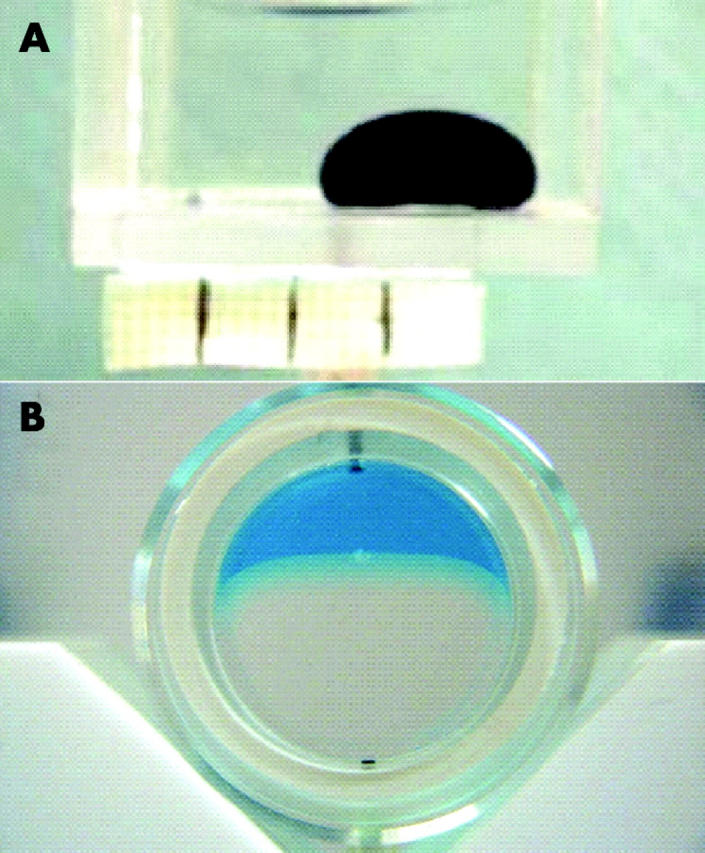
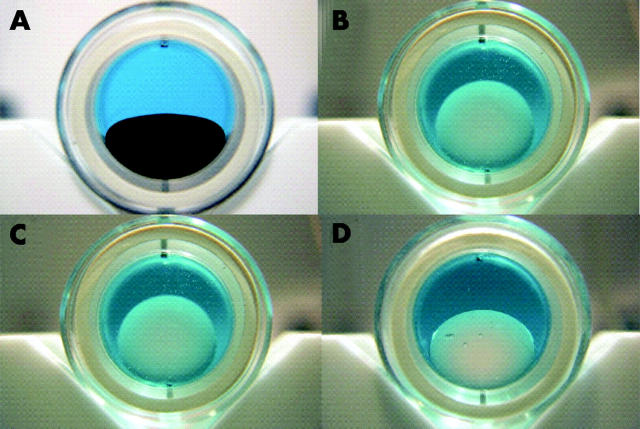
Methods: Solutions of three different densities were examined (1.01, 1.03 and 1.06 g/cm(3)) inside transparent chambers made of surface modified poly(methylmethacrylate) (PMMA).
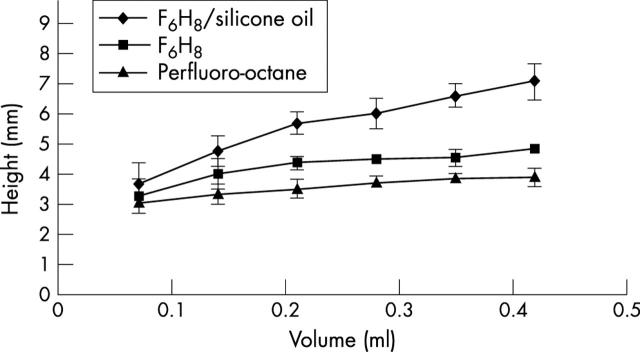
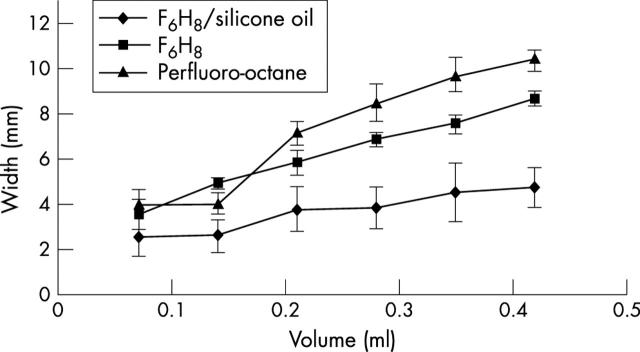
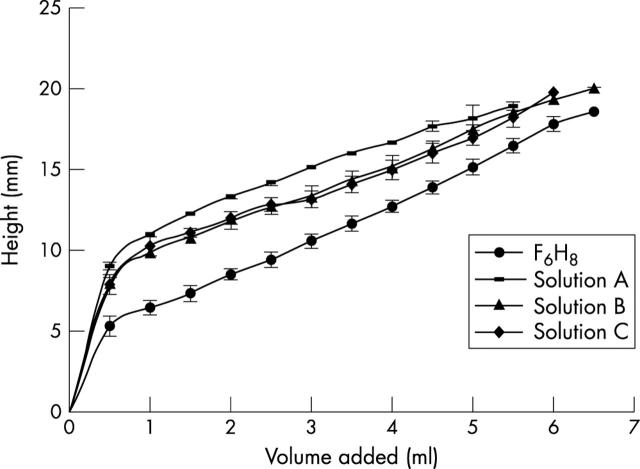
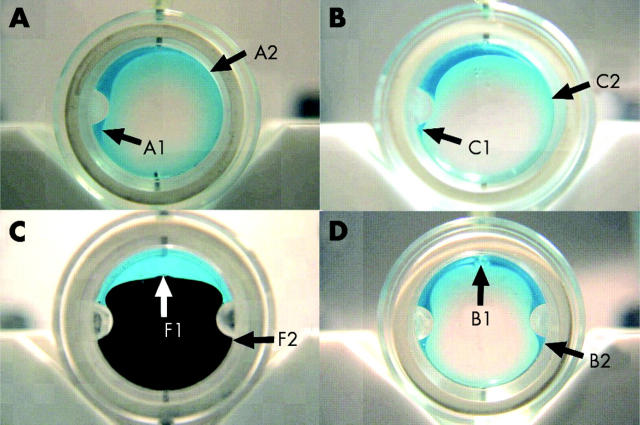
Results: Compared to F(6)H(8), the solutions had poorer contact with hydrophilic surface of the chambers. The higher the specific gravity of the solution, the better was the contact. The solution with a specific gravity 1.01 g/cm(3) is probably of no use clinically.
Conclusion: The model eye chamber made of surface modified PMMA is an efficient way of screening and choosing solutions with promising physical properties. Solutions of silicone oil with F(6)H(8) in other proportions or with other semifluorinated alkanes may be of interest.
Figures
References
-
- Sullivan PM, Luff AJ, Aylward GW. Results of primary retinal reattachment surgery: a prospective audit. Eye 1997;11 (Pt 6):869–71. - PubMed
-
- Singh AK, Michels RG, Glaser BM. Scleral indentation following cryotherapy and repeat cryotherapy enhance release of viable retinal pigment epithelial cells. Retina 1986;6:176–8. - PubMed
-
- Singh AK, Glaser BM, Lemor M, et al. Gravity-dependent distribution of retinal pigment epithelial cells dispersed into the vitreous cavity. Retina 1986;6:77–80. - PubMed
-
- Colthurst MJ, Williams RL, Hiscott PS, et al. Biomaterials used in the posterior segment of the eye. Biomaterials 2000;21:649–65. - PubMed
-
- Fawcett IM, Williams RL, Wong D. Contact angles of substances used for internal tamponade in retinal detachment surgery. Graefes Arch Clin Exp Ophthalmol 1994;232:438–44. - PubMed
MeSH terms
Substances
LinkOut - more resources
Full Text Sources
Other Literature Sources