


Occupational exposure to welding fume among welders: alterations of manganese, iron, zinc, copper, and lead in body fluids and the oxidative stress status
- PMID: 15091287
- PMCID: PMC4126160
- DOI: 10.1097/01.jom.0000116900.49159.03
Occupational exposure to welding fume among welders: alterations of manganese, iron, zinc, copper, and lead in body fluids and the oxidative stress status
Abstract
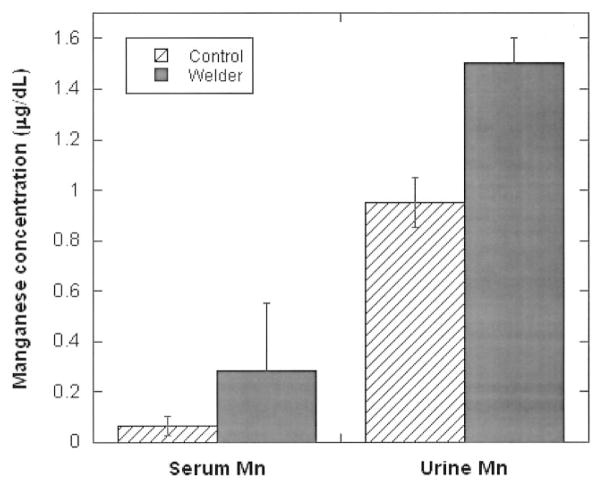
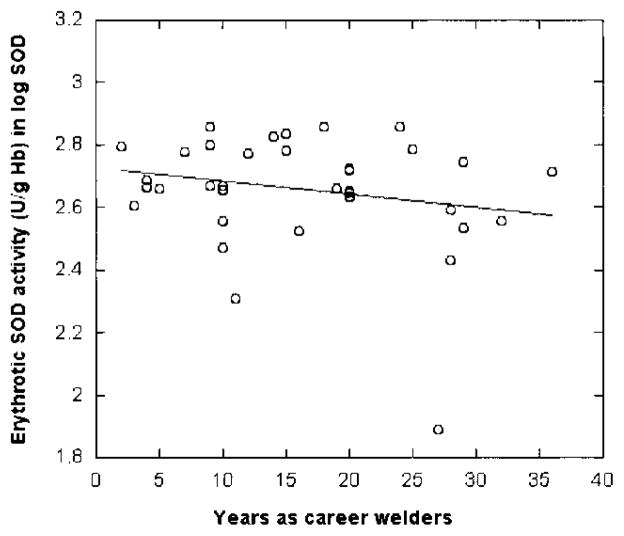
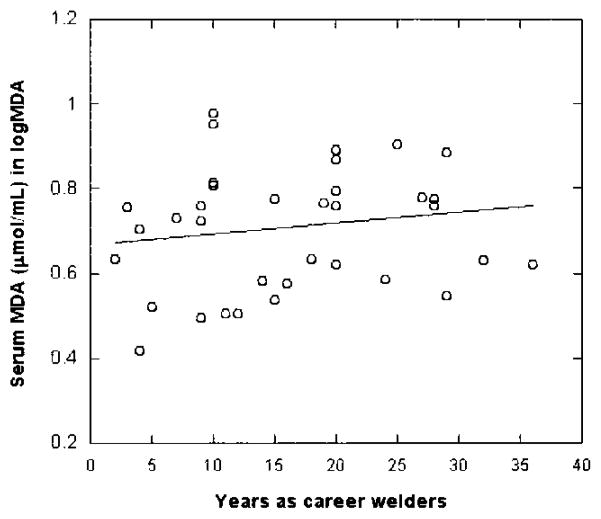
Welders in this study were selected from a vehicle manufacturer; control subjects were from a nearby food factory. Airborne manganese levels in the breathing zones of welders and controls were 1.45 +/- SD1.08 mg/m and 0.11 +/- 0.07 microg/m, respectively. Serum levels of manganese and iron in welders were 4.3-fold and 1.9-fold, respectively, higher than those of controls. Blood lead concentrations in welders increased 2.5-fold, whereas serum zinc levels decreased 1.2-fold, in comparison with controls. Linear regression revealed the lack of associations between blood levels of five metals and welder's age. Furthermore, welders had erythrocytic superoxide dismutase activity and serum malondialdehyde levels 24% less and 78% higher, respectively, than those of controls. These findings suggest that occupational exposure to welding fumes among welders disturbs the homeostasis of trace elements in systemic circulation and induces oxidative stress.
Figures
References
-
- OSHA. Welding Fumes (Total Particulate). Chemical Sampling Information. 1995 http://www.osha-slc.gov/dts/chemicalsampling/data/CH276100.html.
-
- Chandra SV, Shukla GS, Srivastawa RS, Singh H, Gupta VP. An exploratory study of manganese exposure to welders. Clin Toxicol. 1981;18:407–418. - PubMed
-
- Mergler D, Huel G, Bowler R, et al. Nervous system dysfunction among workers with long-term exposure to manganese. Environ Res. 1994;64:151–180. - PubMed
-
- Roels H, Lauwerys R, Buchet JP, et al. Epidemiological survey among workers exposed to manganese: effects on lung, central nervous system, and some biological indices. Am J Ind Med. 1987;11:307–327. - PubMed
Publication types
MeSH terms
Substances
Grants and funding
LinkOut - more resources
Full Text Sources
