


Differential timing of spider mite-induced direct and indirect defenses in tomato plants
- PMID: 15122016
- PMCID: PMC429400
- DOI: 10.1104/pp.103.038315
Differential timing of spider mite-induced direct and indirect defenses in tomato plants
Abstract
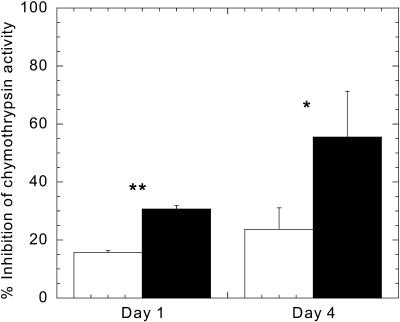
Through a combined metabolomics and transcriptomics approach we analyzed the events that took place during the first 5 d of infesting intact tomato (Lycopersicon esculentum) plants with spider mites (Tetranychus urticae). Although the spider mites had caused little visible damage to the leaves after 1 d, they had already induced direct defense responses. For example, proteinase inhibitor activity had doubled and the transcription of genes involved in jasmonate-, salicylate-, and ethylene-regulated defenses had been activated. On day four, proteinase inhibitor activity and particularly transcript levels of salicylate-regulated genes were still maintained. In addition, genes involved in phospholipid metabolism were up-regulated on day one and those in the secondary metabolism on day four. Although transcriptional up-regulation of the enzymes involved in the biosynthesis of monoterpenes and diterpenes already occurred on day one, a significant increase in the emission of volatile terpenoids was delayed until day four. This increase in volatile production coincided with the increased olfactory preference of predatory mites (Phytoseiulus persimilis) for infested plants. Our results indicate that tomato activates its indirect defenses (volatile production) to complement the direct defense response against spider mites.
Figures




References
-
- Adams RP (2001) Identification of Essential Oil Components by Gas Chromatography/Quadrupole Mass Spectroscopy. Allured Publishing, Carol Stream, IL
-
- Andersson BA, Holman RT, Lundgren L, Stenhagen G (1980) Capillary gas chromatograms of leaf volatiles. A possible aid to breeders for pest and disease resistance. J Agric Food Chem 28: 985–989
-
- Arimura G, Tashiro K, Kuhara S, Nishioka T, Ozawa R, Takabayashi J (2000) Gene responses in bean leaves induced by herbivory and by herbivore-induced volatiles. Biochem Biophys Res Commun 277: 305–310 - PubMed
-
- Arimura G, Ozawa R, Nishioka T, Boland W, Koch T, Kuhnemann F, Takabayashi J (2002) Herbivore-induced volatiles induce the emission of ethylene in neighboring lima bean plants. Plant J 29: 87–98 - PubMed
-
- Baldwin IT, Preston CA (1999) The eco-physiological complexity of plant responses to insect herbivores. Planta 208: 137–145
Publication types
MeSH terms
Substances
LinkOut - more resources
Full Text Sources
