


The essential nature of the ubiquitous 26-kilobase circular replicon of Borrelia burgdorferi
- PMID: 15150244
- PMCID: PMC415784
- DOI: 10.1128/JB.186.11.3561-3569.2004
The essential nature of the ubiquitous 26-kilobase circular replicon of Borrelia burgdorferi
Erratum in
- J Bacteriol. 2005 May;187(9):3288
Abstract
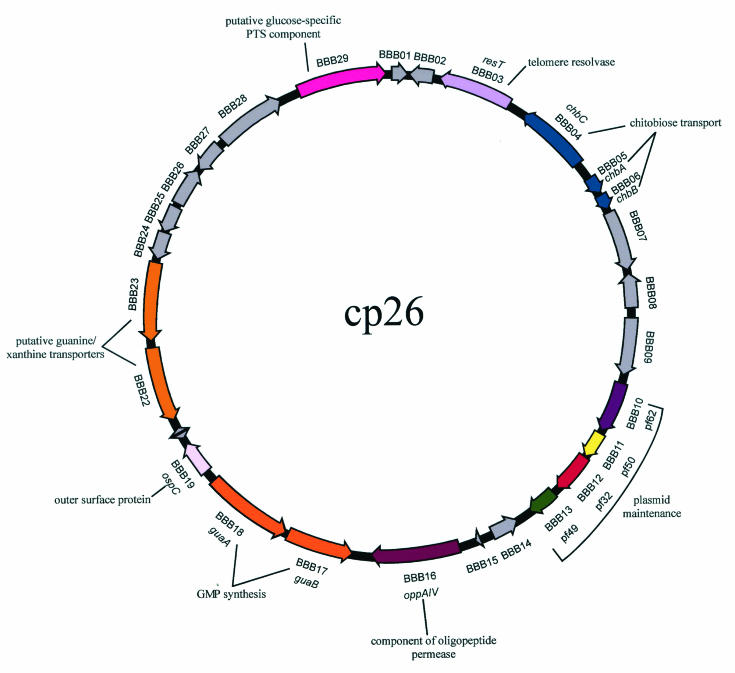
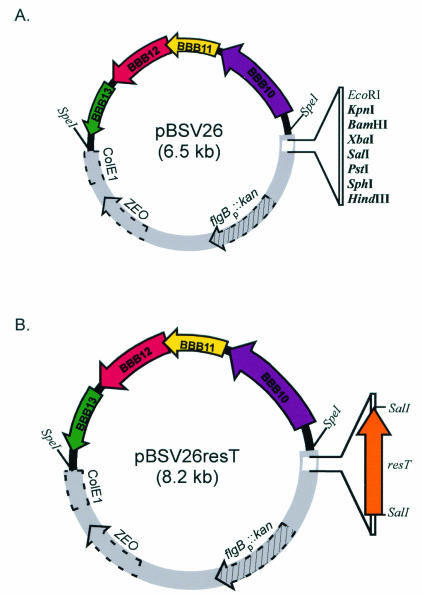
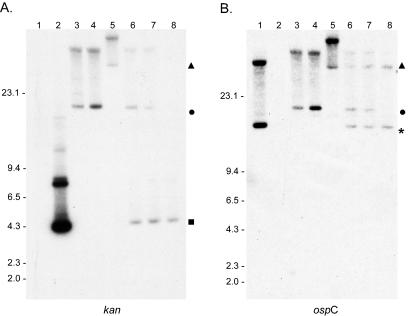
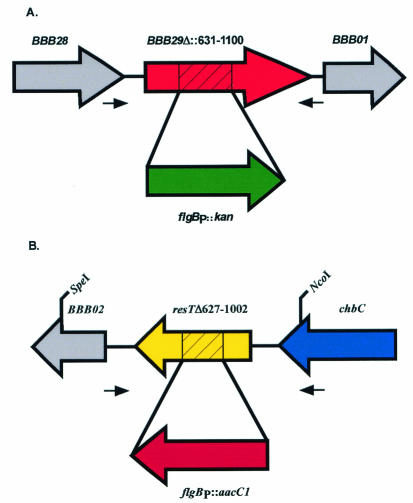
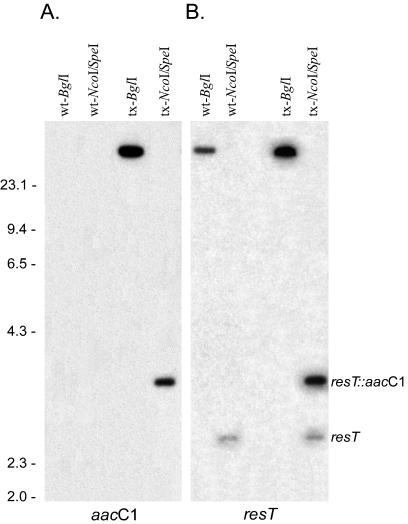
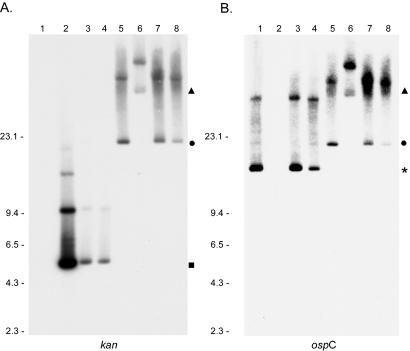
The genome of the type strain (B31) of Borrelia burgdorferi, the causative agent of Lyme disease, is composed of 12 linear and 9 circular plasmids and a linear chromosome. Plasmid content can vary among strains, but one 26-kb circular plasmid (cp26) is always present. The ubiquitous nature of cp26 suggests that it provides functions required for bacterial viability. We tested this hypothesis by attempting to selectively displace cp26 with an incompatible but replication-proficient vector, pBSV26. While pBSV26 transformants contained this incompatible vector, the vector coexisted with cp26, which is consistent with the hypothesis that cp26 carries essential genes. Several cp26 genes with ascribed or predicted functions may be essential. These include the BBB29 gene, which has sequence homology to a gene encoding a glucose-specific phosphotransferase system component, and the resT gene, which encodes a telomere resolvase involved in resolution of the replicated telomeres of the linear chromosome and plasmids. The BBB29 gene was successfully inactivated by allelic exchange, but attempted inactivation of resT resulted in merodiploid transformants, suggesting that resT is required for B. burgdorferi growth. To determine if resT is the only cp26 gene essential for growth, we introduced resT into B. burgdorferi on pBSV26. This did not result in displacement of cp26, suggesting that additional cp26 genes encode vital functions. We concluded that B. burgdorferi plasmid cp26 encodes functions critical for survival and thus shares some features with the chromosome.
Figures
References
-
- Austin, S., and K. Nordström. 1990. Partition-mediated incompatibility of bacterial plasmids. Cell 60:351-354. - PubMed
-
- Barbour, A. G. 1993. Linear DNA of Borrelia species and antigenic variation. Trends Microbiol. 1:236-239. - PubMed
-
- Barbour, A. G., and C. F. Garon. 1987. Linear plasmids of the bacterium Borrelia burgdorferi have covalently closed ends. Science 237:409-411. - PubMed
-
- Baril, C., C. Richaud, G. Baranton, and I. Saint Girons. 1989. Linear chromosome of Borrelia burgdorferi. Res. Microbiol. 140:507-516. - PubMed
MeSH terms
LinkOut - more resources
Full Text Sources
Molecular Biology Databases
