


Assisted reproductive technologies in rhesus macaques
- PMID: 15200674
- PMCID: PMC441410
- DOI: 10.1186/1477-7827-2-37
Assisted reproductive technologies in rhesus macaques
Abstract
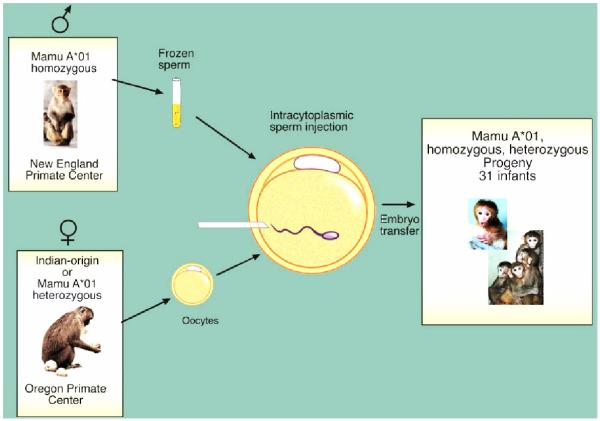
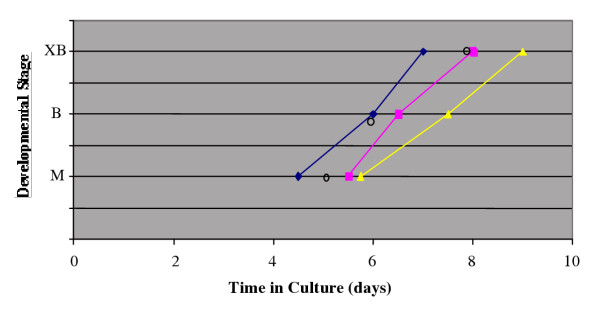
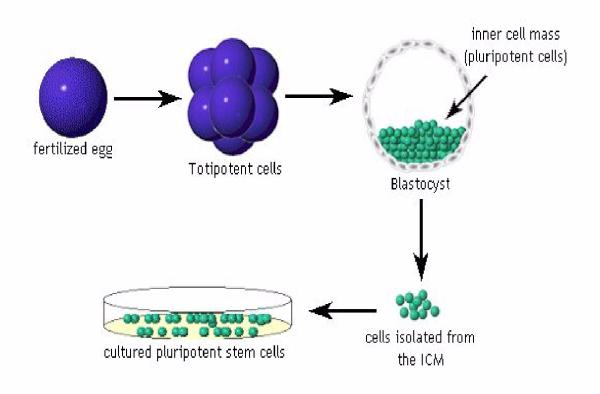
The assisted reproductive technologies (ARTs) have been used in the production of rhesus monkey offspring at the Oregon National Primate Research Center (ONPRC) and that experience is summarized here. Additionally these technologies serve as a source of oocytes/embryos for monozygotic twinning, embryonic stem (ES) cell derivation and cloning. High fertilization efficiencies were realized with conventional insemination or following the use of intracytoplasmic sperm injection (ICSI) and approximately 50% of the resulting embryos grew in vitro to blastocysts. Both fresh and frozen sperm were employed in fertilization by ICSI and the resulting embryos could be low temperature stored for subsequent thawing and transfer when a synchronized recipient female was available or after shipment to another facility. Following the transfer of up to 3 embryos, an overall pregnancy rate of 30% was achieved with increasing rates dependent upon the number of embryos transferred. Singleton pregnancy outcomes following the transfer of ART produced embryos were similar to those observed in a control group of animals in the timed mated breeding colony at ONPRC. ICSI produced embryos were used in efforts to create monozygotic twins by blastomere separation or blastocyst splitting. While pregnancies were achieved following the transfer of demi-embryos, only one was a twin and it was lost to spontaneous abortion. ICSI produced embryos have also served as the source of blastocysts for the derivation of embryonic stem cells. These pluripotent cells hold potential for cell based therapies and we consider the monkey an important translational model in which to evaluate safety, efficacy and feasibility of regenerative medicine approaches based on the transplantation of stem cell-derived progeny. Finally, efforts to produce genetically-identical monkeys by nuclear transfer have been briefly summarized.
Figures
References
-
- Ouhibi N, Zelinski-Wooten MB, Thomson JA, Wolf DP. Assisted fertilization and nuclear transfer in nonhuman primates. In: Wolf DP, Zelinski-Wooten M, editor. In Assisted Fertilization and Nuclear Transfer in Mammals. New Jersey: Humana Press Totowa; 2001. pp. 253–284.
-
- Tarlatzis BC, Bili H. Survey on intracytoplasmic sperm injection: report from the ESHRE ICSI Task Force. European Society of Human Reproduction and Embryology. Hum Reprod. 1998;13:165–177. - PubMed
-
- Bonduelle M, Wilikens A, Buysse A, Van Assche E, Wisanto A, Devroey P, Van Steirteghem AC, Liebaers I. Prospective follow-up study of 877 children born after intracytoplasmic sperm injection (ICSI), with ejaculated epididymal and testicular spermatozoa and after replacement of cryopreserved embryos obtained after ICSI. Hum Reprod. 1996;11:1558–1564. - PubMed
Publication types
MeSH terms
Grants and funding
LinkOut - more resources
Full Text Sources
Medical
