


Phospho.ELM: a database of experimentally verified phosphorylation sites in eukaryotic proteins
- PMID: 15212693
- PMCID: PMC449700
- DOI: 10.1186/1471-2105-5-79
Phospho.ELM: a database of experimentally verified phosphorylation sites in eukaryotic proteins
Abstract
Background: Post-translational phosphorylation is one of the most common protein modifications. Phosphoserine, threonine and tyrosine residues play critical roles in the regulation of many cellular processes. The fast growing number of research reports on protein phosphorylation points to a general need for an accurate database dedicated to phosphorylation to provide easily retrievable information on phosphoproteins.
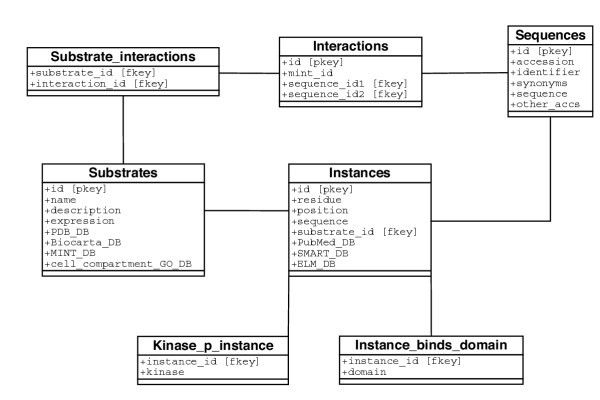
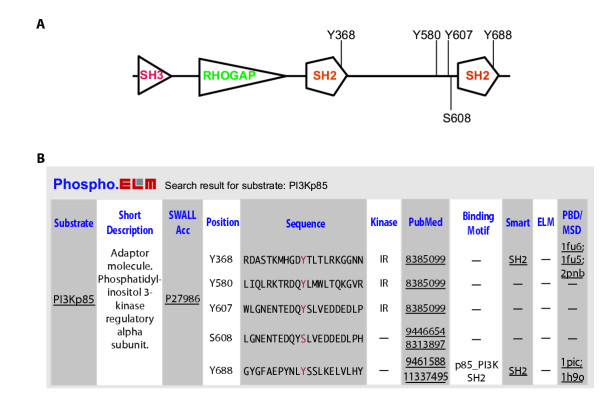
Description: Phospho.ELM http://phospho.elm.eu.org is a new resource containing experimentally verified phosphorylation sites manually curated from the literature and is developed as part of the ELM (Eukaryotic Linear Motif) resource. Phospho.ELM constitutes the largest searchable collection of phosphorylation sites available to the research community. The Phospho.ELM entries store information about substrate proteins with the exact positions of residues known to be phosphorylated by cellular kinases. Additional annotation includes literature references, subcellular compartment, tissue distribution, and information about the signaling pathways involved as well as links to the molecular interaction database MINT. Phospho.ELM version 2.0 contains 1703 phosphorylation site instances for 556 phosphorylated proteins.
Conclusion: Phospho.ELM will be a valuable tool both for molecular biologists working on protein phosphorylation sites and for bioinformaticians developing computational predictions on the specificity of phosphorylation reactions.
Figures
References
Publication types
MeSH terms
Substances
LinkOut - more resources
Full Text Sources
Other Literature Sources
Molecular Biology Databases
