Comparative Study
. 2004 Aug 15;559(Pt 1):287-99.
doi: 10.1113/jphysiol.2004.065565. Epub 2004 Jun 24.

The mechanical properties of chick (Gallus domesticus) sensory hair bundles: relative contributions of structures sensitive to calcium chelation and subtilisin treatment

Affiliations
Comparative Study

The mechanical properties of chick (Gallus domesticus) sensory hair bundles: relative contributions of structures sensitive to calcium chelation and subtilisin treatment

Mikhail E Bashtanov et al. J Physiol. .

Abstract

Up to four link types are found between the stereocilia of chick vestibular hair bundles: tip links, horizontal top connectors, shaft connectors and ankle links. A fifth type, the kinocilial link, couples the hair bundle to the kinocilium. Brownian-motion microinterferometry was used to study the mechanical properties of the hair bundle and investigate changes caused by removing different links with the calcium chelator BAPTA or the protease subtilisin. Immunofluorescence with an antibody to the hair-cell antigen (HCA) and electron microscopy were used to verify destruction of the links. The root mean square displacement and the corresponding absolute stiffness of untreated hair bundles were 4.3 nm and 0.9 mN m(-1), respectively. The ratio of Brownian-motion spectra before and after treatment was calculated and processed using a single oscillator model to obtain relative stiffness. Treatment with BAPTA, which cleaves tip, kinocilial and ankle links, reduces hair-bundle stiffness by 43%, whilst subtilisin treatment, which breaks ankle links and shaft connectors, reduces stiffness by 48%. No changes were detected in viscous damping following either treatment. The time course of the subtilisin-induced stiffness change was close to that of HCA loss, but not to the disappearance of the ankle links, suggesting that shaft connectors make a more significant contribution to hair-bundle stiffness. Sequential treatments of the hair bundles with BAPTA and subtilisin show that the effects are additive. The implication of complete additivity is that structures resistant to both agents (e.g. top connectors and stereocilia pivots) are responsible for approximately 9% of the overall bundle stiffness.


Figures

Figure 1
Figure 1. A schematic drawing of a vestibular hair bundle
Kinocilium (k) is connected to the tallest stereocilia by kinocilial links (kl). Stereocilia are interconnected on the top by tip links (t) and horizontal top links (h) below them. Shaft connectors (s) connect shafts of stereocilia. The stereocilia adjacent to their insertion into the cuticular plate are interconnected by ankle links (a).
Figure 2
Figure 2. FM1-43 stains hair cells of control (A) and subtilisin-(B) but not BAPTA-treated utricles (C)
The control sample was maintained under HBSS perfusion for 45 min. Subtilisin was applied as a 50 mg l−1 solution for 45 min.
Figure 3
Figure 3. Arrangement and employment of the interferometer
A, optical scheme of the interferometer. See Methods for detailed description. B, utricular hair bundles on the folded edge of a macula. A striolar hair bundle is positioned between the beams of the interferometer for measurements. Arrow indicates the line of hair-bundle polarity reversal. Scale bar = 10 μm.
Figure 4
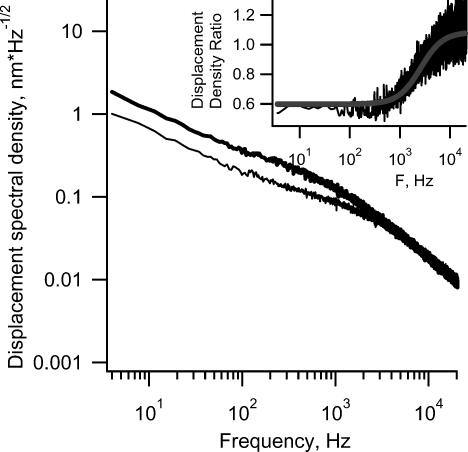
Figure 4. Brownian motion displacement spectra of hair bundles
Curves 1, 2 and 3 were obtained from 3 different hair bundles. Signals were scaled to displacement units using a 15 nm peak-to-peak calibration movement (the peak is not shown). Curve 2 has been multiplied by 2 for clarity. Curve 4 (background noise) was obtained from a point 2 μm adjacent to the bundle and scaled to the displacement using the coefficient of curve 1. The inset shows the ratio of displacement spectra obtained from the same hair bundle after and before 150 min of HBSS perfusion and inllustrates the stability of the preparation.
Figure 5
Figure 5. Distribution of mean-square displacement for 102 hair bundles
The displacement was calculated according to eqn (9) as an integral of the power spectral density over the frequency range 20 Hz to 10 kHz. The continuous curve is a Gaussian function with mean 18.5 nm2 and s.d. 14 nm2.
Figure 6
Figure 6. Displacement spectral density before (thick line) and after (thin line) application of 0.3 μm concanavalin A
Inset shows the ratio of the spectra and fit to eqn (5).
Figure 7
Figure 7. Ratio of spectra of hair bundles before (thick line) and after (thin line) 10 min of treatment with 5 mm BAPTA
Inset shows the ratio of the spectra and fit to eqn (6).
Figure 8
Figure 8. Distributions of stiffness changes following BAPTA (▪) or subtilisin (□) application
The relative stiffness was obtained according to eqn (7) from the fit of displacement ratio curves to eqn (6).
Figure 9
Figure 9. Ratio of spectra before and after 12 (1), 30 (2) or 40 min (3) of subtilisin application
Trace 4 was obtained after 20 min of HBSS washout following the 40 min subtilisin treatment. Each trace is an average of 3 to 4 individual measurements and is slightly smoothed. Continuous curves are fits of original data to eqn (6). The frequency range was restricted to 100 Hz to 6 kHz for the fitting of trace 1.
Figure 10
Figure 10. Kinetic curve for subtilisin-induced change of stiffness (•, ± s.d.) and intensity of immunofluorescence (see also Fig. 10) of utriculi labelled with anti-HCA (▵)
The stiffness curve is fitted according to eqn (11) (thick curve) and scaled error function (thin curve). The dotted line is a linear fit of the fluorescence kinetics. Time point 0 corresponds to the start of the subtilisin treatment. For the stiffness curve, each point is an average of 3 or more stiffness points of 5 or more hair bundles of different maculae. Y-axes are scaled so that saturating stiffness loss corresponds to zero fluorescence intensity.
Figure 11
Figure 11. Effects of subsequent treatments with subtilisin and BAPTA
A, ratio of spectra before and after 8 min of subtilisin (1), 30 min of subtilisin (2), and following 5 and 10 min of BAPTA treatment (3 and 4, respectively). B, the ratio after 10 min of BAPTA (2), subsequent HBSS wash (3), and 25 min of subtilisin treatment (4). Control curve (1) was obtained as a ratio of two independent records before the treatments.
Figure 12
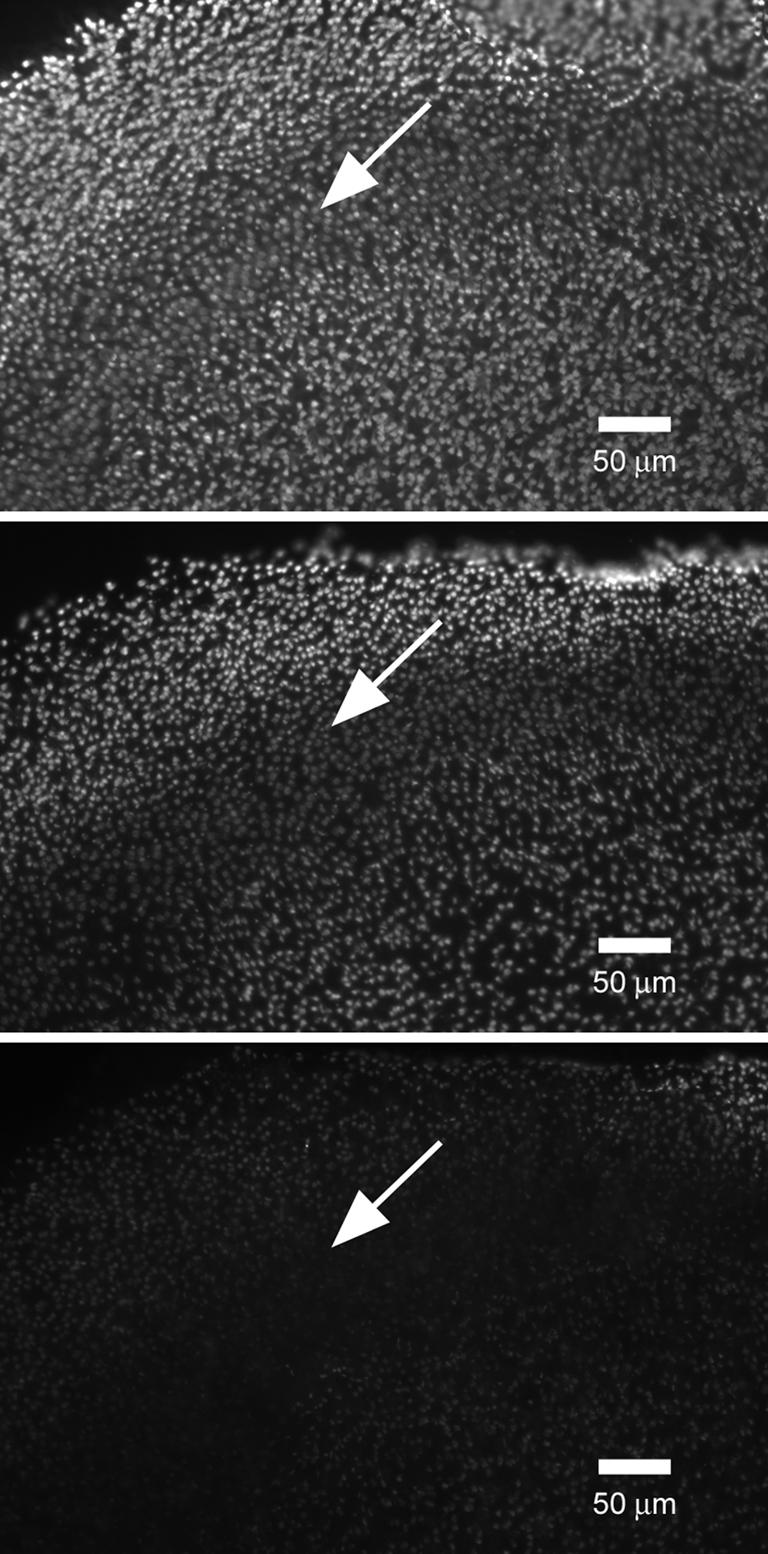
Figure 12. Effect of subtilisin treatment on anti-HCA labelling
The time of subtilisin treatment is (from top to bottom) 0, 10 and 35 min. Arrows indicate striola. The focal plane is on the level of the cuticular plate.
Figure 13
Figure 13. TEM images of upper part (top row, top 200 nm scale bar) and lower part (bottom row, bottom 200 nm scale bar) of striolar hair bundles
BAPTA treatment for 10 min cleaves tip links (long arrows). Subtilisin treatment for 25 min removes ankle links (large arrowheads) and shaft connectors (small arrowheads). Horizontal top links (short arrows) are present after all types of treatment. This is the only type of link left after both sequential treatments. The type of treatment is indicated at the top of each column.

References

    1. Assad JA, Shepherd GMG, Corey DP. Tip-link integrity and mechanical transduction in vertebrate hair-cells. Neuron. 1991;7:985–994. - PubMed
    1. Crawford AC, Evans MG, Fettiplace R. The actions of calcium on the mechanoelectrical transducer current of turtle hair-cells. J Physiol. 1991;434:369–398. - PMC - PubMed
    1. Crawford AC, Fettiplace R. The mechanical-properties of ciliary bundles of turtle cochlear hair-cells. J Physiol. 1985;364:359–379. - PMC - PubMed
    1. Denk W, Webb WW. Optical measurement of picometer displacements of transparent microscopic objects. Appl Opt. 1990;29:2382–2391. - PubMed
    1. Denk W, Webb WW. Forward and reverse transduction at the limit of sensitivity studied by correlating electrical and mechanical fluctuations in frog saccular hair-cells. Hear Res. 1992;60:89–102. - PubMed

Publication types

MeSH terms

LinkOut - more resources