


Effect of vaccine use in the evolution of Mexican lineage H5N2 avian influenza virus
- PMID: 15254209
- PMCID: PMC446090
- DOI: 10.1128/JVI.78.15.8372-8381.2004
Effect of vaccine use in the evolution of Mexican lineage H5N2 avian influenza virus
Abstract
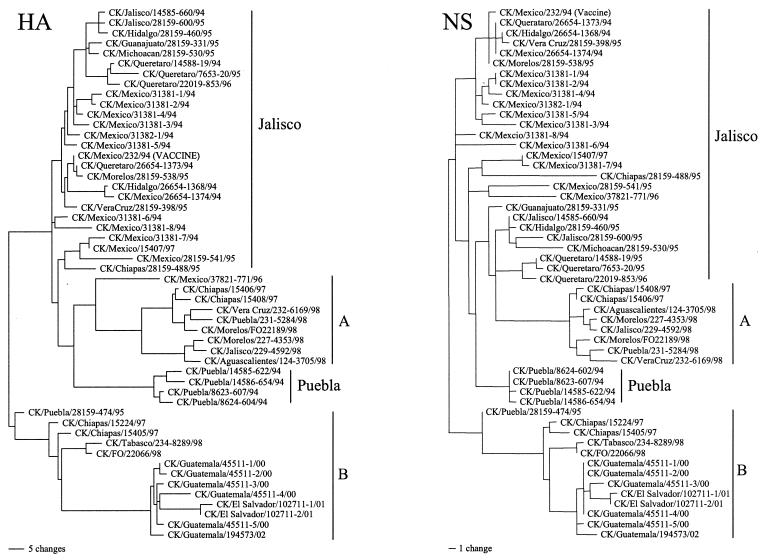
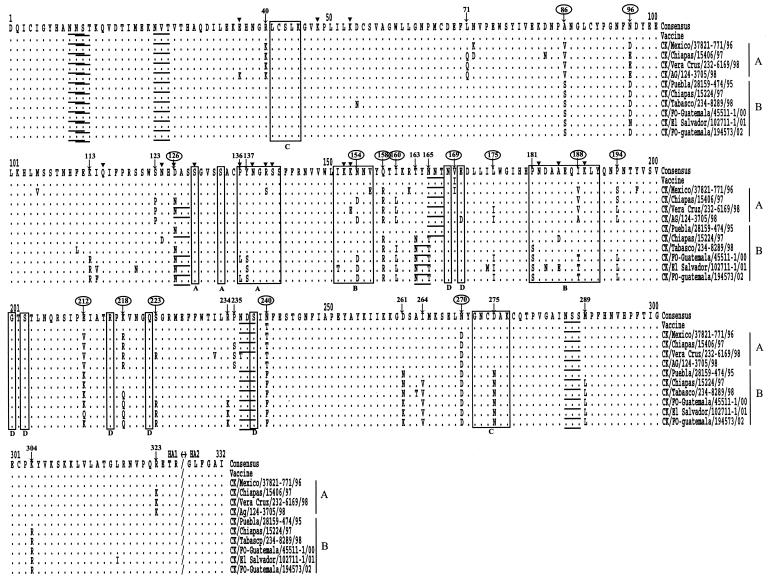
An outbreak of avian influenza (AI) caused by a low-pathogenic H5N2 type A influenza virus began in Mexico in 1993 and several highly pathogenic strains of the virus emerged in 1994-1995. The highly pathogenic virus has not been reported since 1996, but the low-pathogenic virus remains endemic in Mexico and has spread to two adjacent countries, Guatemala and El Salvador. Measures implemented to control the outbreak and eradicate the virus in Mexico have included a widespread vaccination program in effect since 1995. Because this is the first case of long-term use of AI vaccines in poultry, the Mexican lineage virus presented us with a unique opportunity to examine the evolution of type A influenza virus circulating in poultry populations where there was elevated herd immunity due to maternal and active immunity. We analyzed the coding sequence of the HA1 subunit and the NS gene of 52 Mexican lineage viruses that were isolated between 1993 and 2002. Phylogenetic analysis indicated the presence of multiple sublineages of Mexican lineage isolates at the time vaccine was introduced. Further, most of the viruses isolated after the introduction of vaccine belonged to sublineages separate from the vaccine's sublineage. Serologic analysis using hemagglutination inhibition and virus neutralization tests showed major antigenic differences among isolates belonging to the different sublineages. Vaccine protection studies further confirmed the in vitro serologic results indicating that commercial vaccine was not able to prevent virus shedding when chickens were challenged with antigenically different isolates. These findings indicate that multilineage antigenic drift, which has not been observed in AI virus, is occurring in the Mexican lineage AI viruses and the persistence of the virus in the field is likely aided by its large antigenic difference from the vaccine strain.
Figures
References
-
- Ada, G. L., and P. D. Jones. 1986. The immune response to influenza infection. Curr. Top. Microbiol. Immunol. 128:1-54. - PubMed
-
- Beard, C. W. 1989. Serological procedures, p. 192-200. In H. G. Purchase, L. H. Arp, C. H. Domermuth, J. E. Pearson (ed.), A laboratory manual for the isolation and identification of avian pathotypes. Kendall-Hunt Publishing, Dubuque, Iowa.
-
- Caton, A. J., G. G. Brownlee, J. M. Yewdell, and W. Gerhard. 1982. The antigenic structure of the influenza virus A/PR/8/34 hemagglutinin (H1 subtype). Cell 31:417-427. - PubMed
Publication types
MeSH terms
Substances
LinkOut - more resources
Full Text Sources
Medical
Research Materials
Miscellaneous
