Immunization of patients with the hTERT:540-548 peptide induces peptide-reactive T lymphocytes that do not recognize tumors endogenously expressing telomerase
- PMID: 15269141
- PMCID: PMC2374668
- DOI: 10.1158/1078-0432.CCR-04-0325
Immunization of patients with the hTERT:540-548 peptide induces peptide-reactive T lymphocytes that do not recognize tumors endogenously expressing telomerase
Abstract
Purpose: Telomerase is an attractive target antigen for cancer immunotherapies because it is expressed in >85% of human tumors but is rarely found in normal tissues. A HLA-A*0201-restricted T-cell epitope was previously identified within telomerase reverse transcriptase hTERT:540-548. This peptide was reported to induce CTL that recognized tumor cells and transfectants that endogenously expressed telomerase. Therefore, we initiated a clinical protocol to evaluate the therapeutic and immunological efficacy of this peptide.
Experimental design: Fourteen patients with metastatic cancers were vaccinated with hTERT:540-548 emulsified in incomplete Freund's adjuvant.
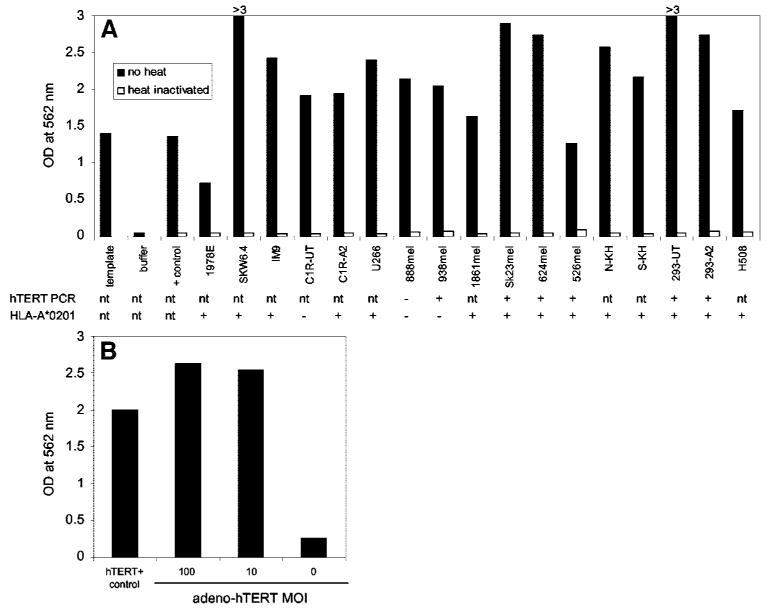
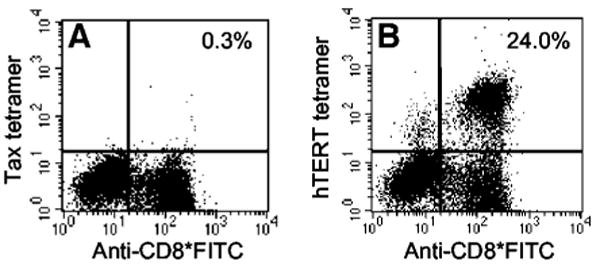
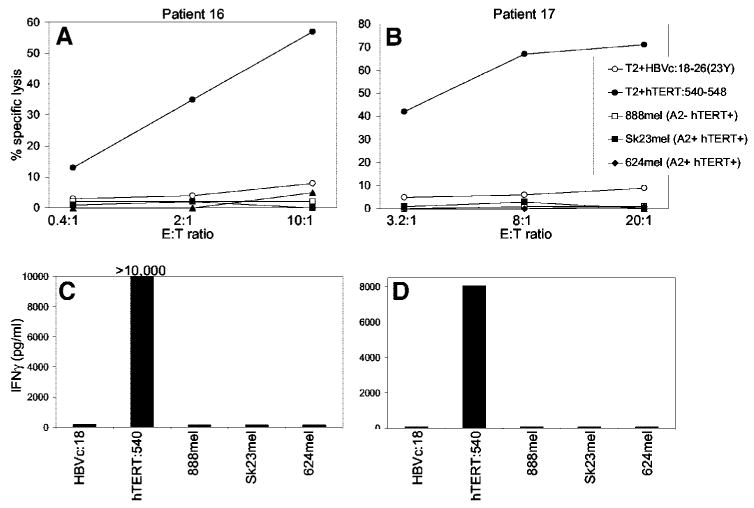
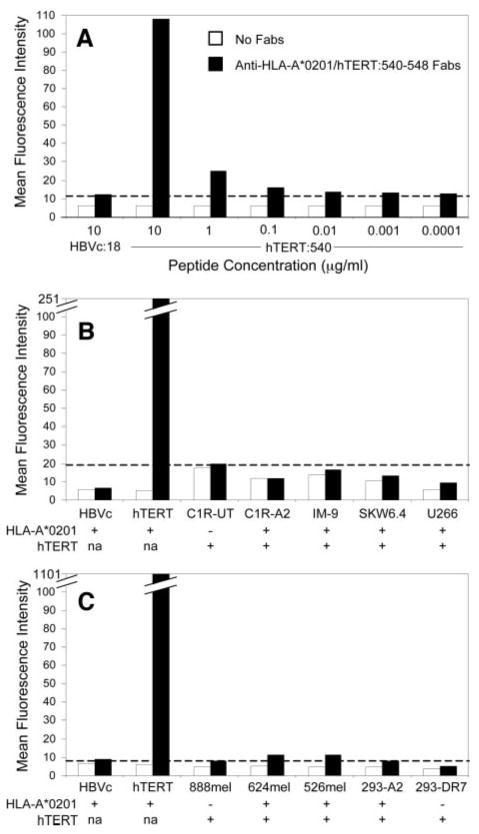
Results: In 7 patients, peripheral blood mononuclear cells collected after immunization recognized hTERT:540-548, whereas those collected before vaccination did not. However, none of these CTLs recognized tumors that endogenously expressed telomerase, and none of the patients had an objective clinical response. Several highly avid T-cell clones were generated that recognized T2 cells pulsed with <or=1 nm hTERT:540-548, but none of these recognized HLA-A*0201(+) hTERT(+) tumors or cells transduced with the human telomerase reverse transcriptase (hTERT) gene. Also, an antibody specific for hTERT:540-548/HLA-A*0201 complexes stained peptide-pulsed cells but not telomerase(+) tumors.
Conclusions: Our results are discordant with previous studies and those of a clinical trial that claimed peripheral blood mononuclear cells from patients vaccinated with peptide-pulsed dendritic cells lysed hTERT(+) tumors. However, our findings are consistent with a previous study that demonstrated that the hTERT:540-548 peptide is cleaved in the proteasome. These results suggest that hTERT:540-548 is not presented on the surfaces of tumor cells in the context of HLA-A*0201 and will not be useful for the immunotherapy of patients with cancer.
Figures
References
-
- Rosenberg SA. Progress in human tumour immunology and immunotherapy. Nature (Lond) 2001;411:380–4. - PubMed
-
- Coulie PG, Van den Eynde BJ, van der Bruggen P, et al. Antigens recognized by T-lymphocytes on human tumours. Biochem Soc Trans. 1997;25:544–8. - PubMed
-
- Vonderheide RH, Hahn WC, Schultze JL, et al. The telomerase catalytic subunit is a widely expressed tumor-associated antigen recognized by cytotoxic T lymphocytes. Immunity. 1999;10:673–9. - PubMed
-
- Greider CW. Telomere length regulation. Annu Rev Biochem. 1996;65:337–65. - PubMed
Publication types
MeSH terms
Substances
Grants and funding
LinkOut - more resources
Full Text Sources
Other Literature Sources
Research Materials