


Attenuation of the bacterial load in blood by pretreatment with granulocyte-colony-stimulating factor protects rats from fatal outcome and brain damage during Streptococcus pneumoniae meningitis
- PMID: 15271925
- PMCID: PMC470620
- DOI: 10.1128/IAI.72.8.4647-4653.2004
Attenuation of the bacterial load in blood by pretreatment with granulocyte-colony-stimulating factor protects rats from fatal outcome and brain damage during Streptococcus pneumoniae meningitis
Abstract
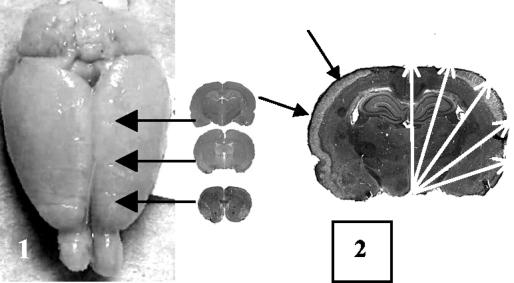
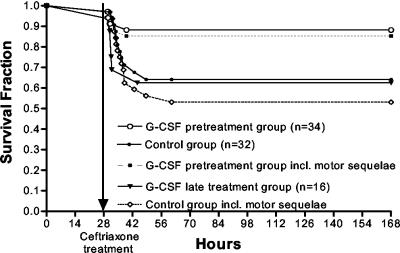
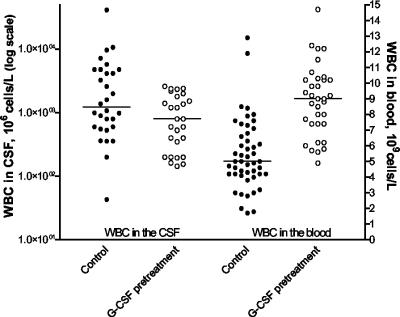
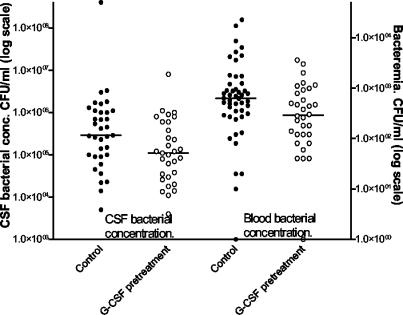
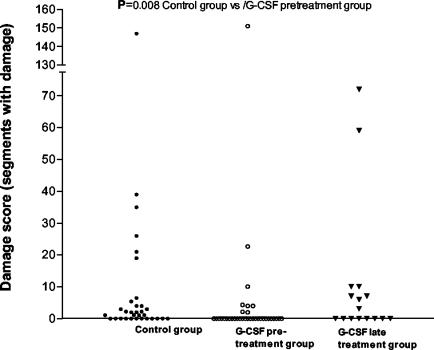
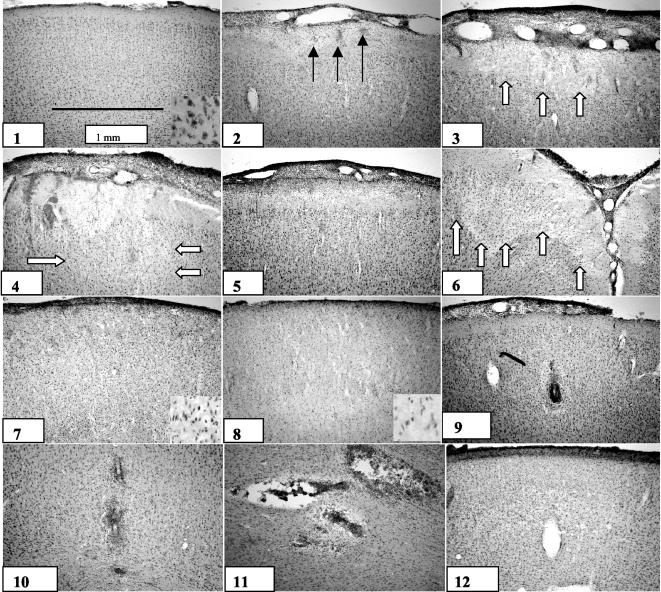
A model of pneumococcal meningitis in young adult rats receiving antibiotics once the infection was established was developed. The intent was to mimic clinical and histopathological features of pneumococcal meningitis in humans. The primary aim of the present study was to evaluate whether medical boosting of the peripheral neutrophil count affected the outcome of the meningitis. The risk of terminal illness over the first 7 days after infection was significantly reduced for rats who had elevated peripheral white blood cell counts after receiving granulocyte-colony-stimulating factor (G-CSF) prior to the infection compared to that for untreated rats (P = 0.039 by the log rank test). The improved outcome was associated with reduced signs of cerebral cortical damage (P = 0.008). Furthermore, the beneficial effects of G-CSF were associated with reduced bacterial loads in the cerebrospinal fluid (median, 1.1 x 10(5) versus 2.9 x 10(5) CFU/ml; P = 0.023) and in blood (median, 2.9 x 10(2) versus 6.3 x 10(2) CFU/ml; P = 0.024), as well as attenuated pleocytosis (median, 800 x 10(6) versus 1,231 x 10(6) cells/liter; P = 0.025), 24 h after the infection. Conversely, initiation of G-CSF therapy 28 h postinfection did not alter the clinical or histological outcome relative to that for non-G-CSF-treated rats. The magnitude of bacteremia and pretreatment with G-CSF were found to be prognostic factors for both outcome and brain damage. In summary, elevated neutrophil levels prior to the development of meningitis result in reduced risks of death and brain damage. This beneficial effect is most likely achieved through improved control of the systemic disease.
Figures
References
-
- Attalah, H. L., E. Azoulay, K. Yang, C. Lasclos, H. Jouault, C. J. Soussy, T. Guillot, L. Brochard, C. Brun-Buisson, A. Harf, and C. Delclaux. 2002. Granulocyte colony-stimulating factor enhances host defenses against bacterial pneumonia following peritonitis in nonneutropenic rats. Crit. Care Med. 30:2107-2114. - PubMed
-
- Bogdanski, R., M. Blobner, I. Becker, F. Hanel, H. Fink, and E. Kochs. 2000. Cerebral histopathology following portal venous infusion of bacteria in a chronic porcine model. Anesthesiology 93:793-804. - PubMed
-
- Cairns, H., and D. Russel. 1946. Cerebral arteritis and phlebitis in pneumococcal meningitis. J. Pathol. Bacteriol. 58:649-665. - PubMed
-
- Dallaire, F., N. Ouellet, M. Simard, Y. Bergeron, and M. G. Bergeron. 2001. Efficacy of recombinant human granulocyte colony-stimulating factor in a murine model of pneumococcal pneumonia: effects of lung inflammation and timing of treatment. J. Infect. Dis. 183:70-77. - PubMed
-
- de Gans, J., and D. van de Beek. 2002. Dexamethasone in adults with bacterial meningitis. N. Engl. J. Med. 347:1549-1556. - PubMed
Publication types
MeSH terms
Substances
LinkOut - more resources
Full Text Sources
