Topographical localisation of cagA positive and cagA negative Helicobacter pylori strains in the gastric mucosa; an in situ hybridisation study
- PMID: 15280402
- PMCID: PMC1770390
- DOI: 10.1136/jcp.2004.017087
Topographical localisation of cagA positive and cagA negative Helicobacter pylori strains in the gastric mucosa; an in situ hybridisation study
Abstract
Background: The cagA gene is a marker for the presence of the cag pathogenicity island, and the presence of cagA positive strains of Helicobacter pylori can identify individuals with a higher risk of developing gastrointestinal diseases.
Aims: To study the interaction between H. pylori cagA(+) and cagA(-) strains and the gastric mucosa.
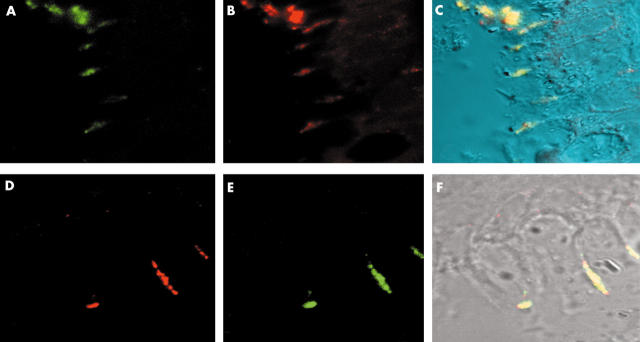
Methods: Patients with H. pylori associated gastritis and peptic ulcers were studied. Biopsies were obtained from the antrum, corpus, fundus, and incisura for H pylori culture, and for in situ hybridisation studies. From each biopsy, multiple single H. pylori colonies were isolated and propagated for DNA isolation, and cagA was detected by the polymerase chain reaction (PCR). For in situ detection of H. pylori an oligonucleotide specific for an H. pylori common antigen and an oligonucleotide specific for cagA were used as probes. Biotinylated probes were incubated with biopsy sections, developed with streptavidin-horseradish peroxidase, and amplified with the tyramide system.
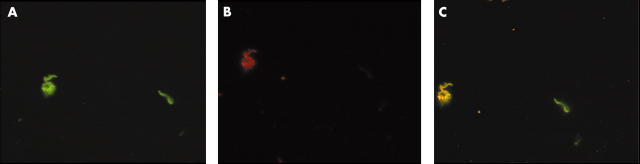
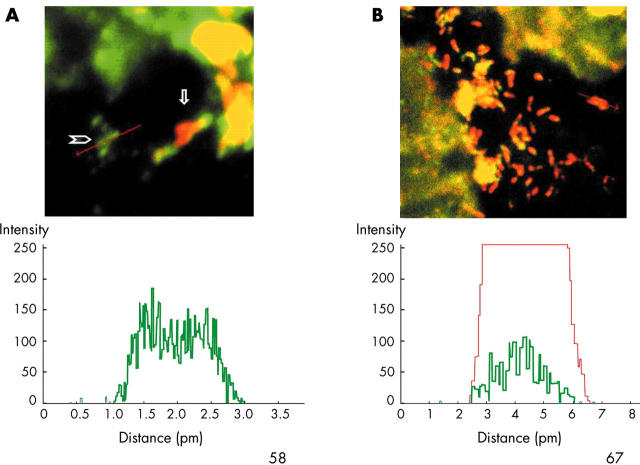
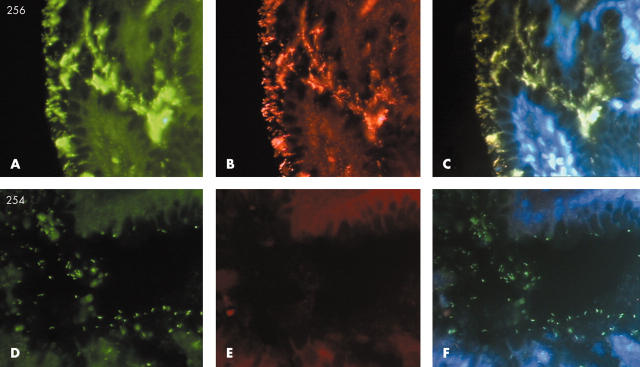
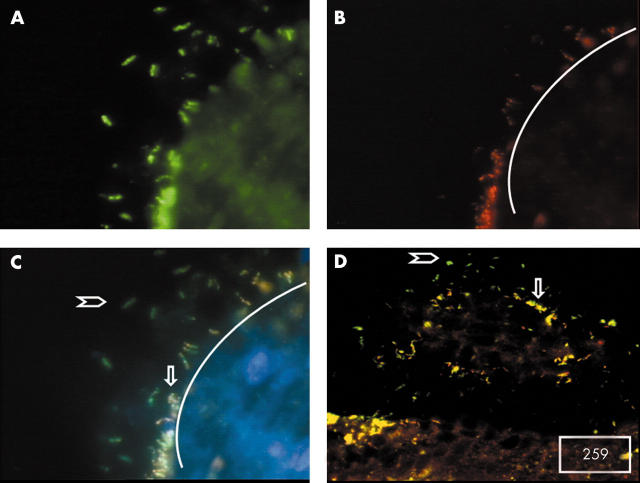
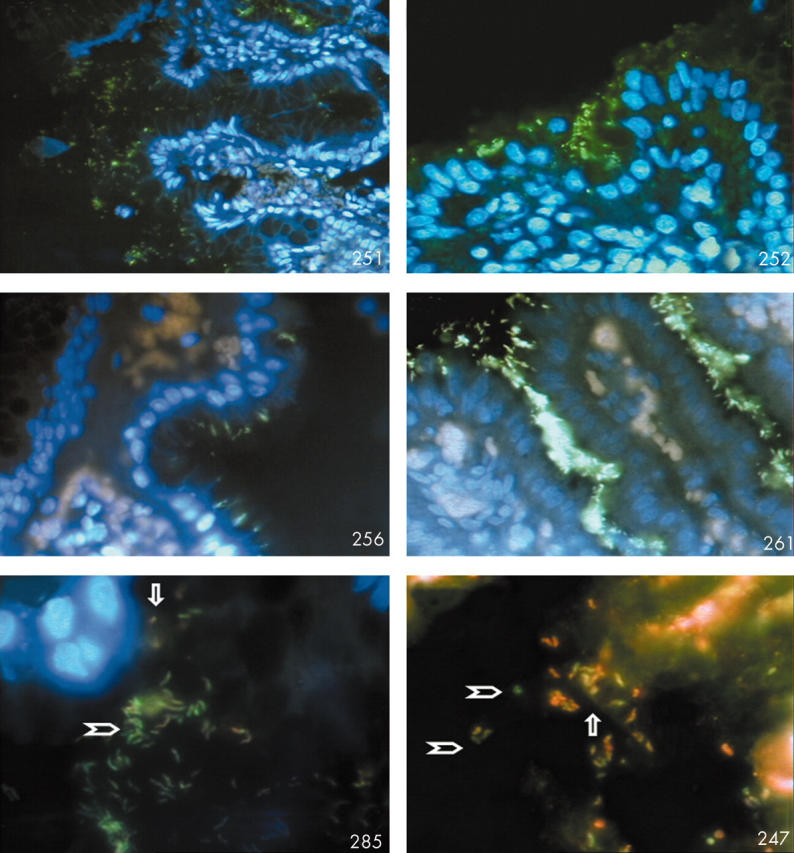
Results: PCR results for cagA in isolated colonies confirmed the in situ hydridisation studies. In situ hybridisation identified cagA(+) bacteria in patients with cagA(+) isolates; cagA(-) bacteria in patients with cagA(-) isolates, and cagA(+) and cagA (-) bacteria in patients with both cagA(+) and cagA(-) isolates. CagA(-) bacteria usually colonised the mucous gel or the apical epithelial surface, whereas cagA(+) bacteria colonised the immediate vicinity of epithelial cells or the intercellular spaces.
Conclusions: These results document a different in vivo interaction between H. pylori cagA(+) or cagA(-) strains and the gastric mucosa.
Figures
References
-
- Peek RM, Blaser MJ. Helicobacter pylori and gastrointestinal tract adenocarcinoma. Nat Rev Cancer 2002;2:28–37. - PubMed
-
- Atherton JC, Peek RM, Tham KT, et al. Clinical and pathologic importance of heterogeneity in vacA, the vacuolating cytotoxin gene of Helicobacter pylori. Gastroenterology 1997;112:92–9. - PubMed
-
- Ching CK, Wong BCY, Kwok E, et al. Prevalence of CagA-bearing Helicobacter pylori strains detected by the anti-CagA assay in patients with peptic ulcer disease and in controls. Am J Gastroenterol 1996;91:949–53. - PubMed
-
- Akopiants NS, Clifton SW, Kersulyte D, et al. Analyses of the cag pathogenicity island of Helicobacter pylori. Mol Microbiol 1998;28:37–53. - PubMed
Publication types
MeSH terms
Substances
LinkOut - more resources
Full Text Sources
Medical