


Direct multiplex assay of lysosomal enzymes in dried blood spots for newborn screening
- PMID: 15292070
- PMCID: PMC3428798
- DOI: 10.1373/clinchem.2004.035907
Direct multiplex assay of lysosomal enzymes in dried blood spots for newborn screening
Abstract
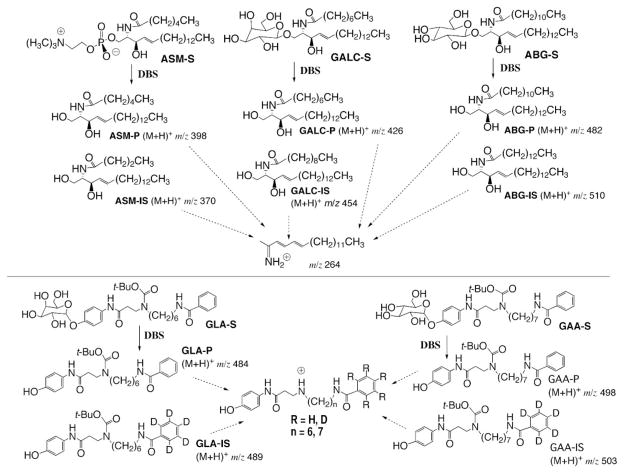
Background: Newborn screening for deficiency in the lysosomal enzymes that cause Fabry, Gaucher, Krabbe, Niemann-Pick A/B, and Pompe diseases is warranted because treatment for these syndromes is now available or anticipated in the near feature. We describe a multiplex screening method for all five lysosomal enzymes that uses newborn-screening cards containing dried blood spots as the enzyme source.
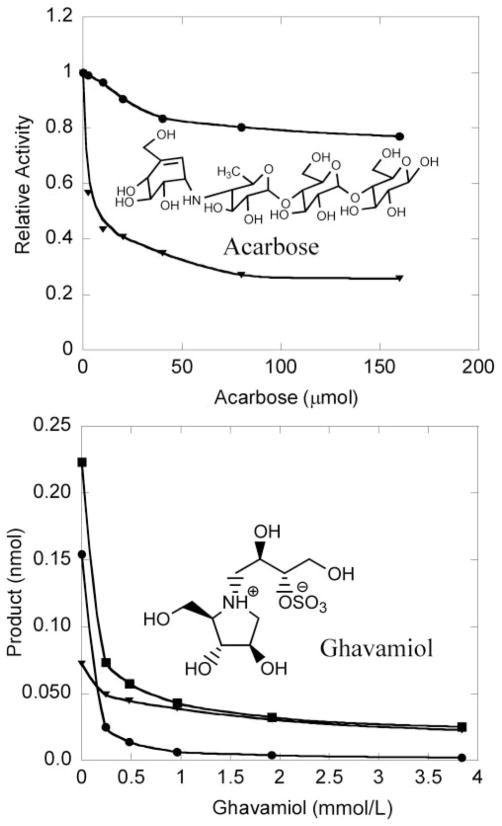
Methods: We used a cassette of substrates and internal standards to directly quantify the enzymatic activities, and tandem mass spectrometry for enzymatic product detection. Rehydrated dried blood spots were incubated with the enzyme substrates. We used liquid-liquid extraction followed by solid-phase extraction with silica gel to remove buffer components. Acarbose served as inhibitor of an interfering acid alpha-glucosidase present in neutrophils, which allowed the lysosomal enzyme implicated in Pompe disease to be selectively analyzed.
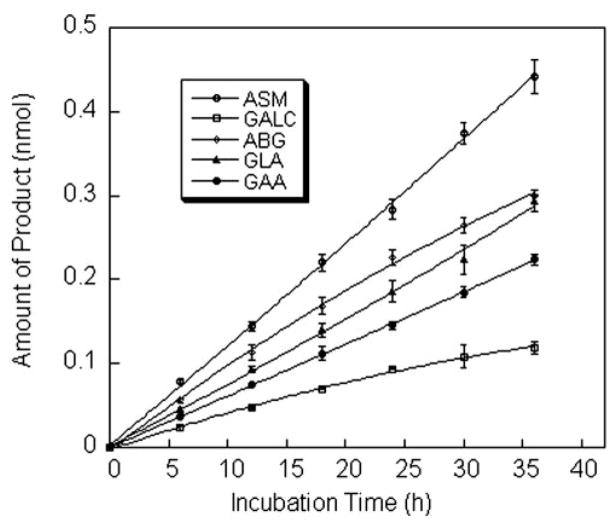
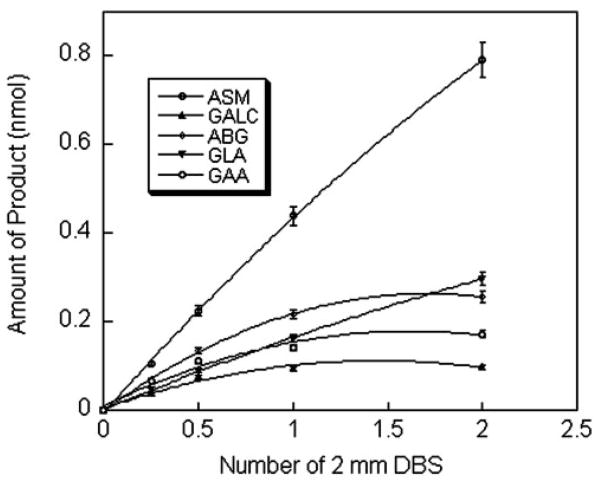
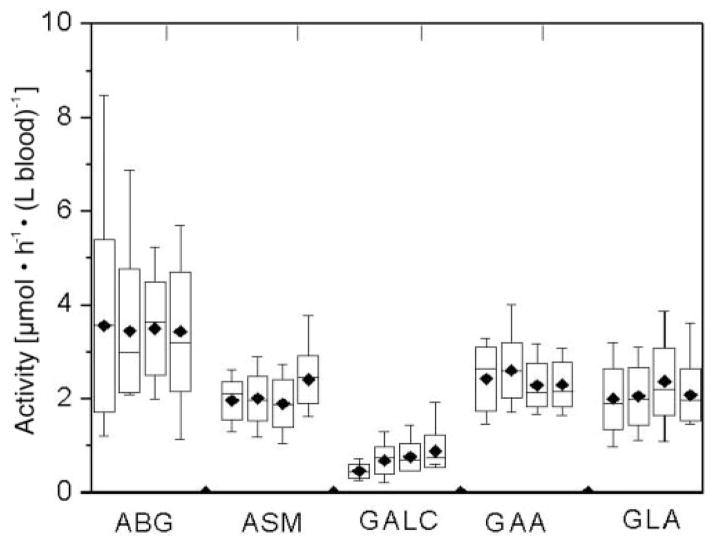
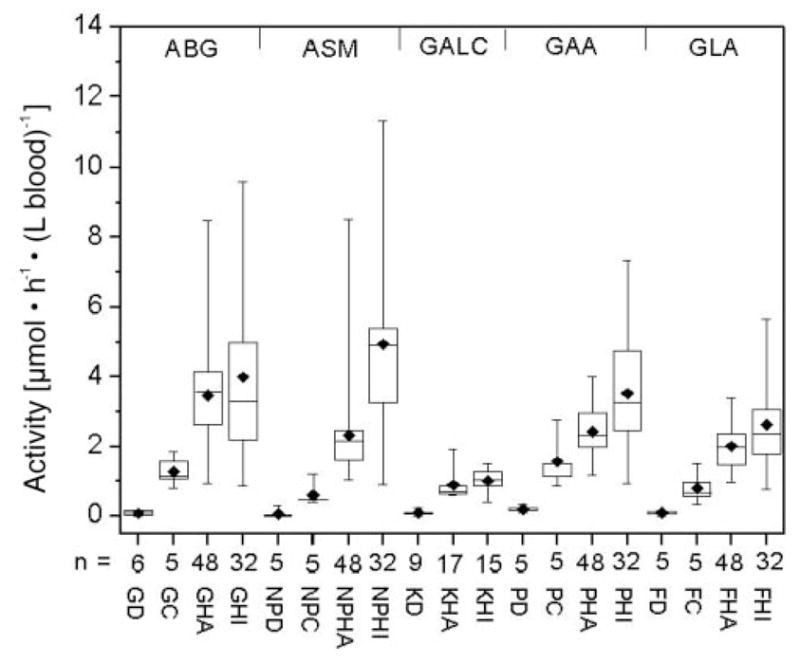
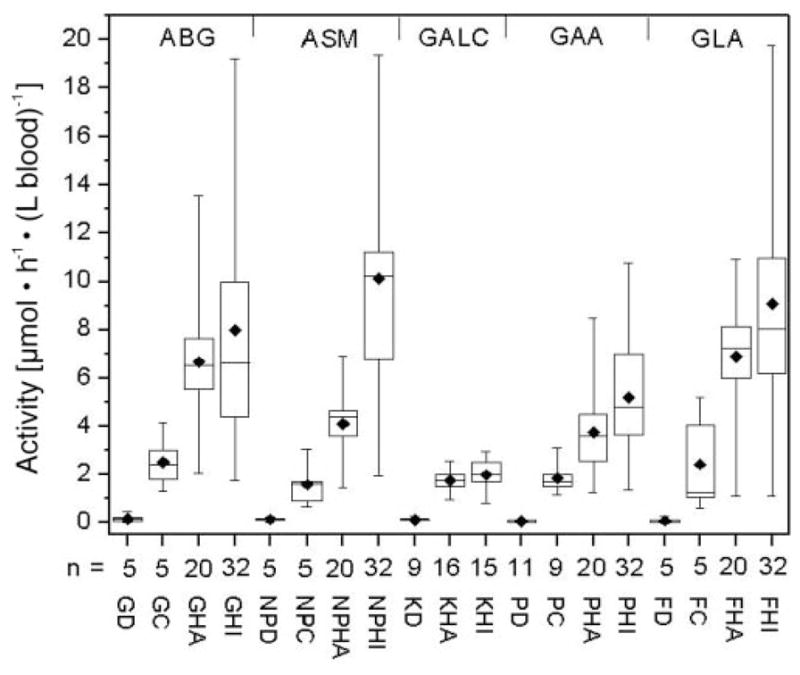
Results: We analyzed dried blood spots from 5 patients with Gaucher, 5 with Niemann-Pick A/B, 11 with Pompe, 5 with Fabry, and 12 with Krabbe disease, and in all cases the enzyme activities were below the minimum activities measured in a collection of heterozygous carriers and healthy noncarrier individuals. The enzyme activities measured in 5-9 heterozygous carriers were approximately one-half those measured with 15-32 healthy individuals, but there was partial overlap of each condition between the data sets for carriers and healthy individuals.
Conclusion: For all five diseases, the affected individuals were detected. The assay can be readily automated, and the anticipated reagent and supply costs are well within the budget limits of newborn-screening centers.
Figures
Comment in
-
Mass spectrometry as a platform for the diagnosis of lysosomal disorders.Clin Chem. 2004 Oct;50(10):1723-4. doi: 10.1373/clinchem.2004.038133. Clin Chem. 2004. PMID: 15388654 No abstract available.
References
-
- Chace DH, Kalas TA, Naylor EW. Use of tandem mass spectrometry for multianalyte screening of dried blood specimens from newborns. Clin Chem. 2003;49:1797–817. - PubMed
-
- Wulfkuhle JD, Paweletz CP, Steeg PS, Petricoin EF, Liotta L. Proteomic approaches to the diagnosis, treatment, and monitoring of cancer. Adv Exp Med Biol. 2003;532:59–68. - PubMed
-
- Jurinke C, van den Boom D, Cantor CR, Koster H. The use of MassARRAY technology for high throughput genotyping. Adv Biochem Eng Biotechnol. 2002;77:57–74. - PubMed
-
- Gerber SA, Scott CR, Turecek F, Gelb MH. Direct profiling of multiple enzyme activities in human cell lysates by affinity chromatography/electrospray ionization mass spectrometry: application to clinical enzymology. Anal Chem. 2001;73:1651–7. - PubMed
-
- Schulze A, Lindner M, Kohlmuller D, Olgemoller K, Mayatepek E, Hoffmann GF. Expanded newborn screening for inborn errors of metabolism by electrospray ionization-tandem mass spectrometry: results, outcome, and implications. Pediatrics. 2003;111:1399–406. - PubMed
Publication types
MeSH terms
Substances
Grants and funding
LinkOut - more resources
Full Text Sources
Other Literature Sources
Medical
