Molecular epidemiology of hospital-associated and community-acquired Clostridium difficile infection in a Swedish county
- PMID: 15297509
- PMCID: PMC497655
- DOI: 10.1128/JCM.42.8.3635-3643.2004
Molecular epidemiology of hospital-associated and community-acquired Clostridium difficile infection in a Swedish county
Abstract
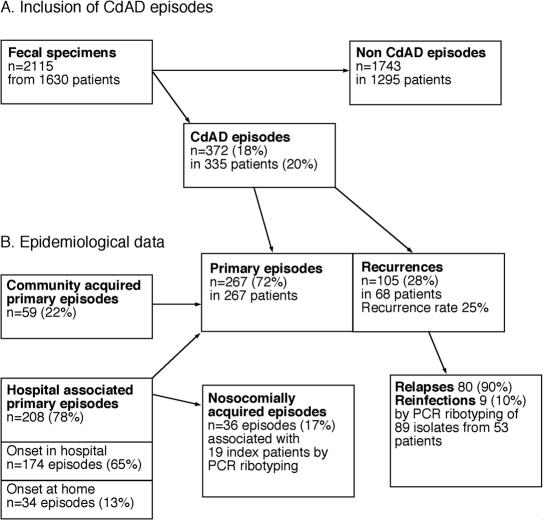
All episodes of Clostridium difficile associated diarrhea (CDAD) diagnosed in a defined population of 274,000 including one tertiary and two primary hospitals and their catchment areas were studied during 12 months. The annual CDAD incidence in the county was 97 primary episodes per 100,000, and 78% of all episodes were classified as hospital associated with a mean incidence of 5.3 (range, 1.4 to 6.5) primary episodes per 1,000 admissions. The incidence among hospitalized individuals was 1,300-fold higher than that in the community (33,700 versus 25 primary episodes per 100,000 persons per year), reflecting a 37-fold difference in antibiotic consumption (477 versus 13 defined daily doses [DDD]/1,000 persons/day) and other risk factors. Three tertiary hospital wards with the highest incidence (13 to 36 per 1,000) had CDAD patients of high age (median age of 80 years versus 70 years for other wards, P < 0.001), long hospital stay (up to 25 days versus 4 days), or a high antibiotic consumption rate (up to 2,427 versus 421 DDD/1,000 bed days). PCR ribotyping of C. difficile isolates available from 330 of 372 CDAD episodes indicated nosocomial acquisition of the strain in 17 to 27% of hospital-associated cases, depending on the time interval between index and secondary cases allowed (2 months or up to 12 months), and only 10% of recurrences were due to a new strain of C. difficile (apparent reinfection). In other words, most primary and recurring episodes were apparently caused by the patient's endogenous strain rather than by one of hospital origin. Typing also indicated that a majority of C. difficile strains belonged to international serotypes, and the distribution of types was similar within and outside hospitals and in primary and relapsing CDAD. However, type SE17 was an exception, comprising 22% of hospital isolates compared to 6% of community isolates (P = 0.008) and causing many minor clusters and a silent nosocomial outbreak including 36 to 44% of the CDAD episodes in the three high-incidence wards.
Figures
References
-
- Alonso, R., S. Gros, T. Pelaez, D. Garcia-de-Viedma, M. Rodriguez-Creixems, and E. Bouza. 2001. Molecular analysis of relapse vs re-infection in HIV-positive patients suffering from recurrent Clostridium difficile associated diarrhoea. J. Hosp. Infect. 48:86-92. - PubMed
-
- Anand, A., and A. E. Glatt. 1993. Clostridium difficile infection associated with antineoplastic chemotherapy: a review. Clin. Infect. Dis. 17:109-113. - PubMed
-
- Bartlett, J. G. 2002. Clinical practice. Antibiotic-associated diarrhea. N. Engl. J. Med. 346:334-339. - PubMed
MeSH terms
LinkOut - more resources
Full Text Sources
Other Literature Sources
Medical
Molecular Biology Databases
Research Materials