


Identification of cis sequences required for lytic DNA replication and packaging of murine gammaherpesvirus 68
- PMID: 15308708
- PMCID: PMC506910
- DOI: 10.1128/JVI.78.17.9123-9131.2004
Identification of cis sequences required for lytic DNA replication and packaging of murine gammaherpesvirus 68
Abstract
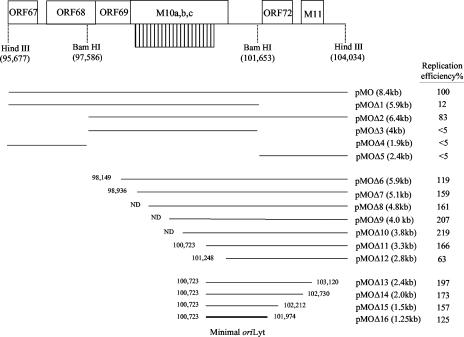
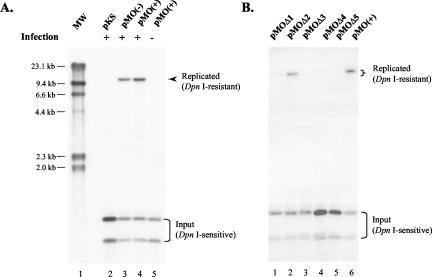
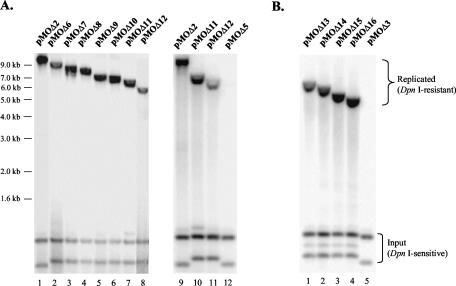
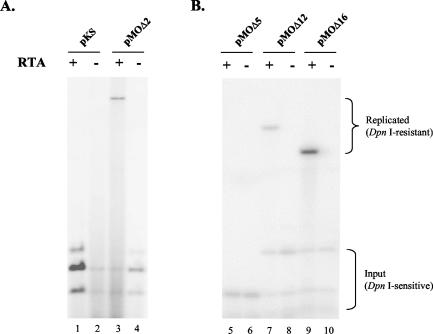
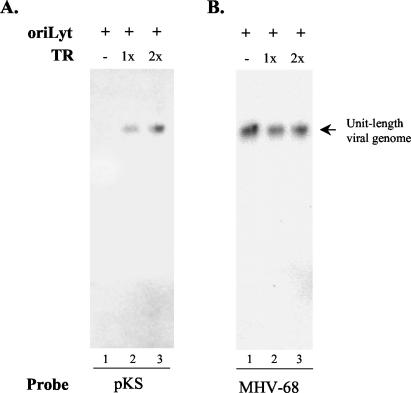
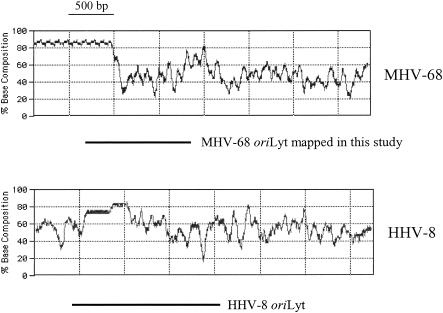
Human gammaherpesviruses are associated with lymphomas and other malignancies. Murine gammaherpesvirus 68 (MHV-68) infection of mice has emerged as a model for understanding gammaherpesvirus pathogenesis in vivo. In contrast to human gammaherpesviruses, MHV-68 replicates in permissive cell lines in a robust manner, presenting an efficient model to study the basic mechanisms for DNA replication and recombination processes. In addition, MHV-68 also infects a broad range of cells of different tissue types and from different host species, and the viral genome persists as an episome in infected cells. These features make MHV-68 an attractive system on which to build gene delivery vectors. We have therefore undertaken a study to identify the cis elements required for MHV-68 genome replication and packaging. Here we report that an 8.4-kb MHV-68 genomic fragment between ORF66 and ORF73 conferred on the plasmid the ability to replicate; replication required the presence of either de novo viral infection or viral reactivation from latency. We further mapped the origin of lytic replication (oriLyt) to a 1.25-kb region. Moreover, we demonstrated that the terminal repeat of the viral genome is sufficient for packaging of the replicated oriLyt plasmid into mature viral particles. Functional identification of the MHV-68 oriLyt and packaging signal has laid a foundation for investigating the mechanisms controlling gammaherpesvirus DNA replication during the viral lytic phase and will also serve as a base on which to design gene delivery vectors.
Figures
References
-
- Adler, H., M. Messerle, and U. H. Koszinowski. 2003. Cloning of herpesviral genomes as bacterial artificial chromosomes. Rev. Med. Virol. 13:111-121. - PubMed
Publication types
MeSH terms
Substances
Grants and funding
LinkOut - more resources
Full Text Sources
