


Patterns of geohelminth infection, impact of albendazole treatment and re-infection after treatment in schoolchildren from rural KwaZulu-Natal/South-Africa
- PMID: 15310401
- PMCID: PMC514548
- DOI: 10.1186/1471-2334-4-27
Patterns of geohelminth infection, impact of albendazole treatment and re-infection after treatment in schoolchildren from rural KwaZulu-Natal/South-Africa
Abstract
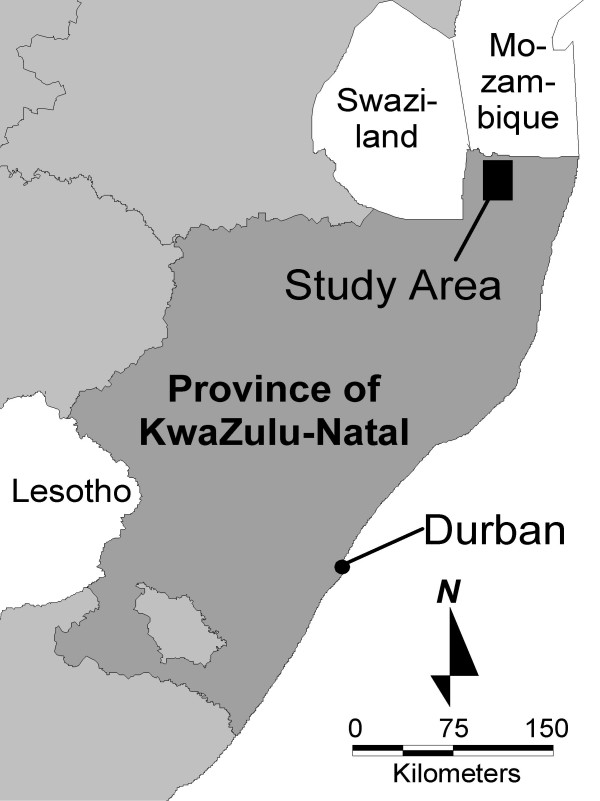
Background: Geohelminth infection is a major health problem of children from rural areas of developing countries. In an attempt to reduce this burden, the Department of Health of the province of KwaZulu-Natal (KZN) established in 1998 a programme for helminth control that aimed at regularly treating primary school children for schistosomiasis and intestinal helminths. This article describes the baseline situation and the effect of treatment on geohelminth infection in a rural part of the province.
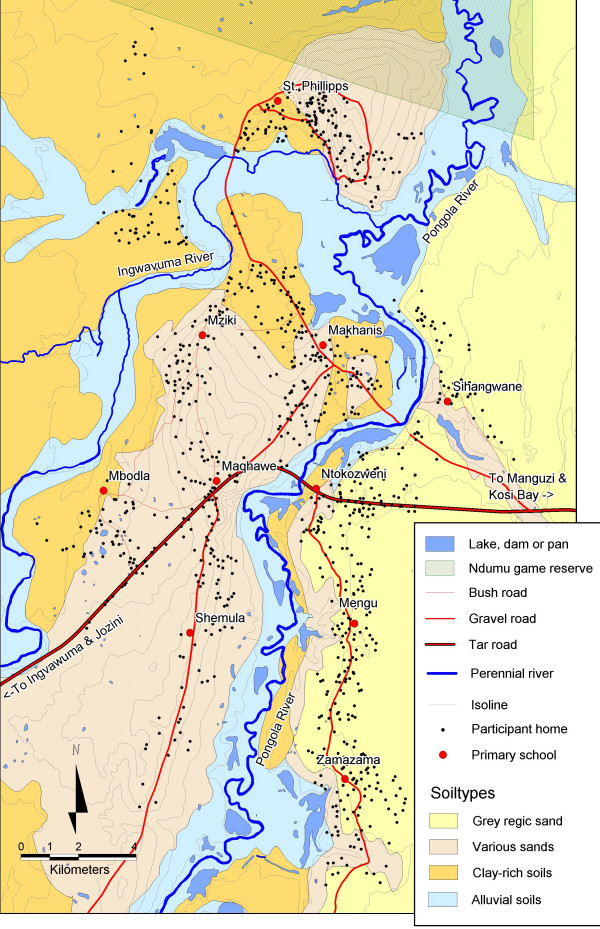
Methods: Grade 3 schoolchildren from Maputaland in northern KZN were examined for infections with hookworm, Ascaris lumbricoides, and Trichuris trichiura, treated twice with 400 mg albendazole and re-examined several times over one year after the first treatment in order to assess the impact of treatment and patterns of infection and re-infection.
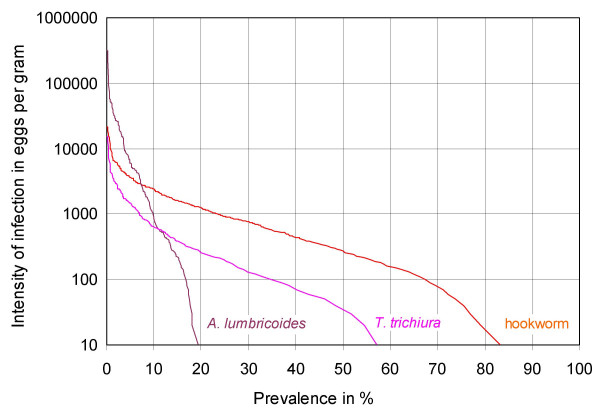
Results: The hookworm prevalence in the study population (83.2%) was considerably higher than in other parts of the province whereas T. trichiura and especially A. lumbricoides prevalences (57.2 and 19.4%, respectively) were much lower than elsewhere on the KZN coastal plain. Single dose treatment with albendazole was very effective against hookworm and A. lumbricoides with cure rates (CR) of 78.8 and 96.4% and egg reduction rates (ERR) of 93.2 and 97.7%, respectively. It was exceptionally ineffective against T. trichiura (CR = 12.7%, ERR = 24.8%). Re-infection with hookworm and A. lumbricoides over 29 weeks after treatment was considerable but still well below pre-treatment levels.
Conclusion: High geohelminth prevalences and re-infection rates in the study population confirm the need for regular treatment of primary school children in the area. The low effectiveness of single course albendazole treatment against T. trichiura infection however demands consideration of alternative treatment approaches.
Figures
References
-
- Stephenson LS. Impact of helminth infections on human nutrition. London: Taylor & Francis; 1987.
-
- Nokes C, Grantham McGregor SM, Sawyer AW, Cooper ES, Robinson BA, Bundy DAP. Moderate to heavy infections of Trichuris trichiura affect cognitive function in Jamaican school children. Parasitology. 1992;104:539–547. - PubMed
-
- Kvalsvig JD, Cooppan RM, Connolly KJ. The effects of parasite infections on cognitive processes in children. Ann Trop Med Parasitol. 1991;85:551–568. - PubMed
Publication types
MeSH terms
Substances
LinkOut - more resources
Full Text Sources
