


Dynamic targeting of the replication machinery to sites of DNA damage
- PMID: 15314062
- PMCID: PMC2172213
- DOI: 10.1083/jcb.200312048
Dynamic targeting of the replication machinery to sites of DNA damage
Abstract
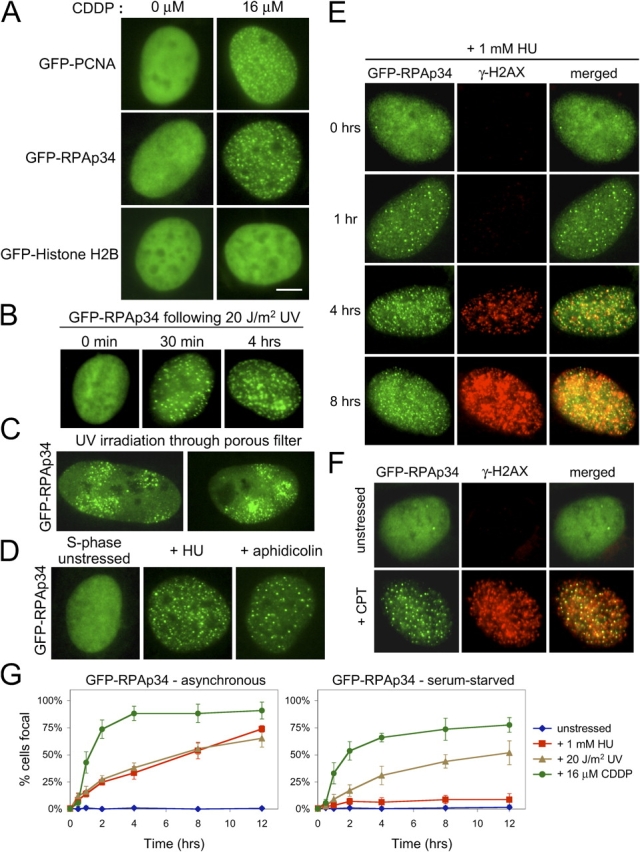
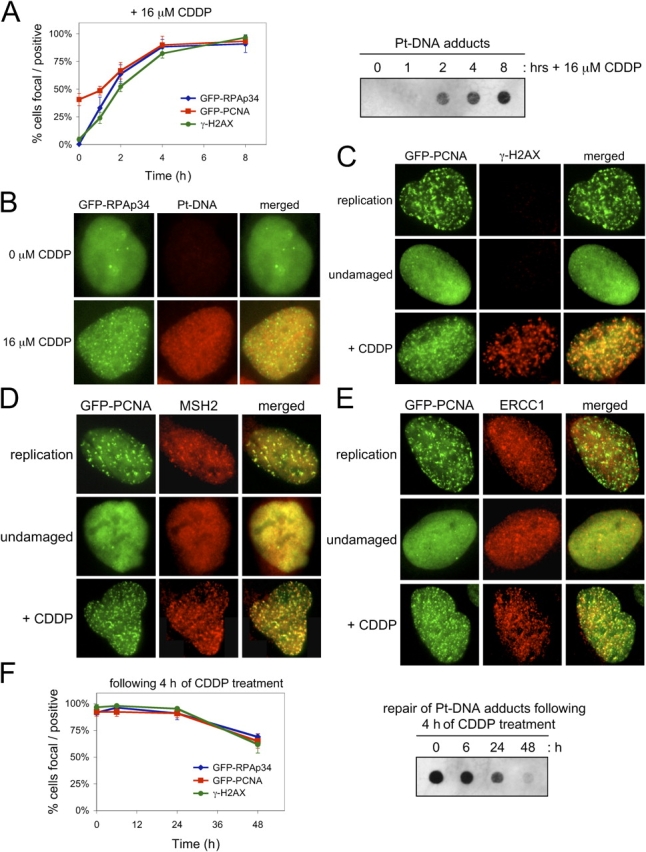
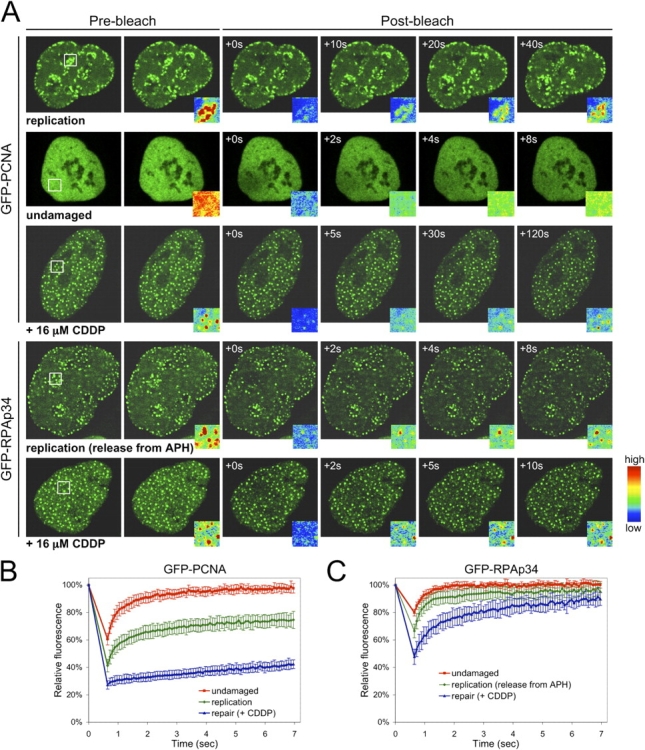
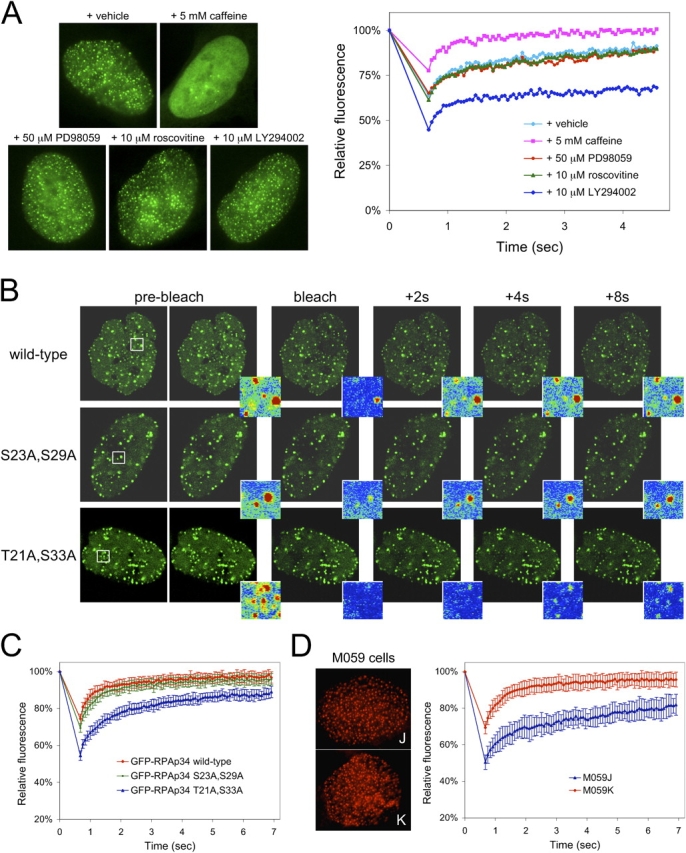
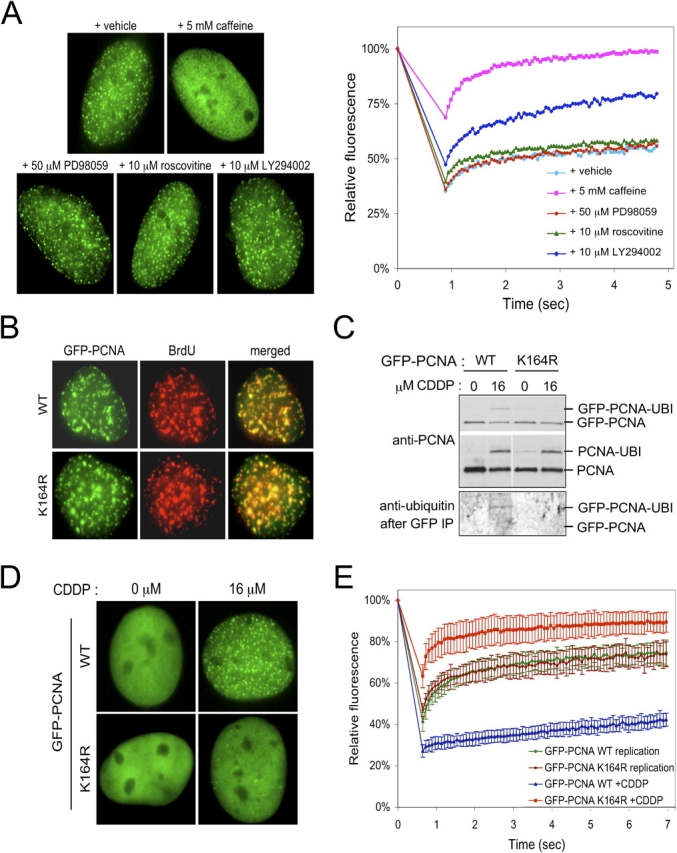
Components of the DNA replication machinery localize into discrete subnuclear foci after DNA damage, where they play requisite functions in repair processes. Here, we find that the replication factors proliferating cell nuclear antigen (PCNA) and RPAp34 dynamically exchange at these repair foci with discrete kinetics, and this behavior is distinct from kinetics during DNA replication. Posttranslational modification is hypothesized to target specific proteins for repair, and we find that accumulation and stability of PCNA at sites of damage requires monoubiquitination. Contrary to the popular notion that phosphorylation on the NH2 terminus of RPAp34 directs the protein for repair, we demonstrate that phosphorylation by DNA-dependent protein kinase enhances RPAp34 turnover at repair foci. Together, these findings support a dynamic exchange model in which multiple repair factors regulated by specific modifications have access to and rapidly turn over at sites of DNA damage.
Figures
References
-
- Barr, S.M., C.G. Leung, E.E. Chang, and K.A. Cimprich. 2003. ATR kinase activity regulates the intranuclear translocation of ATR and RPA following ionizing radiation. Curr. Biol. 13:1047–1051. - PubMed
-
- Garcia-Higuera, I., T. Taniguchi, S. Ganesan, M.S. Meyn, C. Timmers, J. Hejna, M. Grompe, and A.D. D'Andrea. 2001. Interaction of the Fanconi anemia proteins and BRCA1 in a common pathway. Mol. Cell. 7:249–262. - PubMed
-
- He, Z., L.A. Henricksen, M.S. Wold, and C.J. Ingles. 1995. RPA involvement in the damage-recognition and incision steps of nucleotide excision repair. Nature. 374:566–569. - PubMed
Publication types
MeSH terms
Substances
Grants and funding
LinkOut - more resources
Full Text Sources
Miscellaneous
