. 2004 Sep;16(9):2481-98.
doi: 10.1105/tpc.104.022699. Epub 2004 Aug 19.

Isolation and functional analysis of Arabidopsis stress-inducible NAC transcription factors that bind to a drought-responsive cis-element in the early responsive to dehydration stress 1 promoter

Affiliations

Isolation and functional analysis of Arabidopsis stress-inducible NAC transcription factors that bind to a drought-responsive cis-element in the early responsive to dehydration stress 1 promoter

Lam-Son Phan Tran et al. Plant Cell. 2004 Sep.

Abstract

The MYC-like sequence CATGTG plays an important role in the dehydration-inducible expression of the Arabidopsis thaliana EARLY RESPONSIVE TO DEHYDRATION STRESS 1 (ERD1) gene, which encodes a ClpA (ATP binding subunit of the caseinolytic ATP-dependent protease) homologous protein. Using the yeast one-hybrid system, we isolated three cDNA clones encoding proteins that bind to the 63-bp promoter region of erd1, which contains the CATGTG motif. These three cDNA clones encode proteins named ANAC019, ANAC055, and ANAC072, which belong to the NAC transcription factor family. The NAC proteins bound specifically to the CATGTG motif both in vitro and in vivo and activated the transcription of a beta-glucuronidase (GUS) reporter gene driven by the 63-bp region containing the CATGTG motif in Arabidopsis T87 protoplasts. The expression of ANAC019, ANAC055, and ANAC072 was induced by drought, high salinity, and abscisic acid. A histochemical assay using P(NAC)-GUS fusion constructs showed that expression of the GUS reporter gene was localized mainly to the leaves of transgenic Arabidopsis plants. Using the yeast one-hybrid system, we determined the complete NAC recognition sequence, containing CATGT and harboring CACG as the core DNA binding site. Microarray analysis of transgenic plants overexpressing either ANAC019, ANAC055, or ANAC072 revealed that several stress-inducible genes were upregulated in the transgenic plants, and the plants showed significantly increased drought tolerance. However, erd1 was not upregulated in the transgenic plants. Other interacting factors may be necessary for the induction of erd1 in Arabidopsis under stress conditions.


Figures
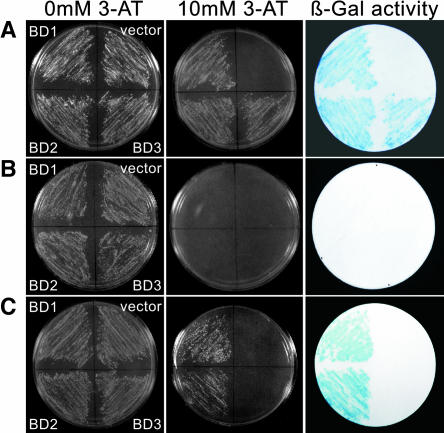
Figure 1.
Figure 1.
Isolation of cDNA Encoding CATGTG Motif Binding Proteins. (A) Forty-nine positive clones were isolated using the yeast one-hybrid system and classified into three groups by sequence analysis: BD1, BD2, and BD3. (B) Three pAD-GAL4 plasmid derivatives carrying cDNA clones encoding BD1, BD2, and BD3 were transformed into a yeast strain carrying the reporter genes under the control of four tandemly repeated 63-bp promoter fragments containing AAAAAA in place of CATGTG. The transformants were examined for growth in the presence of 3-AT and β-galactosidase (β-Gal) activity, demonstrating binding specificity of BD1, BD2, and BD3. (C) The cDNA fragments encoding BD1, BD2, and BD3 were cloned into the constitutively expressed YepGAP vector, and the resulting plasmids were introduced into a yeast strain carrying the reporter genes under the control of four tandemly repeated 63-bp promoter fragments containing the CATGTG motif. BD1 and BD2, but not BD3, were able to transactivate the expression of the HIS3 and lacZ reporter genes.
Figure 2.
Figure 2.
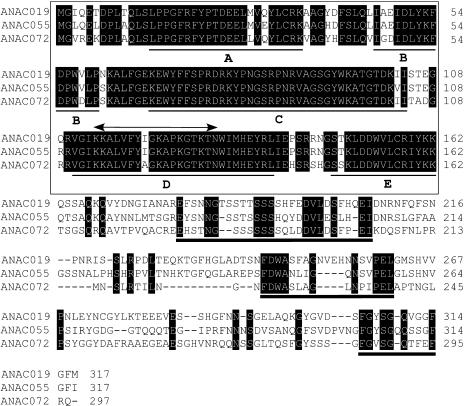
Comparison of the Amino Acid Sequences of ANAC019, ANAC055, and ANAC072. Identical amino acids are indicated by white letters on a black background. The highly conserved region found in NAC family members is boxed. The putative nuclear localization signal is shown by a double-headed arrow above the sequence. The consensus subdomains in the NAC binding domain are shown by thin underlines. The consensus regions in the C-terminal part are shown by thick underlines.
Figure 3.
Figure 3.
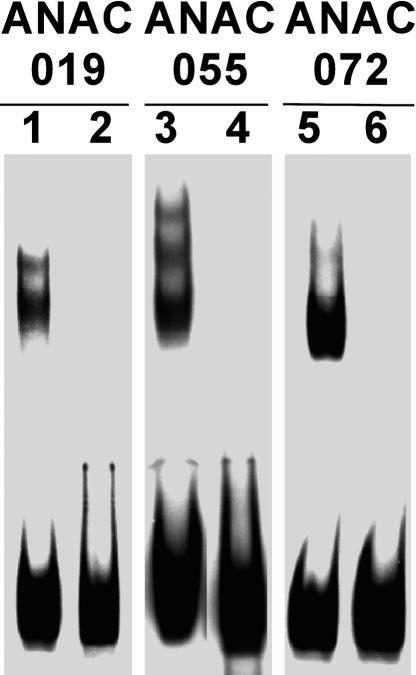
Purified NAC Proteins Bind Specifically to the CATGTG Motif. In vitro DNA binding reactions were performed with the wild-type 63-bp fragment containing the CATGTG motif (lanes 1, 3, and 5) and the base-substituted 63-bp fragment in which the CATGTG motif was replaced by AAAAAA (lanes 2, 4, and 6).
Figure 4.
Figure 4.
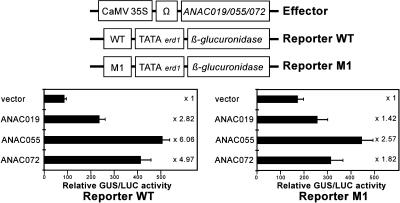
Transactivation Assay of ANAC019, ANAC055, and ANAC072 in T87 Protoplasts. cDNA fragments encoding ANAC019, ANAC055, and ANAC072 were cloned into plant expression vector pBI35SΩ and cotransformed into T87 protoplasts with the reporter gene plasmids (reporter WT or reporter M1). To normalize for transformation efficiency, the CaMV 35S-luciferase plasmid was also cotransferred in all cases. Bars indicate the standard errors of three replicates. Multiplication values refer to the ratio of expression relative to the value obtained with the pBI35SΩ vector.
Figure 5.
Figure 5.
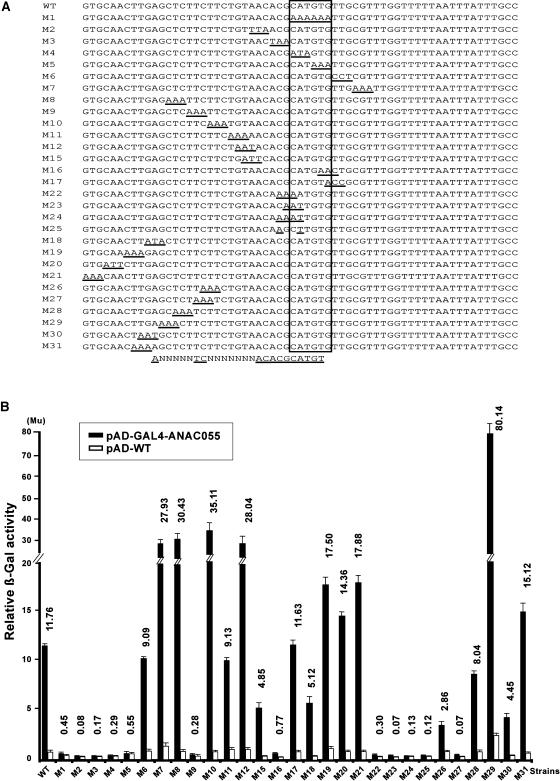
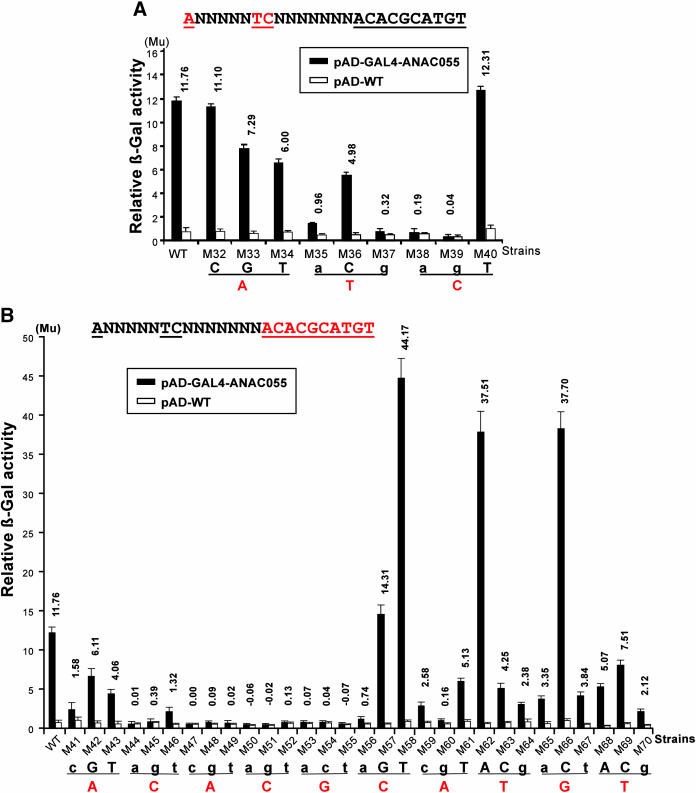
Localization of Complete NACRS Using GAL4AD-ANAC055 Fusion. (A) Base substitution analysis of the 63-bp promoter fragment. Twenty-nine constructs were made for localization of the complete NACRS in the 63-bp fragment. Each base substitution construct was initially fused to the lacZ gene and integrated into the YM4271 chromosome. Yeast recombinant strains were then transformed with pAD-GAL4-ANAC055 or pAD-WT plasmids. The position of the MYC-like sequence is boxed. Mutated nucleotides are underlined. (B) Results of liquid culture assays. The criterion of six units' difference, which is approximately half of the units' difference in the wild type, was used for analysis of the differences of β-galactosidase (β-Gal) activities given by pAD-GAL4-ANAC055 and pAD-WT in each mutated construct. Mu, Miller units.
Figure 6.
Figure 6.
Determination of the Core DNA Binding Motif Using GAL4AD-ANAC055 Fusion. Thirty-nine constructs were made to define the core motif of NACRS. Each base substitution construct was initially fused to the lacZ gene and integrated into the YM4271 chromosome. Yeast recombinant strains were then transformed with pAD-GAL4-ANAC055 or pAD-WT plasmids. β-Gal, β-galactosidase; Mu, Miller units. (A) Results of liquid culture assays of nine constructs designed to facilitate an investigation of the first three nucleotides (red letters). (B) Results of liquid culture assays of 30 constructs designed to facilitate an investigation of the next 10 nucleotides (red letters). The criterion of four units' difference, which is approximately one-third of the units' difference in the wild type, was used for analysis of the differences of β-galactosidase activities given by pAD-GAL4-ANAC055 and pAD-WT in each mutated construct. Nucleotide changes in the NACRS that had an adverse effect on the binding activity of ANAC055 protein are indicated by small letters.
Figure 7.
Figure 7.
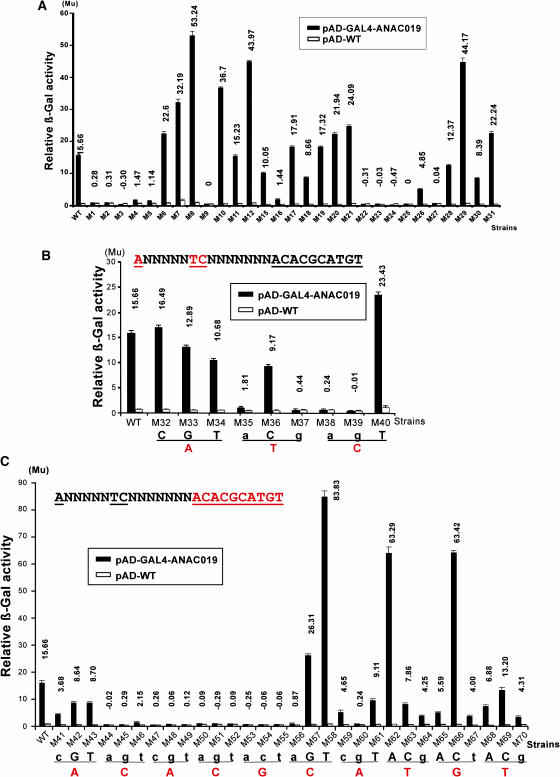
Localization of Complete NACRS and Core DNA Binding Motif Using GAL4AD-ANAC019 Fusion. (A) Localization of complete NACRS. Results of liquid culture assays of 29 constructs (Figure 5A) designed for localization of the complete NACRS in the 63-bp promoter fragment. The criterion of eight units' difference, which is approximately half of the units' difference in the wild type, was used for analysis of the differences of β-galactosidase (β-Gal) activities given by pAD-GAL4-ANAC019 and pAD-WT in each mutated construct. Mu, Miller units. (B) and (C) Localization of core DNA binding motif. Results of liquid culture assays of nine (B) and of 30 (C) constructs designed to facilitate an investigation of the first three and the next 10 nucleotides (red letters), respectively, to define the core motif of NACRS. The criterion of 5.5 units' difference, which is approximately one-third of the units' difference in the wild type, was used for analysis of the differences of β-galactosidase activities given by pAD-GAL4-ANAC019 and pAD-WT in each mutated construct. Nucleotide changes in the NACRS that had an adverse effect on the binding activity of ANAC019 protein are indicated by small letters.
Figure 8.
Figure 8.
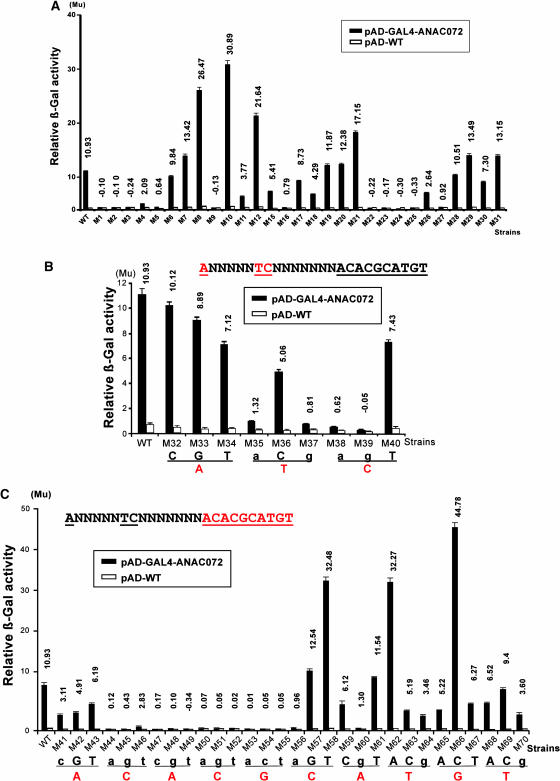
Localization of Complete NACRS and Core DNA Binding Motif Using GAL4AD-ANAC072 Fusion. (A) Localization of complete NACRS. Results of liquid culture assays of 29 constructs (Figure 5A) designed for localization of the complete NACRS in the 63-bp promoter fragment. The criterion of 5.5 units' difference, which is approximately half of the units' difference in the wild type, was used for analysis of the differences of β-galactosidase (β-Gal) activities given by pAD-GAL4-ANAC072 and pAD-WT in each mutated construct. Mu, Miller units. (B) and (C) Localization of core DNA binding motif. Results of liquid culture assays of nine (B) and of 30 (C) constructs designed to facilitate an investigation of the first three and the next 10 nucleotides (red letters), respectively, to define the core motif of NACRS. The criterion of 3.7 units' difference, which is approximately one-third of the units' difference in the wild type, was used for analysis of the differences of β-galactosidase activities given by pAD-GAL4-ANAC072 and pAD-WT in each mutated construct. Nucleotide changes in the NACRS that had an adverse effect on the binding activity of ANAC072 protein are indicated by small letters.
Figure 9.
Figure 9.
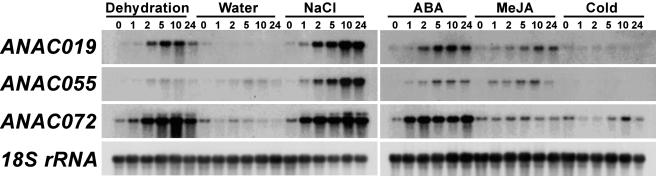
Expression of ANAC019, ANAC055, and ANAC072. Each lane was loaded with 5 μg of total RNA from 3-week-old Arabidopsis plants that had been dehydrated (Dehydration), transferred for hydroponic growth in distilled water (Water), transferred for hydroponic growth in 250 mM NaCl (NaCl), transferred for hydroponic growth in 100 μM ABA (ABA), transferred for hydroponic growth in 20 μM methyl jasmonate (MeJA), or transferred for hydroponic growth at 4°C (Cold). Numbers above each lane indicate the number of hours after the initiation of treatment before isolation of RNA. mRNA transcription was analyzed by RNA gel hybridization with specific probes from the 3′ flanking sequence of the NAC genes.
Figure 10.
Figure 10.
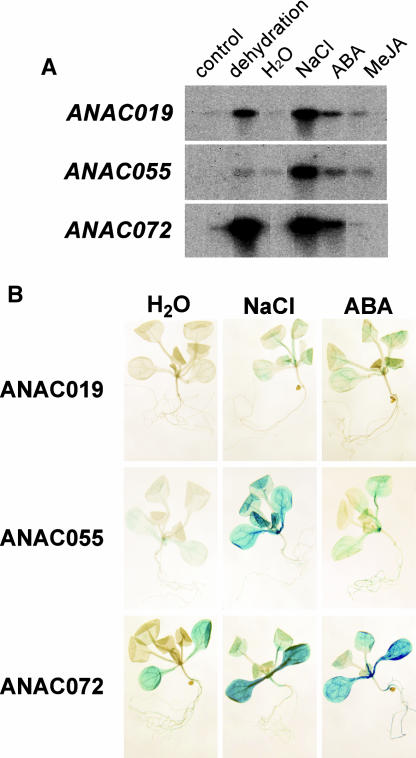
Expression of the GUS Reporter Gene under the Control of NAC Promoters in Transgenic Plants. (A) RNA gel blot analysis. Each lane was loaded with 10 μg of total RNA from 3-week-old transgenic Arabidopsis plants containing PANAC019-GUS (ANAC019), PANAC055-GUS (ANAC055), or PANAC072-GUS (ANAC072) fusions, which were either untreated controls (control), or dehydrated (dehydration), transferred for hydroponic growth in distilled water (H2O), transferred for hydroponic growth in 250 mM NaCl (NaCl), transferred for hydroponic growth in 100 μM ABA (ABA), or transferred for hydroponic growth in 20 μM methyl jasmonate (MeJA) for 10 h. (B) Histochemical assay. Two-week-old transgenic Arabidopsis plants containing either PANAC019-GUS (ANAC019), PANAC055-GUS (ANAC055), or PANAC072-GUS (ANAC072) fusions were treated with distilled water (H2O), 250 mM NaCl (NaCl), or 100 μM ABA (ABA) for 10 h before being subjected to histochemical analysis.
Figure 11.
Figure 11.
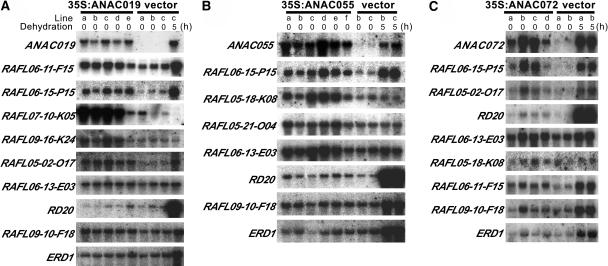
Confirmation of Microarray Data by RNA Gel Blot Analysis. Each lane was loaded with 10 μg of total RNA from 3-week-old transgenic Arabidopsis plants containing pBI35S:ANAC019Hyg (35S:ANAC019) (A), pBI35S:ANAC055Hyg (35S:ANAC055) (B), pBI35S:ANAC072Hyg (35S:ANAC072) (C), or pBI35SHyg (vector) as a control. Transgenic Arabidopsis plants were untreated or dehydrated as indicated before analysis.
Figure 12.
Figure 12.
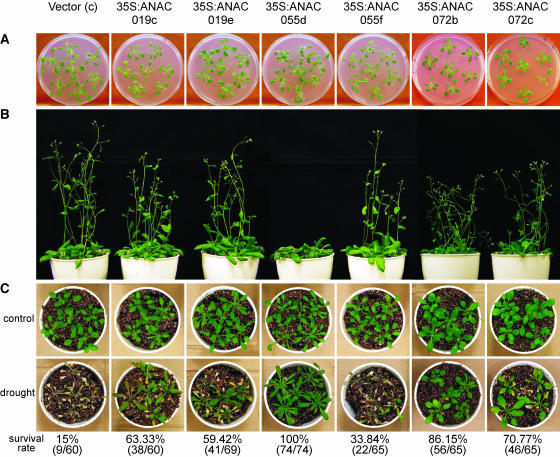
Phenotype of the 35S:ANAC019, 35S:ANAC055, and 35S:ANAC072 Plants. The effect of the overexpression of NAC genes on plant morphology was studied as follows: (A) 35S:ANAC019, 35S:ANAC055, 35S:ANAC072, and vector control plants were germinated on selective germination medium and grown for 3 weeks. The control and transgenic plants grew at the same rate. (B) Three-week-old plants were transferred to pots and grown for two additional weeks. Bolting of the 35S:ANAC055d plant was delayed by strong ectopic expression of ANAC055. (C) Drought tolerance phenotype of the 35S:ANAC019, 35S:ANAC055, and 35S:ANAC072 transgenic plants was investigated as described in Methods. Control, 4-week-old plants growing under normal conditions; drought, water withheld from plants for 9 d, then rewatering for 3 d. Percentage of surviving plants and numbers of surviving plants per total number of tested plants are indicated under the photographs. Vector line c (Figure 11) was used as a control plant.

References

    1. Abe, H., Urao, T., Ito, T., Seki, M., Shinozaki, K., and Yamaguchi-Shinozaki, K. (2003). Arabidopsis AtMYC2 (bHLH) and AtMYB2 (MYB) function as transcriptional activators in abscisic acid signaling. Plant Cell 15, 63–78. - PMC - PubMed
    1. Abe, H., Yamaguchi-Shinozaki, K., Urao, T., Iwasaki, T., Hosokawa, D., and Shinozaki, K. (1997). Role of Arabidopsis MYC and MYB homologs in drought- and abscisic acid-regulated gene expression. Plant Cell 9, 1859–1868. - PMC - PubMed
    1. Axelos, M., Curie, C., Mazzolini, L., Bardet, C., and Lescure, B. (1992). A protocol for transient gene expression in Arabidopsis thaliana protoplasts isolated from cell suspension cultures. Plant Physiol. Biochem. 30, 123–128.
    1. Bray, E., Bailey-Serresand, J., and Weretilnyk, E. (2000). Responses to abiotic stresses. In Biochemistry and Molecular Biology of Plants, B. Buchanan, W. Gruissem, and J.R. Rockville, eds (Rockville, MD: American Society of Plant Biologists), pp. 1158–1203.
    1. Choi, H., Hong, J., Ha, J., Kang, J., and Kim, S.Y. (2000). ABFs, a family of ABA-responsive element binding factors. J. Biol. Chem. 275, 1723–1730. - PubMed

Publication types

MeSH terms

Associated data