


Demystified...recombinant antibodies
- PMID: 15333649
- PMCID: PMC1770420
- DOI: 10.1136/jcp.2003.014407
Demystified...recombinant antibodies
Abstract
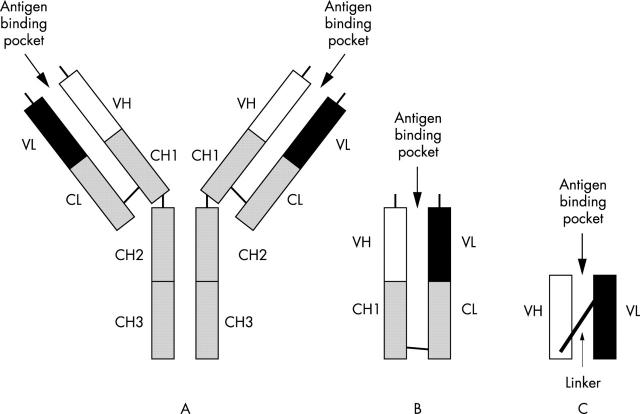
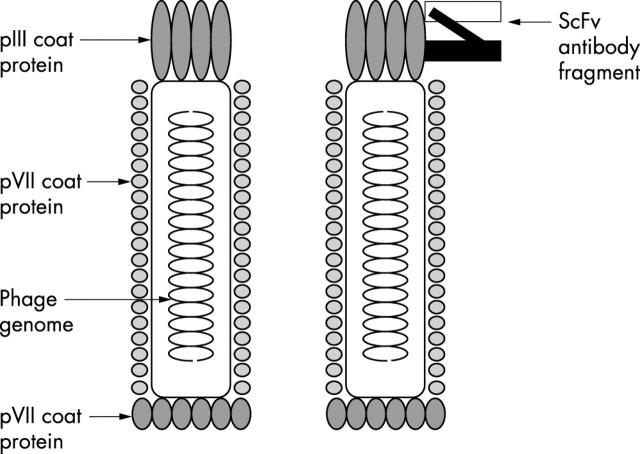
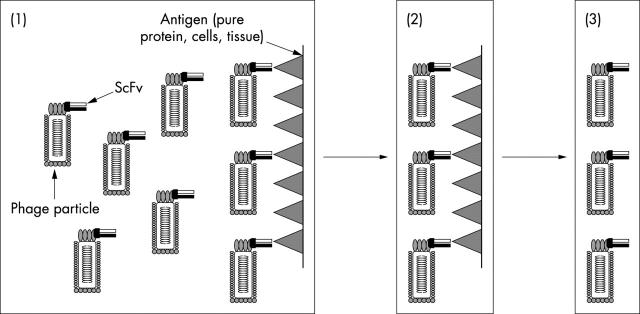
Recombinant antibodies are important tools for biomedical research and are increasingly being used as clinical diagnostic/therapeutic reagents. In this article, a background to humanized antibodies is given, together with details of the generation of antibody fragments--for example, single chain Fv fragments. Phage antibody fragments are fast becoming popular and can be generated by simple established methods of affinity enrichment from libraries derived from immune cells. Phage display methodology can also be used for the affinity enrichment of existing antibody fragments to provide a reagent with a higher affinity. Here, phage antibodies are demystified to provide a greater understanding of the potential of these reagents and to engage clinicians and biomedical scientists alike to think about potential applications in pathology and clinical settings.
Figures
References
-
- Nelson PN, Astley SJ, Warren P. Monoclonal antibodies: the generation and application of “tools of the trade” within biomedical science. In: Crocker J, Murray PG, eds. Molecular biology in cellular pathology. New York: John Wiley & Sons Ltd 2003:329–49.
-
- Nabhan C, Dyer MJ, Rosen ST. Current status of monoclonal antibody therapy for chronic lymphocytic leukaemia. Oncology 2003;17:253–62. - PubMed
-
- Souriau C, Hudson PJ. Recombinant antibodies for cancer diagnosis. Expert Opin Biol Ther 2003;3:305–18. - PubMed
-
- Stockwin L, Holmes S. The role of therapeutic antibodies in drug discovery. Biochem Soc Trans 2003;31:433–6. - PubMed
Publication types
MeSH terms
Substances
LinkOut - more resources
Full Text Sources
Other Literature Sources
