A Review of the Neuropharmacology of Bupropion, a Dual Norepinephrine and Dopamine Reuptake Inhibitor
- PMID: 15361919
- PMCID: PMC514842
- DOI: 10.4088/pcc.v06n0403
A Review of the Neuropharmacology of Bupropion, a Dual Norepinephrine and Dopamine Reuptake Inhibitor
Abstract
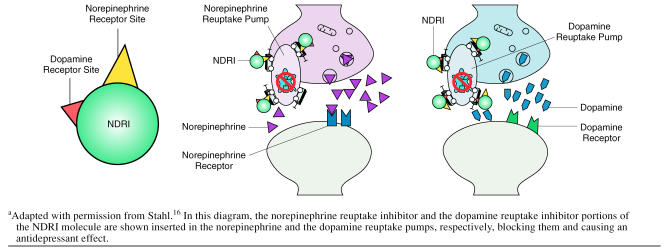
BACKGROUND: The neurochemical and biological effects of antidepressant medications have become better defined over the last decade. When the anti-depressant bupropion was introduced in the United States in 1989, the specific pharmacologic basis of its clinical effects was uncertain. Research conducted over the past decade has significantly advanced the understanding of the neuropharmacology of bupropion and has demonstrated a novel mechanism of antidepressant activity. This article discusses the mechanism of action of bupropion and relates the drug's neuropharmacologic effects to its clinical efficacy and tolerability profiles. DATA SOURCES: Data were obtained via the MEDLINE database in an English-language search spanning the period 1965 to May 2002 and using the search terms bupropion, bupropion SR, and antidepressants, as well as from the manufacturer's bupropion databases. CONCLUSIONS: The preclinical and clinical data show that bupropion acts via dual inhibition of norepinephrine and dopamine reuptake and is devoid of clinically significant serotonergic effects or direct effects on postsynaptic receptors. Dual norepinephrine and dopamine reuptake inhibition is associated with a unique clinical profile. Bupropion has demonstrated efficacy comparable to that of other antidepressants. However, because bupropion is a selective norepinephrine and dopamine reuptake inhibitor with no serotonergic activity, common antidepressant-associated side effects, such as sexual dysfunction, weight gain, and sedation, are not associated with bupropion therapy.
Figures
References
-
- Kavoussi RJ, Segraves RT, and Hughes AR. et al. Double-blind comparison of bupropion sustained-release and sertraline in depressed outpatients. J Clin Psychiatry. 1997 58:532–537. - PubMed
-
- Croft H, Settle E, and Houser T. et al. A placebo-controlled comparison of the antidepressant efficacy and effects on sexual functioning of sustained-release bupropion and sertraline. Clin Ther. 1999 21:643–658. - PubMed
-
- Coleman CC, Cunningham LA, and Foster VJ. et al. Sexual dysfunction associated with the treatment of depression: a placebo-controlled comparison of bupropion sustained-release and sertraline treatment. Ann Clin Psychiatry. 1999 11:205–215. - PubMed
-
- Weihs KL, Settle EC, and Batey SR. et al. Bupropion sustained-release versus paroxetine for the treatment of depression in the elderly. J Clin Psychiatry. 2000 61:196–202. - PubMed
-
- Weisler RH, Johnston JA, and Lineberry CG. et al. Comparison of bupropion and trazodone for the treatment of major depression. J Clin Psychopharmacol. 1994 14:170–179. - PubMed
LinkOut - more resources
Full Text Sources
Other Literature Sources
Research Materials
Miscellaneous