


Direct evidence for a chronic CD8+-T-cell-mediated immune reaction to tax within the muscle of a human T-cell leukemia/lymphoma virus type 1-infected patient with sporadic inclusion body myositis
- PMID: 15367598
- PMCID: PMC516372
- DOI: 10.1128/JVI.78.19.10320-10327.2004
Direct evidence for a chronic CD8+-T-cell-mediated immune reaction to tax within the muscle of a human T-cell leukemia/lymphoma virus type 1-infected patient with sporadic inclusion body myositis
Abstract
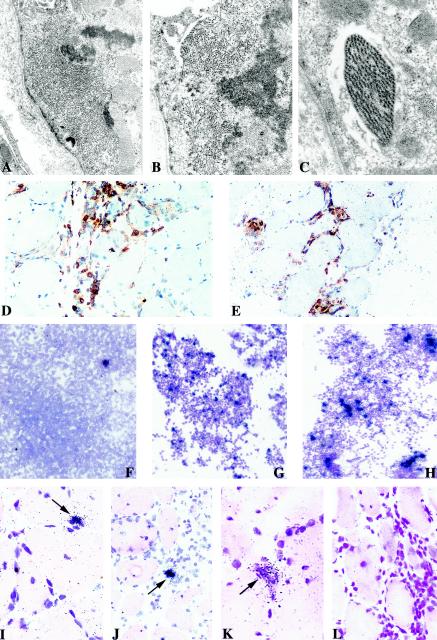
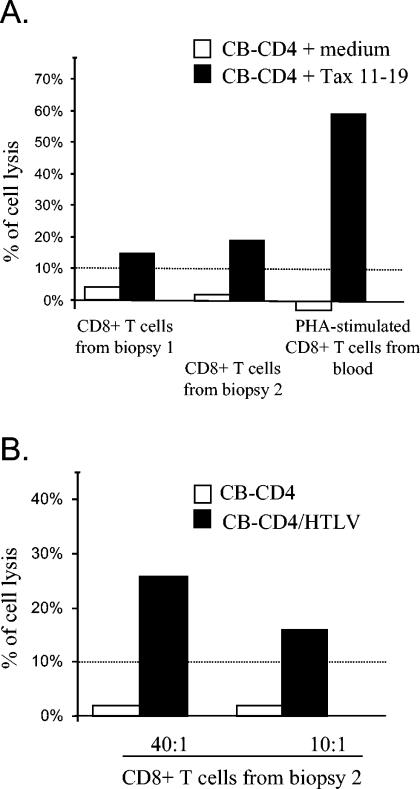
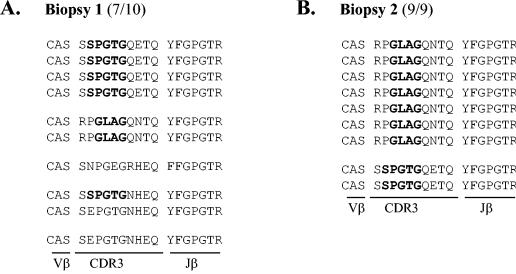
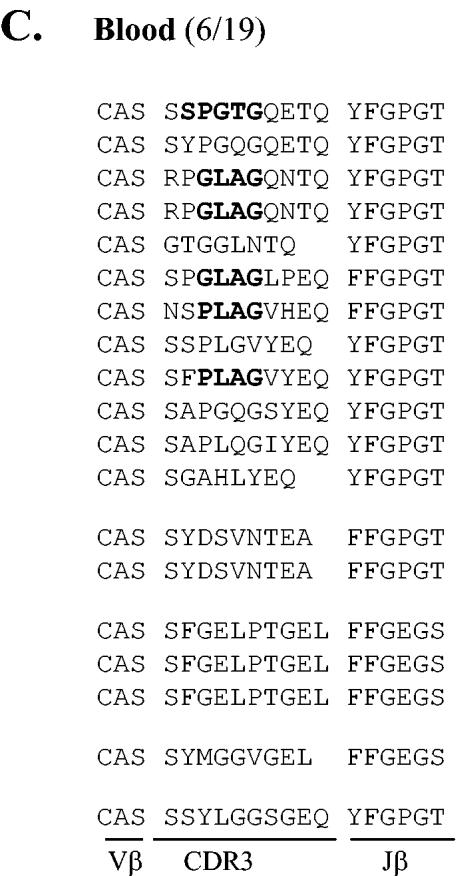
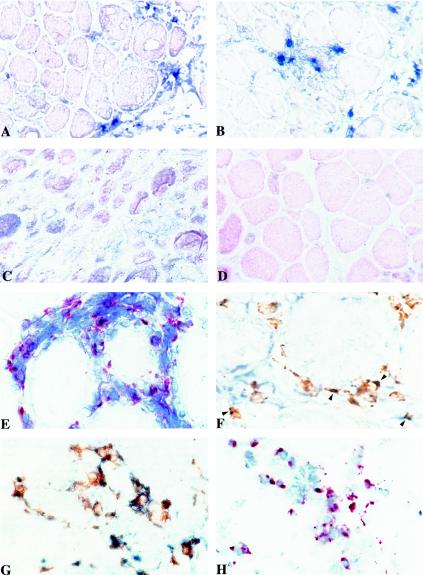
Human T-cell leukemia/lymphoma virus type 1 (HTLV-1) infection can lead to the development of HTLV-1-associated myelopathy/tropical spastic paraparesis (HAM/TSP), concomitantly with or without other inflammatory disorders such as myositis. These pathologies are considered immune-mediated diseases, and it is assumed that migration within tissues of both HTLV-1-infected CD4(+) T cells and anti-HTLV-1 cytotoxic T cells represents a pivotal event. However, although HTLV-1-infected T cells were found in inflamed lesions, the antigenic specificity of coinfiltrated CD8(+) T cells remains to be determined. In this study, we performed both ex vivo and in situ analyses using muscle biopsies obtained from an HTLV-1-infected patient with HAM/TSP and sporadic inclusion body myositis. We found that both HTLV-1-infected CD4(+) T cells and CD8(+) T cells directed to the dominant Tax antigen can be amplified from muscle cell cultures. Moreover, we were able to detect in two successive muscle biopsies both tax mRNA-positive mononuclear cells and T cells recognized by the Tax11-19/HLA-A*02 tetramer and positive for perforin. These findings provide the first direct demonstration that anti-Tax cytotoxic T cells are chronically recruited within inflamed tissues of an HTLV-1 infected patient, which validates the cytotoxic immune reaction model for the pathogenesis of HTLV-1-associated inflammatory disease.
Figures
References
-
- Bieganowska, K., P. Hollsberg, G. J. Buckle, D. G. Lim, T. F. Greten, J. Schneck, J. D. Altman, S. Jacobson, S. L. Ledis, B. Hanchard, J. Chin, O. Morgan, P. A. Roth, and D. A. Hafler. 1999. Direct analysis of viral-specific CD8+ T cells with soluble HLA-A2/Tax11-19 tetramer complexes in patients with human T cell lymphotropic virus-associated myelopathy. J. Immunol. 162:1765-1771. - PubMed
-
- Bourcier, K. D., D. G. Lim, Y. H. Ding, K. J. Smith, K. Wucherpfennig, and D. A. Hafler. 2001. Conserved CDR3 regions in T-cell receptor (TCR) CD8+ T cells that recognize the Tax11-19/HLA-A*0201 complex in a subject infected with human T-cell leukemia virus type 1: relationship of T-cell fine specificity and major histocompatibility complex/peptide/TCR crystal structure. J. Virol. 75:9836-9843. - PMC - PubMed
-
- Cavrois, M., A. Gessain, O. Gout, S. Wain-Hobson, and E. Wattel. 2000. Common human T cell leukemia virus type 1 (HTLV-1) integration sites in cerebrospinal fluid and blood lymphocytes of patients with HTLV-1-associated myelopathy/tropical spastic paraparesis indicate that HTLV-1 crosses the blood-brain barrier via clonal HTLV-1-infected cells. J. Infect. Dis. 182:1044-1050. - PubMed
-
- Cupler, E. J., M. Leon-Monzon, J. Miller, C. Semino-Mora, T. L. Anderson, and M. C. Dalakas. 1996. Inclusion body myositis in HIV-1 and HTLV-1 infected patients. Brain 119:1887-1893. - PubMed
-
- Dalakas, M. C., and R. Hohlfeld. 2003. Polymyositis and dermatomyositis muscle biopsy findings in inflammatory myopathies. Understanding the immunopathogenesis of inclusion-body myositis: present and future prospects. Lancet 362:971-982.
Publication types
MeSH terms
Substances
LinkOut - more resources
Full Text Sources
Medical
Research Materials
Miscellaneous
