


Long-lasting increase of alcohol relapse by the cannabinoid receptor agonist WIN 55,212-2 during alcohol deprivation
- PMID: 15385608
- PMCID: PMC6729684
- DOI: 10.1523/JNEUROSCI.2179-04.2004
Long-lasting increase of alcohol relapse by the cannabinoid receptor agonist WIN 55,212-2 during alcohol deprivation
Abstract
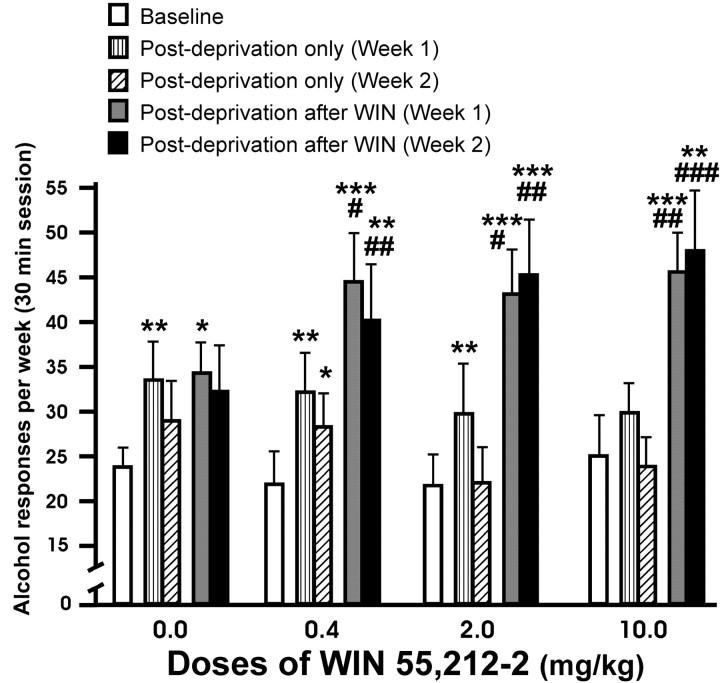
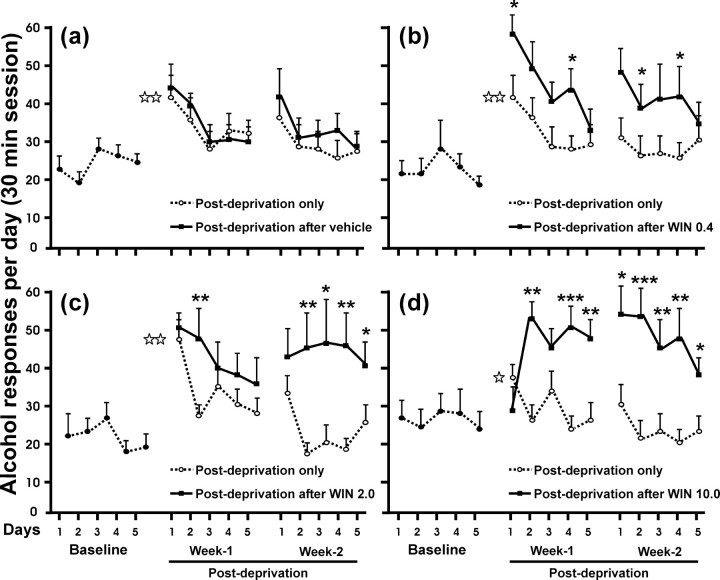
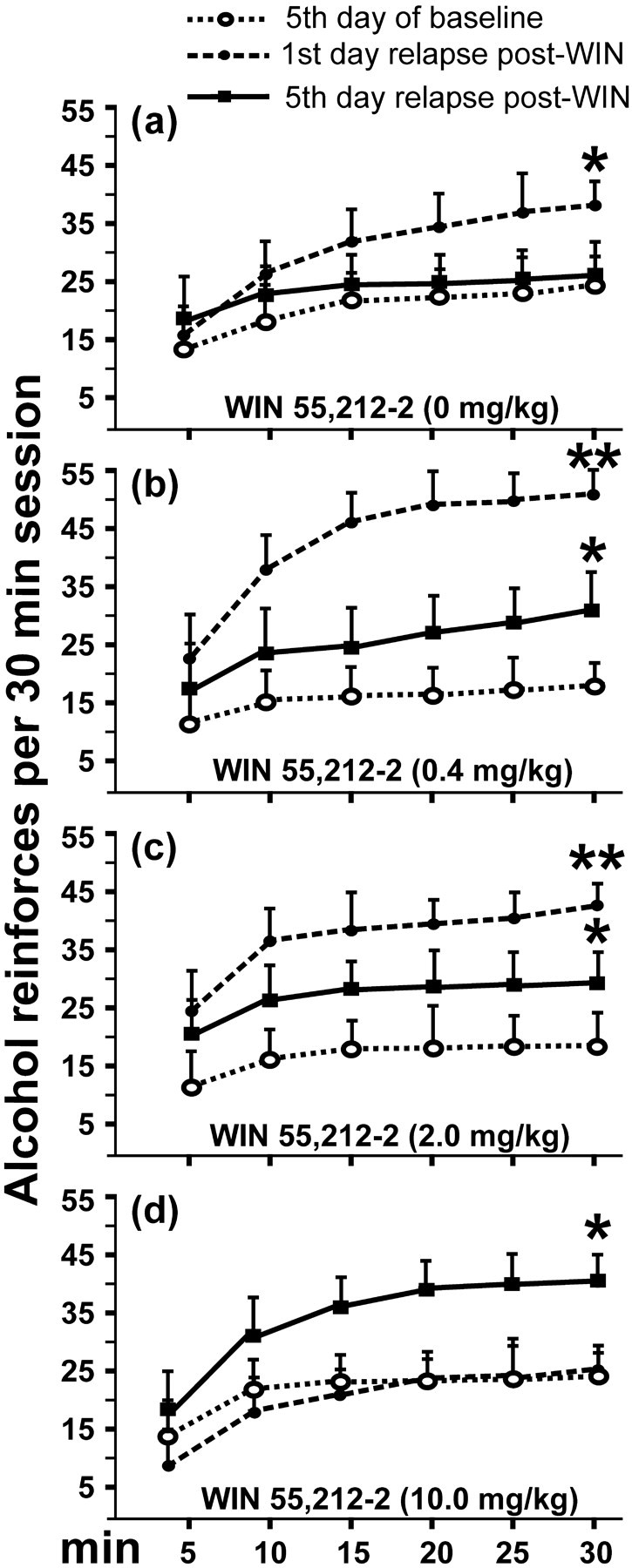
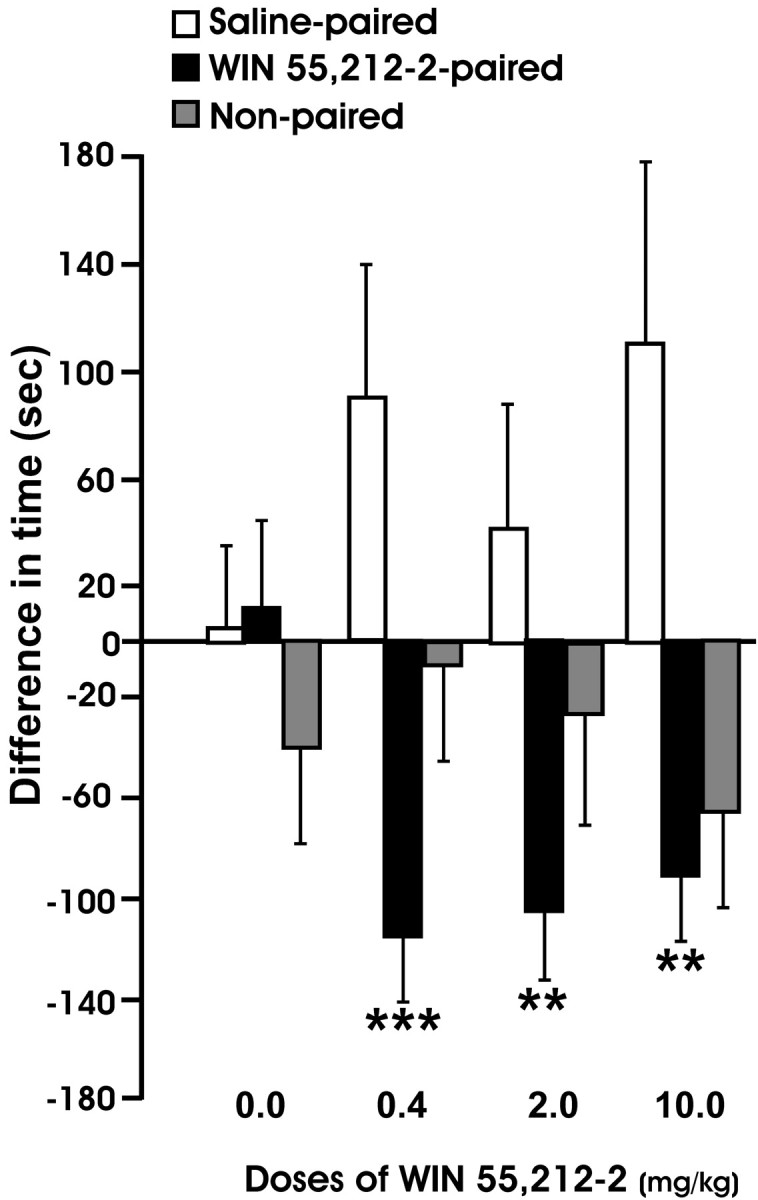
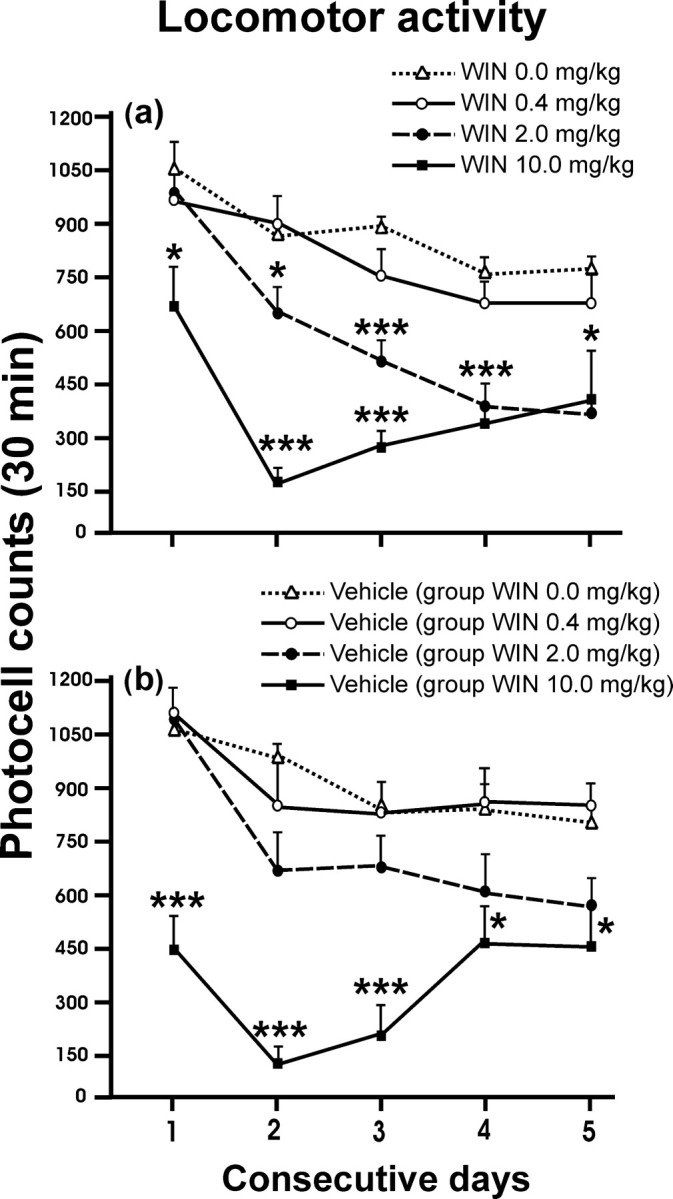
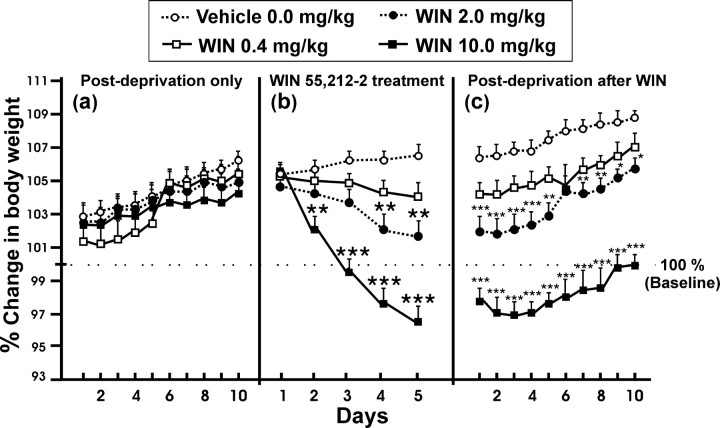
Alcoholism is characterized by successive relapses. Recent data have shown a cross-talk between the cannabinoid system and ethanol. In this study, male Wistar rats with a limited (30 min sessions), intermittent, and extended background of alcohol operant self-administration were used. The relapse to alcohol after 1 week of alcohol deprivation was evaluated. Two weeks later, the animals were treated with the cannabinoid agonist WIN 55,212-2 (R-(+)-[2,3-dihydro-5-methyl-3-(4-morpholinylmethyl)pyrrolo[1,2,3-de]-1,4-benzoxazin-6-yl]-1-naphthalenylmethanone mesylate) (0, 0.4, 2.0, and 10.0 mg/kg, s.c.) during a similar alcohol deprivation period, and alcohol relapse during 2 weeks was assessed. A conditioned place preference (CPP) paradigm was used to study the rewarding properties of the cannabinoid agonist. Locomotor activity was also recorded. All doses of WIN 55,212-2 produced aversion in the CPP paradigm. The doses of 2.0 and 10.0 mg/kg resulted in an important suppression of spontaneous locomotor activity and a progressive weight loss during the next 2 weeks. The single alcohol deprivation was followed by a transient increase in their responding for alcohol from a range of 20-24 lever presses at baseline to a range of 38-48 responses in the first and second days (alcohol deprivation effect). However, the administration of WIN 55,212-2 during ethanol deprivation produced similar increased responses for alcohol but in a long-term way (at least over 2 weeks). These findings suggest that noncontingent chronic exposure to cannabinoids during alcohol deprivation can potentiate the relapse into alcohol use, indicating that functional changes in the cannabinoid brain receptor may play a key role in ethanol relapse.
Figures
References
-
- Aceto MD, Scates SM, Martin BB (2001) Spontaneous and precipitated withdrawal with a synthetic cannabinoid, WIN 55212-2. Eur J Pharmacol 416: 75-81. - PubMed
-
- Anggadiredja K, Yamaguchi T, Tanaka H, Shoyama Y, Watanabe S, Yamamoto T (2003) Prostaglandin E2 attenuates SR141716A-precipitated withdrawal in tetrahydrocannabinol-dependent mice. Brain Res 966: 47-53. - PubMed
-
- Basavarajappa BS, Hungund BL (1999) Down-regulation of cannabinoid receptor agonist-stimulated [35S]GTP gamma S binding in synaptic plasma membrane from chronic ethanol exposed mouse. Brain Res 815: 89-97. - PubMed
-
- Basavarajappa BS, Hungund BL (2002) Neuromodulatory role of the endocannabinoid signaling system in alcoholism: an overview. Prostaglandins Leukot Essent Fatty Acids 66: 287-299. - PubMed
-
- Braida D, Sala M (2000) Cannabinoid-induced working memory impairment is reversed by a second generation cholinesterase inhibitor in rats. NeuroReport 11: 2025-2029. - PubMed
Publication types
MeSH terms
Substances
LinkOut - more resources
Full Text Sources
Medical
Miscellaneous
