


Raised levels of anti-glucose-6-phosphate isomerase IgG in serum and synovial fluid from patients with inflammatory arthritis
- PMID: 15458959
- PMCID: PMC1755497
- DOI: 10.1136/ard.2004.025502
Raised levels of anti-glucose-6-phosphate isomerase IgG in serum and synovial fluid from patients with inflammatory arthritis
Abstract
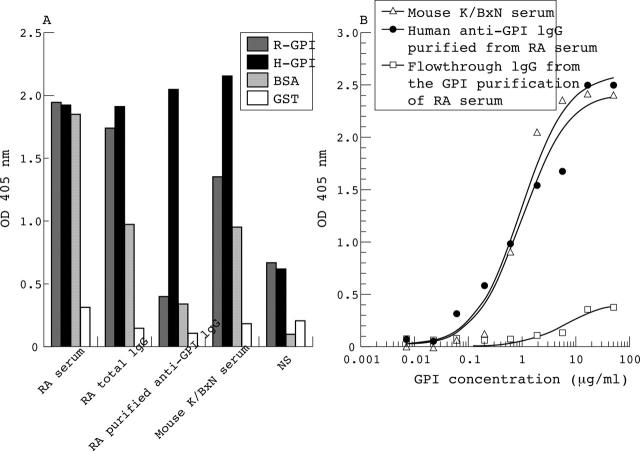
Background: In K/BxN mice, anti-glucose-6-phosphate isomerase (GPI) antibodies (Abs) are arthritogenic, and their transfer into naive mice induces arthritis. Anti-GPI Abs develop in many human patients with RA and are associated with more severe forms of the disease.
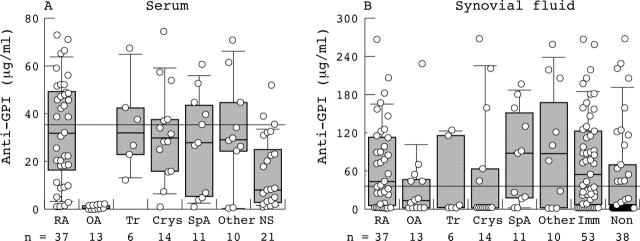
Objective: To elucidate the serum and synovial fluid (SF) anti-GPI IgG profiles among different patient groups with a variety of arthritides.
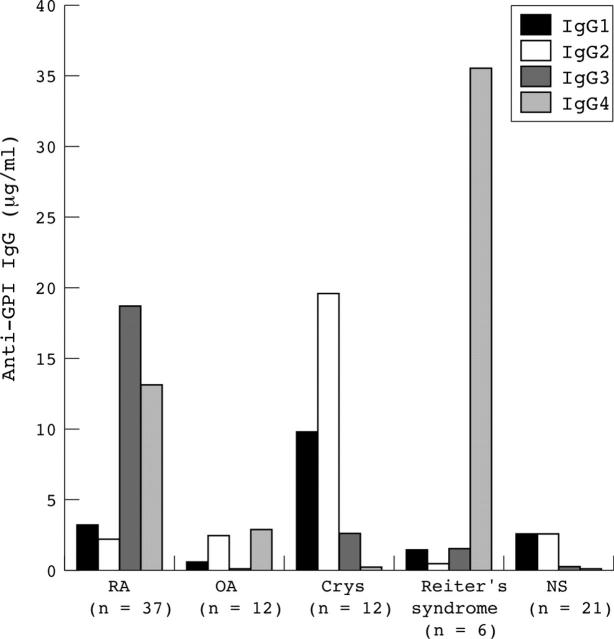
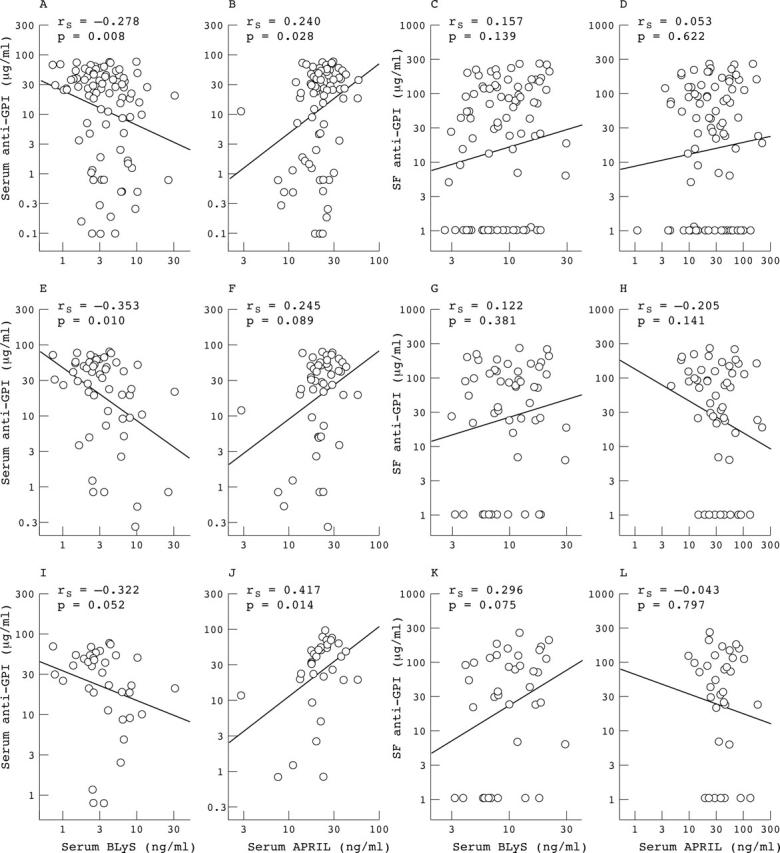
Methods: Blood and SF obtained concomitantly from 91 patients with clinically well defined arthritis were tested for concentrations of total anti-GPI IgG, anti-GPI IgG subclasses, B lymphocyte stimulator (BLyS), and APRIL by ELISA.
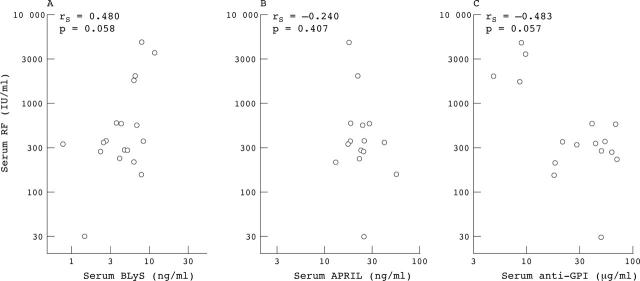
Results: Anti-GPI IgG was detected in sera and SF of patients with many arthritic diseases, but was preferentially associated with inflammatory arthritis, in general, and RA, in particular. The anti-GPI IgG subclass usage was skewed and varied among the different arthritic disease groups. Inverse correlations between serum levels of BLyS and anti-GPI IgG and positive correlations between serum levels of APRIL and anti-GPI IgG were seen among immune based arthritic patients and patients with RA but not among non-immune based patients. No correlations were found in SF from any group of arthritic patients.
Conclusion: Raised circulating anti-GPI Abs are not unique to patients with RA but are present in many patients with inflammatory arthritis. The difference in anti-GPI IgG subclass usage among disease groups may influence effector function and disease outcome. The inverse correlation between serum BLyS and anti-GPI IgG levels suggests that anti-GPI B cells may be regulated differently from other autoantibody producing B cells. Anti-GPI Abs may serve a pathogenic function in humans by promoting the maintenance of existing disease.
Figures
References
Publication types
MeSH terms
Substances
Grants and funding
LinkOut - more resources
Full Text Sources
Medical
Miscellaneous
