


Dietary plasma protein affects the immune response of weaned rats challenged with S. aureus Superantigen B
- PMID: 15465764
- PMCID: PMC7107471
- DOI: 10.1093/jn/134.10.2667
Dietary plasma protein affects the immune response of weaned rats challenged with S. aureus Superantigen B
Abstract
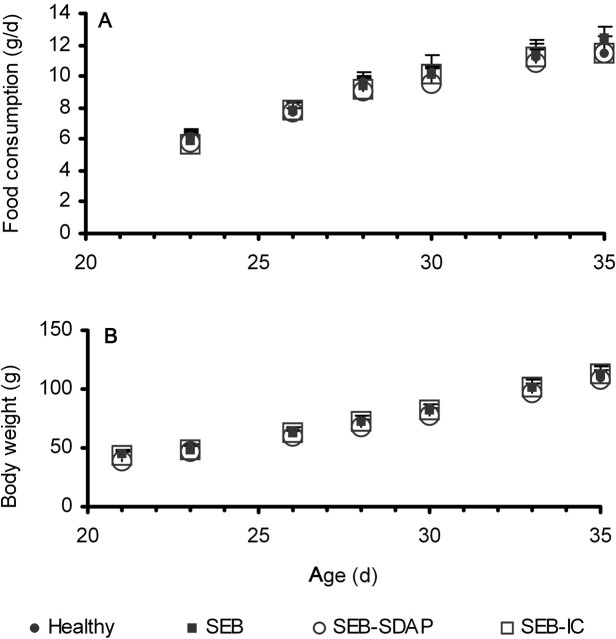
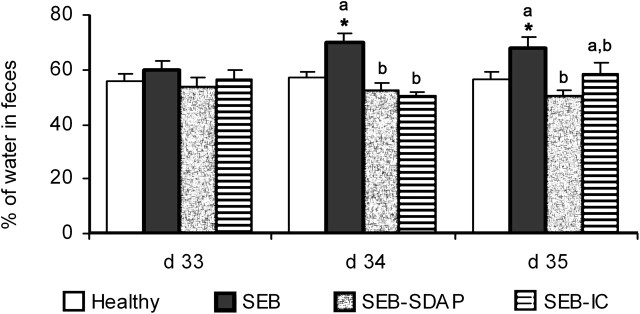
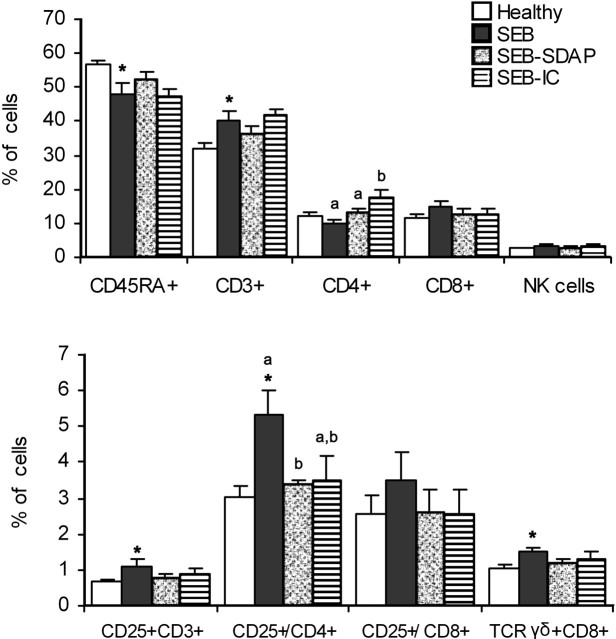
The aim of this study was to determine the potential modulatory effects of diets supplemented with spray-dried animal plasma (SDAP) or immunoglobulin concentrates (IC) on the immune response of rats challenged with Staphylococcus aureus enterotoxin B (SEB). Lewis rats were fed diets containing 80 g of SDAP/kg diet, 22.7 g of IC/kg diet, or milk proteins (Control diet) from postnatal d 21 (weaning) for 14 d. On d 30 and 33, rats were given SEB (0.5 mg/kg body weight; i.p.). Organized gut-associated lymphoid tissue (GALT) populations, intestinal secretion, mucosal and serum immunoglobulin concentrations, and neutrophil infiltration were studied. On d 35, blood was collected under anesthesia and samples of intestinal mucosa, Peyer's patches, mesenteric lymph nodes (MLN), and spleen were taken. SEB increased the water content of feces, which was prevented by diets containing either SDAP (P < 0.002) or IC (P < 0.001), indicating that plasma protein-supplemented diets can reverse the SEB-induced secretory response. In Peyer's patches, the diet containing SDAP partially prevented the SEB-induced increase in T lymphocytes (P < 0.1) and reduced the percentage of activated T helper cells (P < 0.05). In MLN, activated T lymphocytes were increased by SEB but they were not affected by diet. No effects of SEB or dietary supplementation on mucosal IgA and serum IgA and IgG were observed. The effects of SDAP supplementation on the lymphocyte populations of GALT in rats challenged with SEB support the view that SDAP can modulate the immune response and suggest that plasma protein supplementation can prevent GALT from possible activation by luminal bacterial superantigens.
Figures
References
-
- Torrallardona D., Conde M. R., Badiola I., Polo J. & Brufau J. (2003) Effect of fishmeal replacement with spray-dried animal plasma and colistin on intestinal structure, intestinal microbiology, and performance of weanling pigs challenged with Escherichia coli K99. J. Anim. Sci. 81:1220–1226. - PubMed
-
- Hansen J. A., Nelssen J. L., Goodband R. D. & Weeden T. L. (1993) Evaluation of animal protein supplements in diets of early-weaned pigs. J. Anim. Sci. 71:1853–1862. - PubMed
-
- Coffey R. D. & Cromwell G. L. (1995) The impact of the environment and antimicrobial agents on the growth response of early-weaned pigs to spray-dried porcine plasma. J. Anim. Sci. 73:2532–2539. - PubMed
-
- Van Dijk A. J., Enthoven P. M., Ven den Hoven S. G., Van Laarhoven M. M., Niewold T. A., Nabuurs M. J. & Beynen A. C. (2002) The effect of dietary spray-dried porcine plasma on clinical response in weaned piglets challenged with a pathogenic Escherichia coli. Vet. Microbiol. 84:207–218. - PubMed
-
- Quigley J. D., 3rd & Drew M. D. (2000) Effects of oral antibiotics or bovine plasma on survival, health and growth in dairy calves challenged with Escherichia coli. Food Agric. Immunol. 12:311–318.
Publication types
MeSH terms
Substances
LinkOut - more resources
Full Text Sources
Other Literature Sources
Miscellaneous
