


Clinical review: hemorrhagic shock
- PMID: 15469601
- PMCID: PMC1065003
- DOI: 10.1186/cc2851
Clinical review: hemorrhagic shock
Abstract
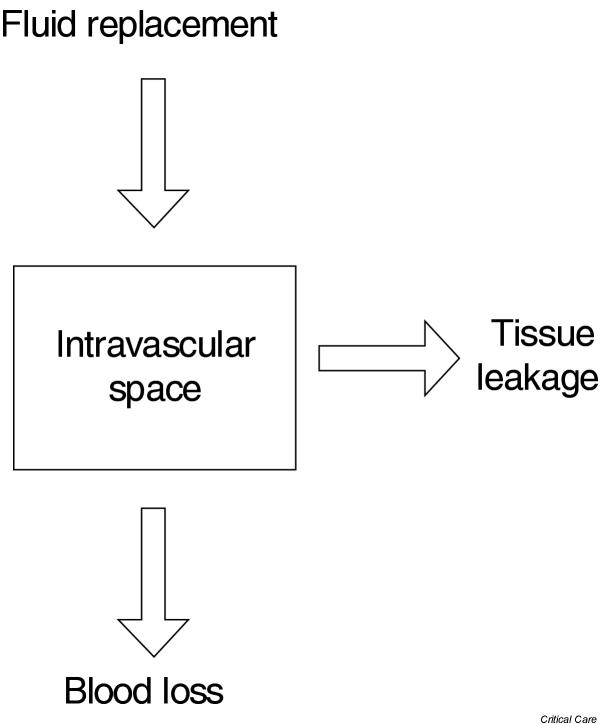
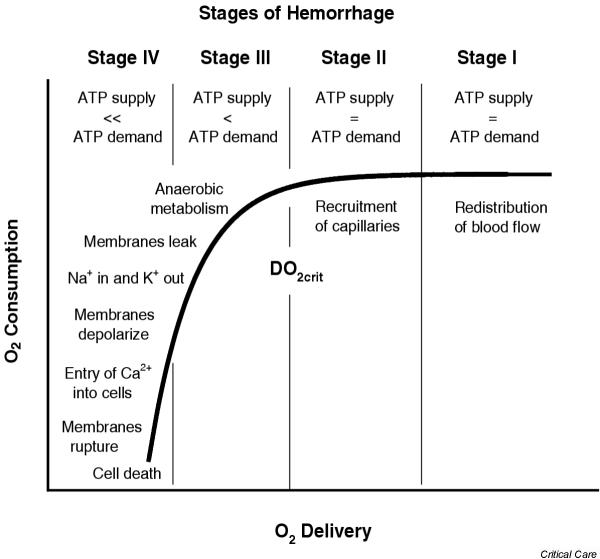
This review addresses the pathophysiology and treatment of hemorrhagic shock - a condition produced by rapid and significant loss of intravascular volume, which may lead sequentially to hemodynamic instability, decreases in oxygen delivery, decreased tissue perfusion, cellular hypoxia, organ damage, and death. Hemorrhagic shock can be rapidly fatal. The primary goals are to stop the bleeding and to restore circulating blood volume. Resuscitation may well depend on the estimated severity of hemorrhage. It now appears that patients with moderate hypotension from bleeding may benefit by delaying massive fluid resuscitation until they reach a definitive care facility. On the other hand, the use of intravenous fluids, crystalloids or colloids, and blood products can be life saving in those patients who are in severe hemorrhagic shock. The optimal method of resuscitation has not been clearly established. A hemoglobin level of 7-8 g/dl appears to be an appropriate threshold for transfusion in critically ill patients with no evidence of tissue hypoxia. However, maintaining a higher hemoglobin level of 10 g/dl is a reasonable goal in actively bleeding patients, the elderly, or individuals who are at risk for myocardial infarction. Moreover, hemoglobin concentration should not be the only therapeutic guide in actively bleeding patients. Instead, therapy should be aimed at restoring intravascular volume and adequate hemodynamic parameters.
Figures
Comment in
-
Hemorrhagic shock: a review.Crit Care. 2004 Oct;8(5):396; author reply 396. doi: 10.1186/cc2898. Epub 2004 Jun 30. Crit Care. 2004. PMID: 15469603 Free PMC article. No abstract available.
References
-
- Cropp GJ. Changes in blood and plasma volumes during growth. J Pediatr. 1971;78:220–229. - PubMed
-
- Committee on Trauma . Advanced Trauma Life Support Manual. Chicago: American College of Surgeons; 1997. pp. 103–112.
-
- Bourke DL, Smith TC. Estimating allowable hemodilution. Anesthesiology. 1974;41:609–612. - PubMed
Publication types
MeSH terms
LinkOut - more resources
Full Text Sources
Other Literature Sources
Medical
