


Using GIS technology to identify areas of tuberculosis transmission and incidence
- PMID: 15479478
- PMCID: PMC529461
- DOI: 10.1186/1476-072X-3-23
Using GIS technology to identify areas of tuberculosis transmission and incidence
Abstract
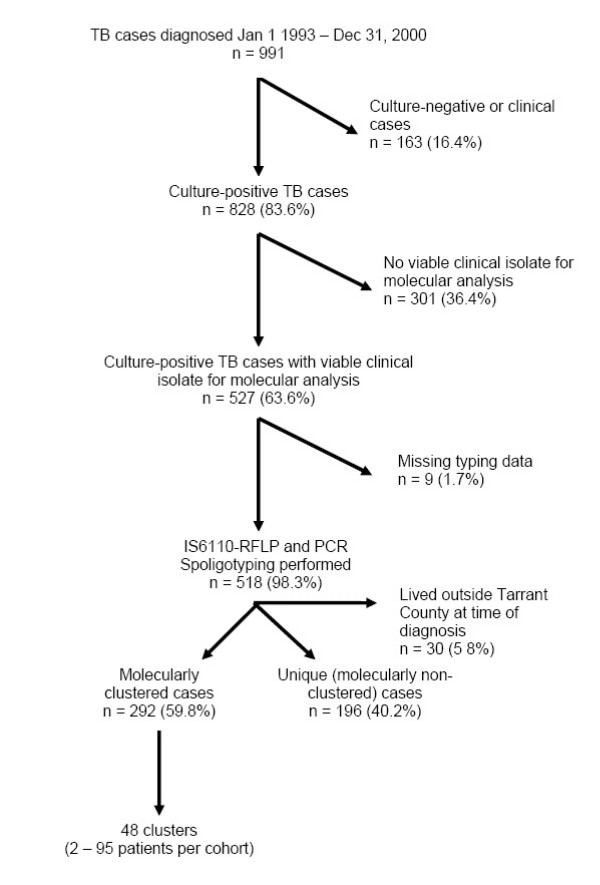
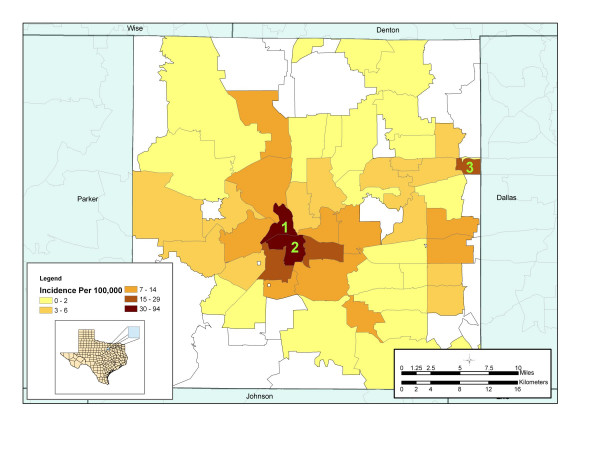
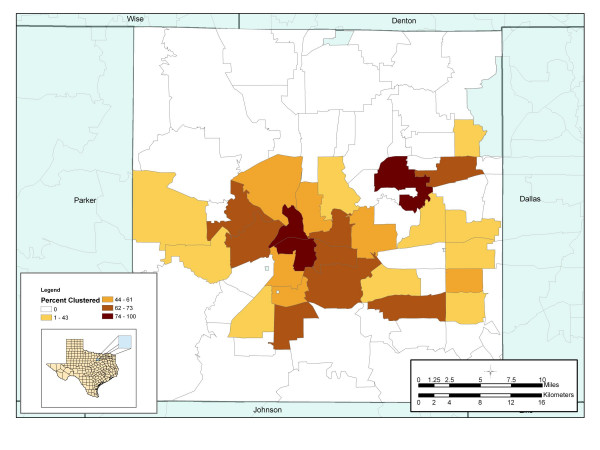
BACKGROUND: Currently in the U.S. it is recommended that tuberculosis screening and treatment programs be targeted at high-risk populations. While a strategy of targeted testing and treatment of persons most likely to develop tuberculosis is attractive, it is uncertain how best to accomplish this goal. In this study we seek to identify geographical areas where on-going tuberculosis transmission is occurring by linking Geographic Information Systems (GIS) technology with molecular surveillance. METHODS: This cross-sectional analysis was performed on data collected on persons newly diagnosed with culture positive tuberculosis at the Tarrant County Health Department (TCHD) between January 1, 1993 and December 31, 2000. Clinical isolates were molecularly characterized using IS6110-based RFLP analysis and spoligotyping methods to identify patients infected with the same strain. Residential addresses at the time of diagnosis of tuberculosis were geocoded and mapped according to strain characterization. Generalized estimating equations (GEE) analysis models were used to identify risk factors involved in clustering. RESULTS: Evaluation of the spatial distribution of cases within zip-code boundaries identified distinct areas of geographical distribution of same strain disease. We identified these geographical areas as having increased likelihood of on-going transmission. Based on this evidence we plan to perform geographically based screening and treatment programs. CONCLUSION: Using GIS analysis combined with molecular epidemiological surveillance may be an effective method for identifying instances of local transmission. These methods can be used to enhance targeted screening and control efforts, with the goal of interruption of disease transmission and ultimately incidence reduction.
Figures
References
-
- From the Centers for Disease Control and Prevention: Tuberculosis morbidity among U.S.-born and Foreign-born populations – United States 2000. MMWR Morb Mortal Wkly Rep. 2002;51:101–4. - PubMed
-
- Centers for Disease Control and Prevention Advisory Council for the Elimination of Tuberculosis (ACET): Tuberculosis elimination revisited: obstacles, opportunities, and a renewed commitment. MMWR Recomm Rep. 1999;48:1–13. - PubMed
-
- Institute of Medicine . Ending Neglect: the elimination of tuberculosis in the United States. Washington, D.C.: National Academy Press; 2000.
LinkOut - more resources
Full Text Sources
