Multispecific T cell response and negative HCV RNA tests during acute HCV infection are early prognostic factors of spontaneous clearance
- PMID: 15479691
- PMCID: PMC1774263
- DOI: 10.1136/gut.2003.037788
Multispecific T cell response and negative HCV RNA tests during acute HCV infection are early prognostic factors of spontaneous clearance
Abstract
Background/aims: Hepatitis C virus (HCV) infection results in a high frequency of chronic disease. The aim of this study was to identify early prognostic markers of disease resolution by performing a comprehensive analysis of viral and host factors during the natural course of acute HCV infection.
Methods: The clinical course of acute hepatitis C was determined in 34 consecutive patients. Epidemiological and virological parameters, as well as cell mediated immunity (CMI) and distribution of human leukocyte antigens (HLA) alleles were analysed.
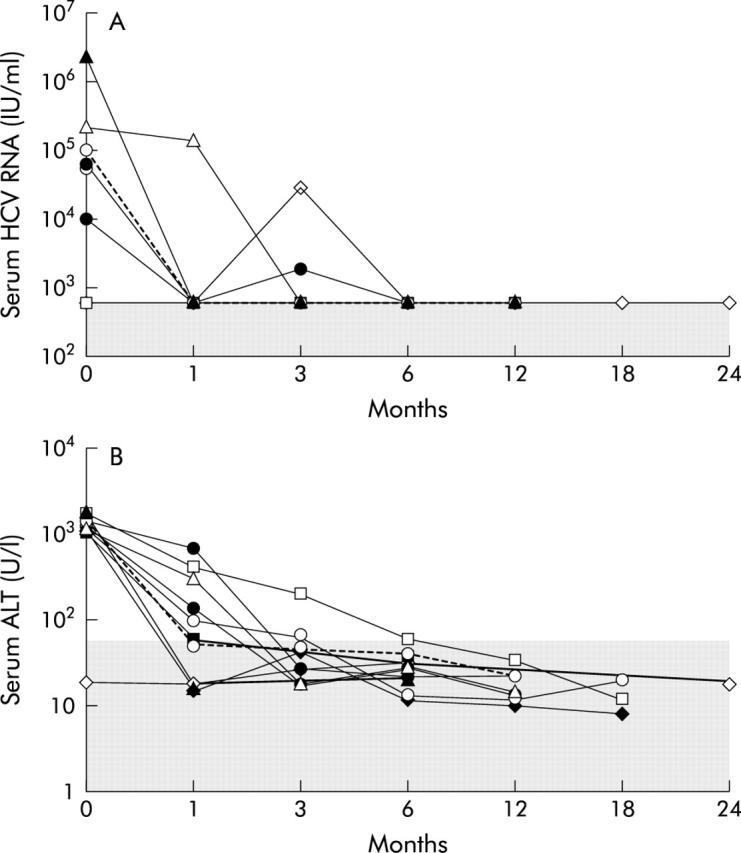
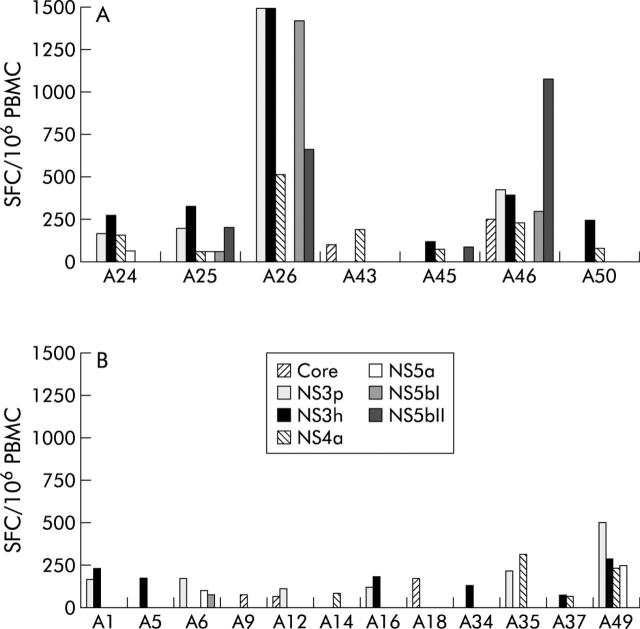
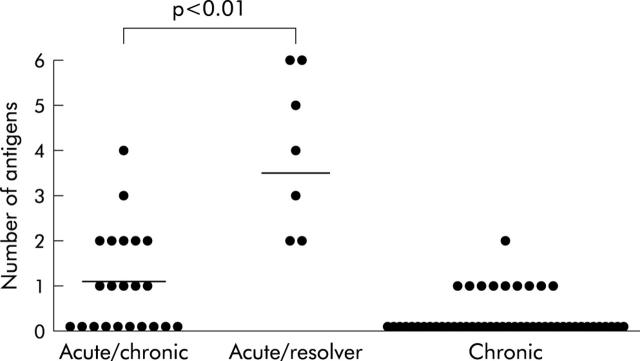
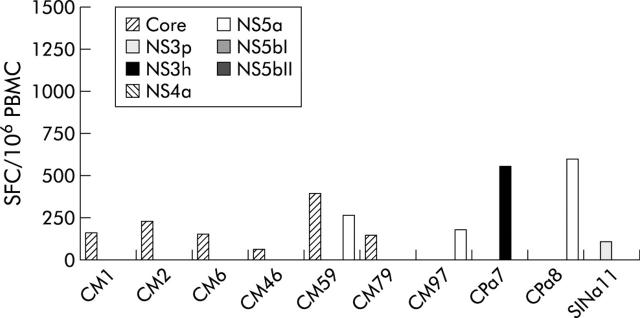
Results: Ten out of 34 patients experienced self-limiting infection, with most resolving patients showing fast kinetics of viral clearance: at least one negative HCV RNA test during this phase predicted a favourable outcome. Among other clinical epidemiological parameters measured, the self-limiting course was significantly associated with higher median peak bilirubin levels at the onset of disease, and with the female sex, but only the latter parameter was independently associated after multivariate analysis. No significant differences between self-limiting or chronic course were observed for the distribution of DRB1 and DQB1 alleles. HCV specific T cell response was more frequently detected during acute HCV infection, than in patients with chronic HCV disease. A significantly broader T cell response was found in patients with self-limiting infection than in those with chronic evolving acute hepatitis C.
Conclusion: The results suggest that host related factors, in particular sex and CMI, play a crucial role in the spontaneous clearance of this virus. Most importantly, a negative HCV RNA test and broad CMI within the first month after onset of the symptoms represent very efficacious predictors of viral clearance and could thus be used as criteria in selecting candidates for early antiviral treatment.
Figures
References
-
- Orland JR, Wright TL, Cooper S. Acute hepatitis C. Hepatology 2001;33:321–7. - PubMed
-
- Hoofnagle JH. Hepatitis C. the clinical spectrum of disease. Hepatology. 1997;26(Suppl. 1):15S–20. - PubMed
-
- Alberti A , Chemello L, Bevegnu L. Natural history of hepatitis C. J Hepatol 1999;31 (Suppl 1) :17–24. - PubMed
-
- Alter MJ, Margolis HS, Krawczynski K, et al. The natural history of community-acquired hepatitis C in the United States. The Sentinel Counties Chronic non-A, non-B Hepatitis Study Team. N Engl J Med 1992;327:1899–905. - PubMed
-
- Mattson L , Sönnerborg A, Weiland O. Outcome of acute symptomatic non-A, non-B hepatitis: A 13-year follow-up study of hepatitis C virus markers. Liver 1993;13:274–8. - PubMed
Publication types
MeSH terms
Substances
LinkOut - more resources
Full Text Sources
Medical
Research Materials