


Mediation of Endogenous beta-endorphin by Tetrandrine to Lower Plasma Glucose in Streptozotocin-induced Diabetic Rats
- PMID: 15480445
- PMCID: PMC516459
- DOI: 10.1093/ecam/neh027
Mediation of Endogenous beta-endorphin by Tetrandrine to Lower Plasma Glucose in Streptozotocin-induced Diabetic Rats
Abstract
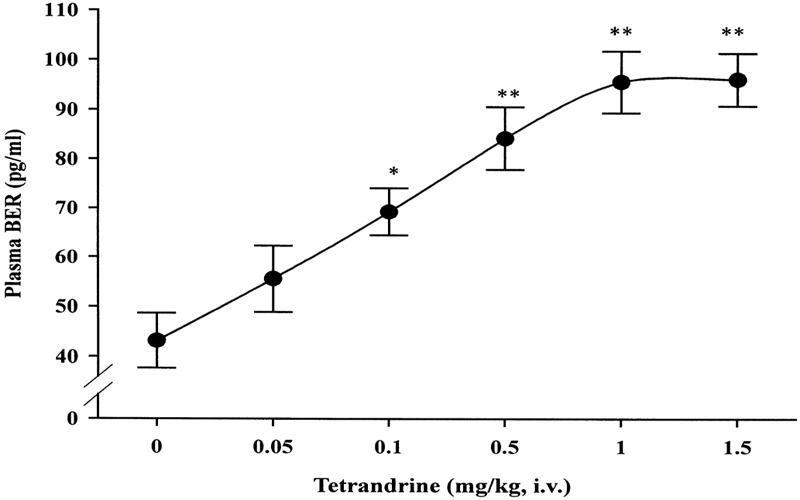
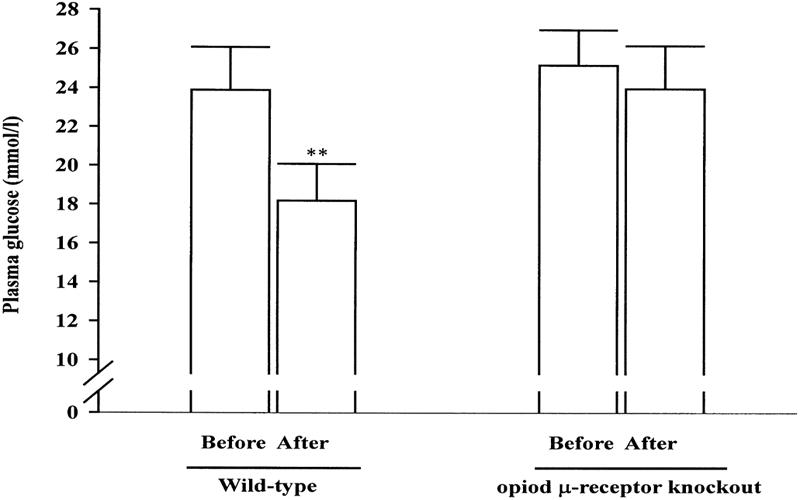
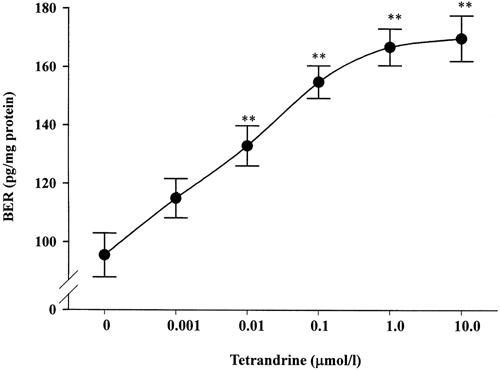
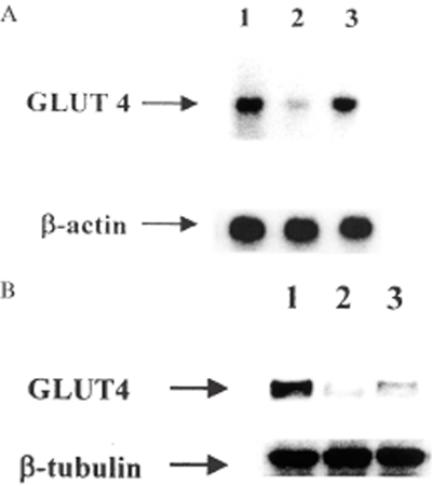
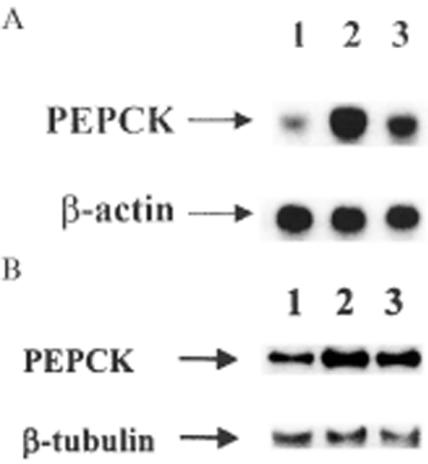
The role of beta-endorphin in the plasma glucose-lowering action of tetrandrine in streptozotocin-induced diabetic rats (STZ-diabetic rats) was investigated. The plasma glucose concentration was assessed by the glucose oxidase method. The enzyme-linked immunosorbent assay was used to determine the plasma level of beta-endorphin-like immunoreactivity (BER). The mRNA levels of glucose transporter subtype 4 (GLUT4) in soleus muscle and phosphoenolpyruvate carboxykinase (PEPCK) in the liver of STZ-diabetic rats were detected by Northern blotting analysis. The expressed protein of GLUT4 or PEPCK was characterized by Western blotting analysis. Tetrandrine dose-dependently increased plasma BER in a manner parallel to the decrease of plasma glucose in STZ-diabetic rats. Moreover, the plasma glucose-lowering effect of tetrandrine was inhibited by naloxone and naloxonazine at doses sufficient to block opioid μ-receptors. Further, tetrandrine failed to produce plasma glucose-lowering action in opioid μ-receptor knockout diabetic mice. Bilateral adrenalectomy eliminated the plasma glucose-lowering effect and plasma BER-elevating effect of tetrandrine in STZ-diabetic rats. Both effects were abolished by treatment with hexamethonium or pentolinium at doses sufficient to block nicotinic receptors. Tetrandrine enhanced BER release directly from the isolated adrenal medulla of STZ-diabetic rats and this action was abolished by the blockade of nicotinic receptors. Repeated intravenous administration of tetrandrine (1.0 mg/kg) to STZ-diabetic rats for 3 days resulted in an increase in the mRNA and protein levels of the GLUT4 in soleus muscle, in addition to the lowering of plasma glucose. Similar treatment with tetrandrine reversed the elevated mRNA and protein levels of PEPCK in the liver of STZ-diabetic rats. The obtained results suggest that tetrandrine may induce the activation of nicotinic receptors in adrenal medulla to enhance the secretion of beta-endorphin, which could stimulate opioid μ-receptors to increase glucose utilization or/and reduce hepatic gluconeogenesis to lower plasma glucose levels in STZ-diabetic rats.
Figures
References
-
- Lopez-Candales A. Metabolic syndrome X: a comprehensive review of the pathophysiology and recommended therapy. J Med. 2001;32:283–300. - PubMed
-
- Sutter MC, Wang YX. Recent cardiovascular drugs from Chinese medicinal plants. Cardiovasc Res. 1993;27:1891–1901. - PubMed
-
- Felix JP, King VF, Shevell JL, Garcia ML, Kaczorowski GJ, Bick IR, et al. Bis(benzylisoquinoline) analogs of tetrandrine block L-type calcium channels: evidence for interaction at the diltiazem-binding site. Biochemistry. 1992;31:11793–11800. - PubMed
-
- Kwan CY, Achike FI. Tetrandrine and related bis-benzylisoquinoline alkaloids from medicinal herbs: cardiovascular effects and mechanisms of action. Acta Pharmacol Sin. 2002;23:1057–1068. - PubMed
-
- Lee JH, Kang GH, Kim KC, Kim KM, Park DI, Choi BT, et al. Tetrandrine-induced cell cycle arrest and apoptosis in A549 human lung carcinoma cells. Int J Oncol. 2002;21:1239–1244. - PubMed
LinkOut - more resources
Full Text Sources
Other Literature Sources
Research Materials
