. 2005 Feb;54(2):157-71.
doi: 10.1007/s00262-004-0544-6. Epub 2004 Oct 7.

A polytope DNA vaccine elicits multiple effector and memory CTL responses and protects against human papillomavirus 16 E7-expressing tumour

Affiliations

A polytope DNA vaccine elicits multiple effector and memory CTL responses and protects against human papillomavirus 16 E7-expressing tumour

Tracy Doan et al. Cancer Immunol Immunother. 2005 Feb.

Abstract

Vaccine-induced CD8 T cells directed to tumour-specific antigens are recognised as important components of protective and therapeutic immunity against tumours. Where tumour antigens have pathogenic potential or where immunogenic epitopes are lost from tumours, development of subunit vaccines consisting of multiple individual epitopes is an attractive alternative to immunising with whole tumour antigen. In the present study we investigate the efficacy of two DNA-based multiepitope ('polytope') vaccines containing murine (H-2b) and human (HLA-A*0201)-restricted epitopes of the E7 oncoprotein of human papillomavirus type 16, in eliciting tumour-protective cytotoxic T-lymphocyte (CTL) responses. We show that the first of these polytopes elicited powerful effector CTL responses (measured by IFN-gamma ELISpot) and long-lived memory CTL responses (measured by functional CTL assay and tetramers) in immunised mice. The responses could be boosted by immunisation with a recombinant vaccinia virus expressing the polytope. Responses induced by immunisation with polytope DNA alone partially protected against infection with recombinant vaccinia virus expressing the polytope. Complete protection was afforded against challenge with an E7-expressing tumour, and reduced growth of nascent tumours was observed. A second polytope differing in the exact composition and order of CTL epitopes, and lacking an inserted endoplasmic reticulum targeting sequence and T-helper epitope, induced much poorer CTL responses and failed to protect against tumour challenge. These observations indicate the validity of a DNA polytope vaccine approach to human papillomavirus E7-associated carcinoma, and underscore the importance of design in polytope vaccine construction.


Figures
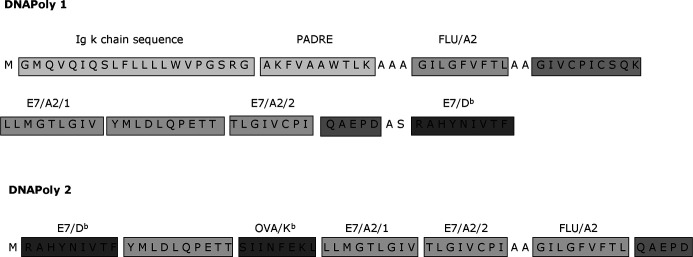
Fig. 1
Fig. 1
Schematic presentation of domain structure of DNApoly1 and DNApoly2 vaccines, and amino acid sequences of encoded epitopes relevant to the present study. DNApoly1 contains, in addition to encoded epitopes, an endoplasmic reticulum (Ig κ-chain) signal sequence. The DNA polytopes minigenes were subcloned from bacterial expression plasmids into a pcDNA3-derived eukaryotic expression vector as described [37]
Fig. 2
Fig. 2
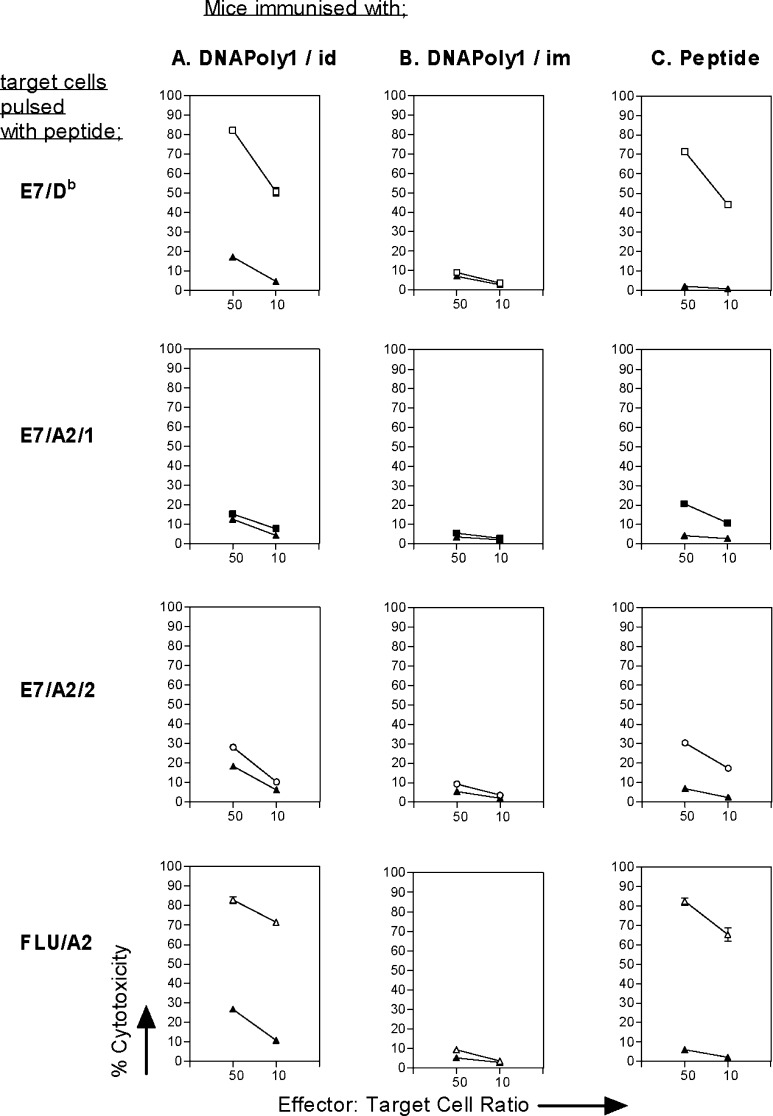
Immunisation of A2.1 Kb mice with DNApoly1 elicits epitope-specific memory CTL responses. Pooled splenocytes from mice (three per group) immunised twice with DNApoly1 DNA i.d. (a) or i.m. (b), or immunised once with an equimolar mix of epitope peptides (c), were restimulated with a single cognate peptide and reacted with EL4.A2 cells pulsed with the same peptide (open symbols) or without peptide (filled symbols), in a 51Cr-release cytotoxicity assay. Data points are means of triplicate tests ± standard deviation (SD). (Error bars, though plotted, do not appear, because SDs do not exceed symbol size). Data are from one of three experiments with similar results
Fig. 3
Fig. 3
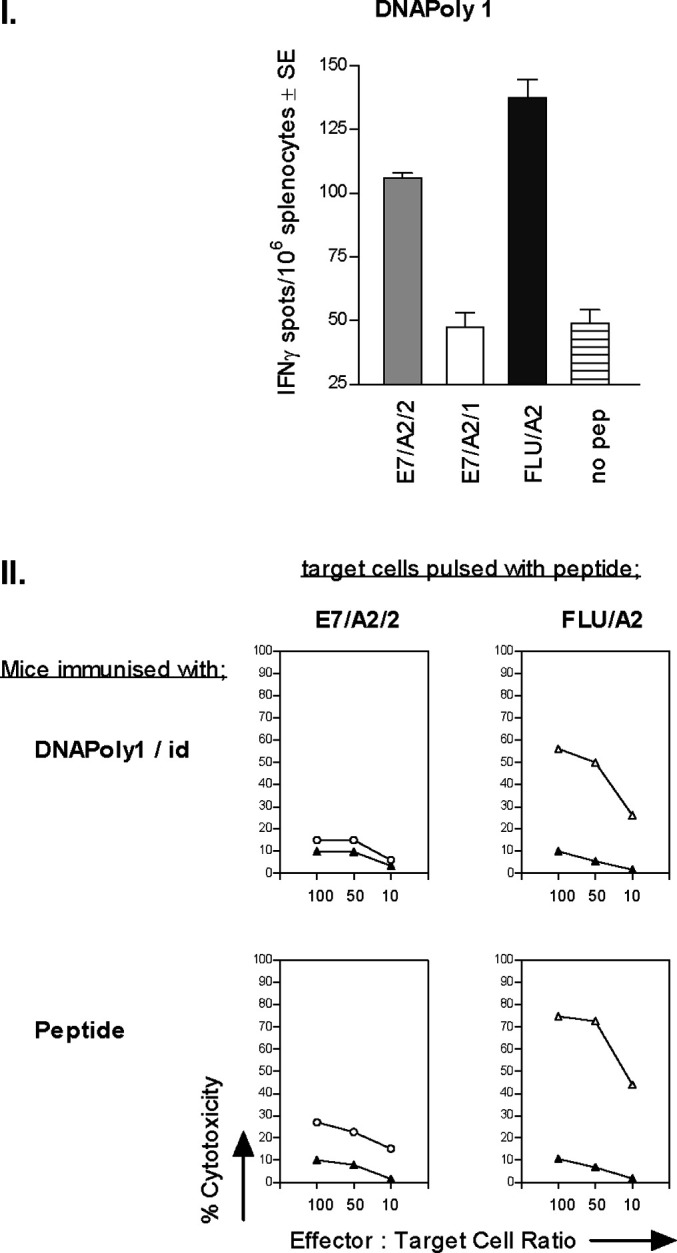
Immunisation of HHD mice with DNApoly1 DNA elicits epitope-specific effector and memory CTL responses: a Pooled ex vivo splenocytes from mice (three per group) immunised twice i.d. with DNApoly1 were incubated with or without E7/A2/2 or flu/A2, peptide as indicated, and IFN-γ–secreting cells were quantified by ELISpot assay. b Pooled splenocytes from mice (three per group) immunised i.d. twice with DNApoly1 DNA, or with an equimolar mix of epitope peptides, were restimulated with a single cognate peptide in vitro and reacted with EL4.A2 peptide pulsed target cells (open symbols), or without peptide (filled symbols) as indicated in a 51Cr-release cytotoxicity assay. Data points are means of triplicate tests ± SD. (Error bars, though plotted, do not appear, because SDs do not exceed symbol size). Data are from one of two experiments with similar results
Fig. 4
Fig. 4
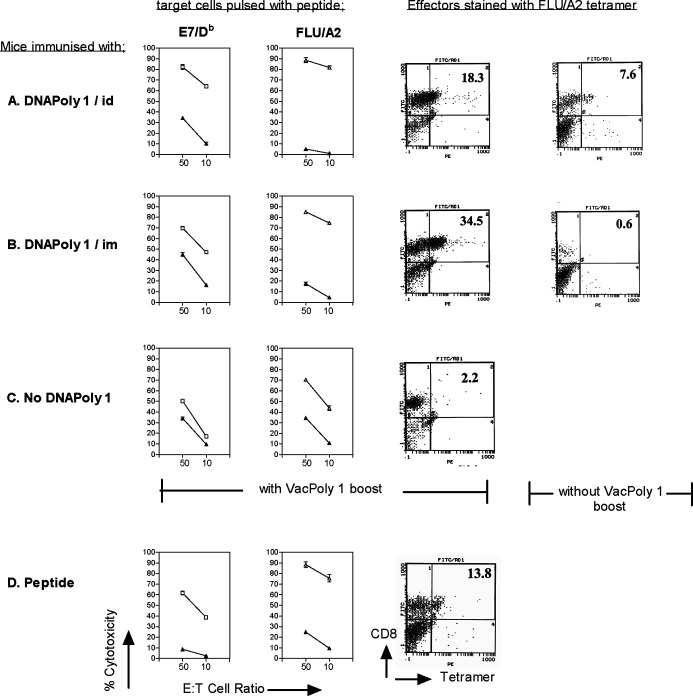
Cytotoxic T-lymphocyte responses in DNApoly1-immunised mice are ‘boosted’ by subsequent inoculation with vaccinia virus encoding the polytope (Vacpoly1). Pooled restimulated splenocytes from A2.1 Kb mice (three per group) immunised twice with DNApoly1 i.d. (a), DNApoly1 i.m. (b), or unimmunised (c), were ‘boosted’ with VacPoly1, 3 weeks after the second immunisation. Spleens were harvested 2 weeks after ‘boost’, and CTL responses measured in specifically restimulated splenocytes by 51Cr-release cytotoxicity assay, and by staining with flu/A2-specific PE-tetramer. (d) 51Cr-release cytotoxicity and tetramer staining using pooled splenocytes from mice (three per group) immunised once with peptide mix + tetanus toxoid + Quil A, 10 days prior to in vitro restimulation. In 51Cr-release assays, open symbols represent EL4.A2 target cells pulsed with peptide; filled symbols represent unpulsed EL4.A2 target cells. Data points are means of triplicate tests ± SD. (Error bars, though plotted, do not appear, because SDs do not exceed symbol size). Data are from one of two experiments with similar results
Fig. 5
Fig. 5
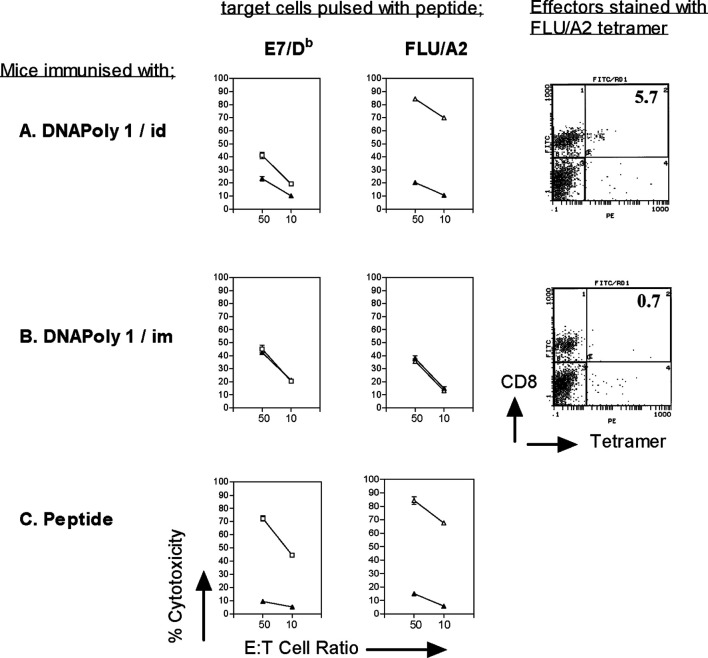
Immunisation with DNApoly1 induces long-term memory. Pooled splenocytes from A2.1 Kb mice (three per group) immunised twice with DNApoly1 i.d. (a), DNApoly1 i.m. (b), were restimulated in vitro 16 weeks after the second immunisation, and CTL response measured by 51Cr-release cytotoxicity assay against EL4-A2 target cells, and by staining of effector splenocytes with flu/A2 PE-tetramer. (c) CTL response measured by 51Cr-release cytotoxicity assay using pooled splenocytes from ‘control’ mice (three per group) immunised once with peptide mix + tetanus toxoid + Quil A, 10 days prior to in vitro restimulation. In 51Cr-release assays, open symbols represent EL4.A2 target cells pulsed with cognate peptide, filled symbols represent unpulsed EL4.A2 target cells. Data points are means of triplicate tests ± SD. (Error bars, though plotted, do not appear, because SDs do not exceed symbol size). Data are from one of two experiments with similar results
Fig. 6
Fig. 6
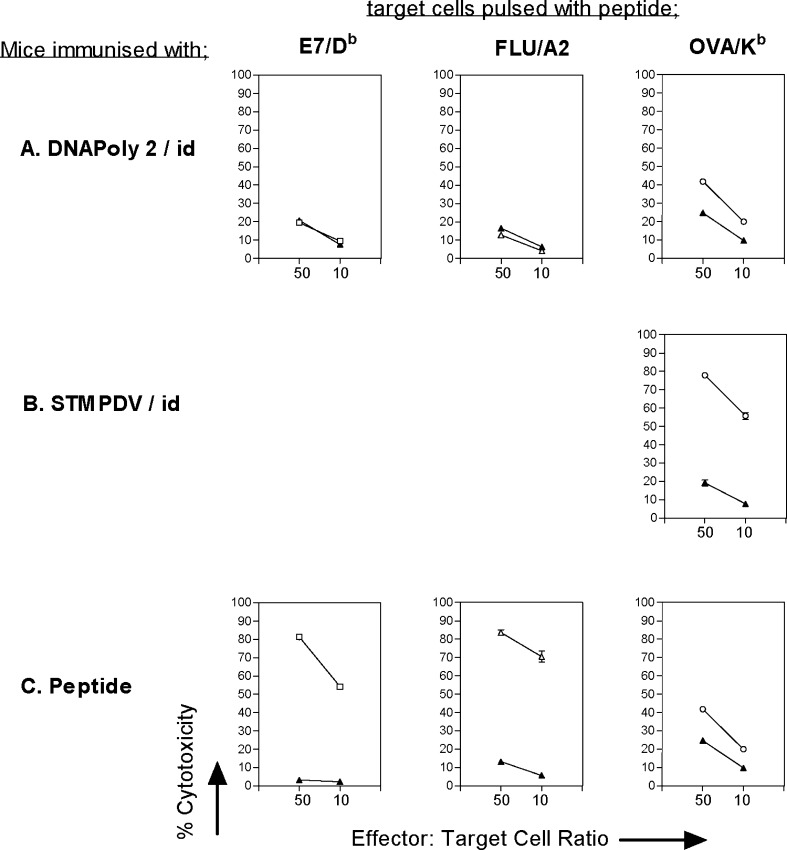
Immunisation with DNApoly2 fails to induce E7/Db or flu/A2-directed immune responses. Pooled splenocytes from A2.1 Kb mice (three per group) immunised twice i.d. with DNApoly2 DNA (a) STMPDV DNA (b) or once with peptide mix + tetanus toxoid + Quil A (c), were restimulated with individual peptides and reacted with EL4.A2 cells pulsed with the cognate peptide (open symbols) or without peptide (filled symbols) in 51Cr-release cytotoxicity assay. Data points are means of triplicate tests ± SD. (Error bars, though plotted, do not appear, because SDs do not exceed symbol size). Data are from one of two experiments with similar results
Fig. 7
Fig. 7
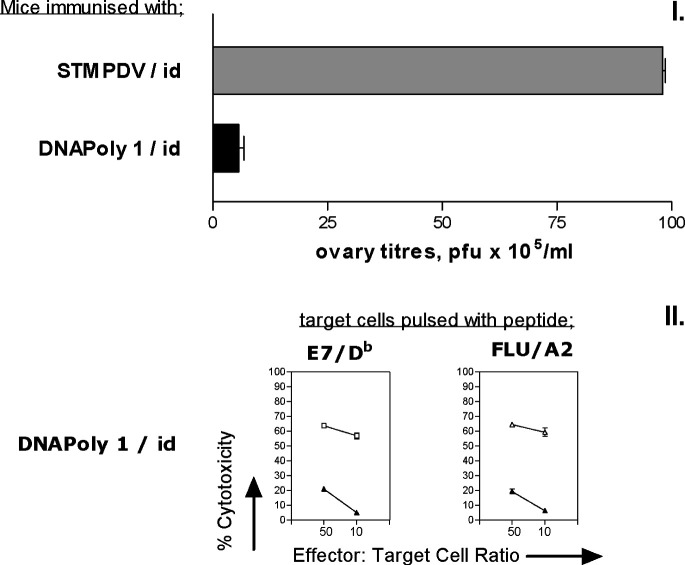
Recombinant vaccinia virus challenge and CTL response following polytope DNA immunisation. a Mice (three per group) were immunised once with pDNApoly1 or with pSTMPDV DNA (control), and then challenged intraperitoneally with 107 pfu of vaccinia recombinant for DNApoly1(Vacpoly1). Vaccinia virus titres in the ovaries were measured 4 days later. Histogram bars represent the means of individual mice ± SD. b Pooled restimulated splenocytes from a parallel group of DNApoly1-immunised mice (three per group) identical to those subject to Vacpoly1 challenge were reacted with EL4.A2 cells pulsed with the cognate peptide (open symbols) or without peptide (filled symbols) in 51Cr-cytotoxicity assay. Data points are means of triplicate tests ± SD. (Error bars, though plotted, do not appear, because SDs do not exceed symbol size.)
Fig. 8
Fig. 8
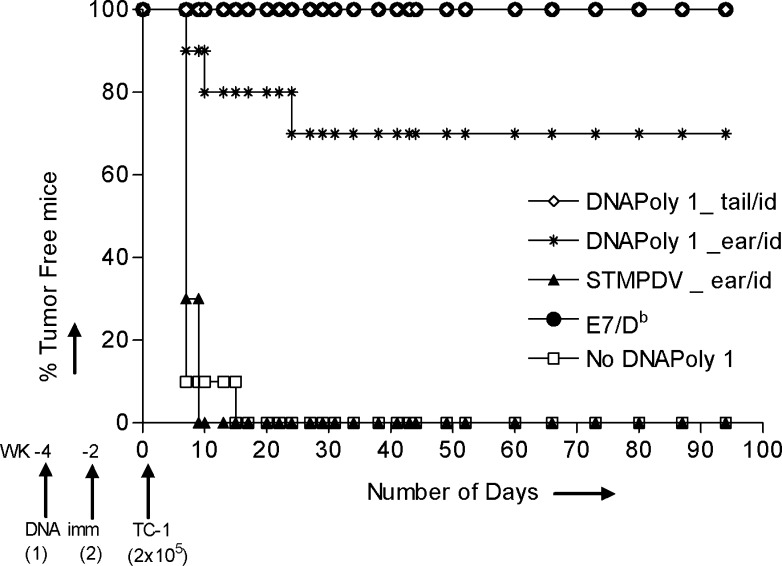
Tumour growth in immunised mice. Growth of E7-expressing tumour (TC-1) in H-2b mice (ten per group) immunised twice on the days indicated with 100 μg DNApoly1 i.d. in the ear pinna or at the base of tail, or with 100 μg pSTMPDV DNA i.d. at the base of the tail. Control groups of mice (ten per group) were immunised with 30 μg E7/Db peptide + tetanus toxoid + Quil A adjuvant, or were unimmunised. Mice were immunised 2 and 4 weeks before challenge with 2×10⁵ TC-1 cells (s.c.) on day 0. Results are expressed as tumour-free mice (%) at the indicated time points. Data are from one of three experiments with similar results
Fig. 9
Fig. 9
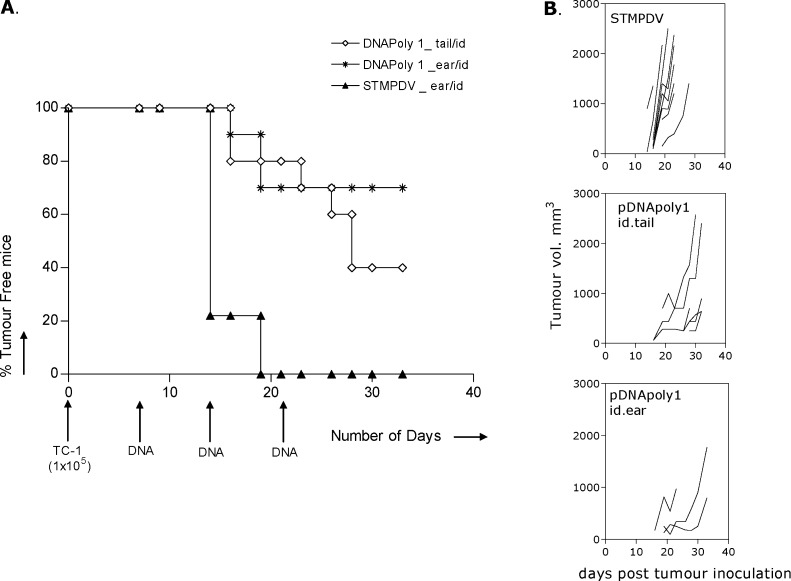
Therapy against early TC-1 tumours. Mice (ten per group) received 1×10⁵ TC-1 cells s.c. on day 0. Mice subsequently received 100 μg DNA vaccine (pDNApoly i.d. in the ear pinna or tail base, or irrelevant pSTMPDV i.d. in the ear pinna) three times on days 7, 14 and 21 (a). Tumour-free mice (%) at the indicated time-points. (b) Onset and growth of tumours in evaluable individual mice, by group

References

    1. Ada Immunol Cell Biol. 1999;77:180. doi: 10.1046/j.1440-1711.1999.00803.x. - DOI - PubMed
    1. Alexander Immunity. 1994;1:751. - PubMed
    1. Alexander J Immunol. 1997;159:4753. - PubMed
    1. Anderson J Exp Med. 1991;174:489. doi: 10.1084/jem.174.2.489. - DOI - PMC - PubMed
    1. Borysiewicz Lancet. 1996;347:1523. doi: 10.1016/S0140-6736(96)90674-1. - DOI - PubMed

Publication types

MeSH terms