


Polycyclic aromatic hydrocarbons, environmental tobacco smoke, and respiratory symptoms in an inner-city birth cohort
- PMID: 15486366
- PMCID: PMC2223076
- DOI: 10.1378/chest.126.4.1071
Polycyclic aromatic hydrocarbons, environmental tobacco smoke, and respiratory symptoms in an inner-city birth cohort
Abstract
Study objectives: Several studies have found associations between diesel exposure, respiratory symptoms, and/or impaired pulmonary function. We hypothesized that prenatal exposure to airborne polycyclic aromatic hydrocarbons (PAH), important components of diesel exhaust and other combustion sources, may be associated with respiratory symptoms in young children. We also hypothesized that exposure to environmental tobacco smoke (ETS) may worsen symptoms beyond that observed to be associated with PAH alone.
Design/participants: To test our hypotheses, we recruited 303 pregnant women from northern Manhattan believed to be at high risk for exposure to both PAH and ETS, collected 48-h personal PAH exposure measurements, and monitored their children prospectively.
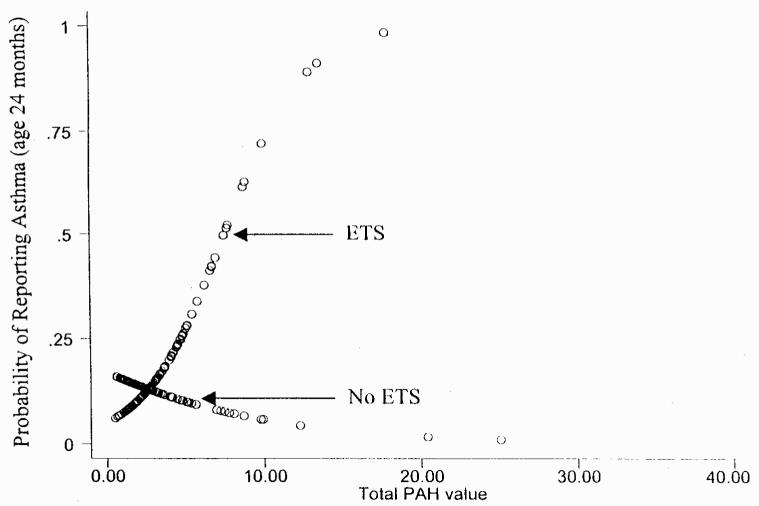
Results: By 12 months of age, more cough and wheeze were reported in children exposed to prenatal PAH in concert with ETS postnatally (PAH x ETS interaction odds ratios [ORs], 1.41 [p < 0.01] and 1.29 [p < 0.05], respectively). By 24 months, difficulty breathing and probable asthma were reported more frequently among children exposed to prenatal PAH and ETS postnatally (PAH x ETS ORs, 1.54 and 1.64, respectively [p < 0.05]).
Conclusions: Our results suggest that early exposure to airborne PAH and ETS can lead to increased respiratory symptoms and probable asthma by age 12 to 24 months. Interventions to lower the risk of respiratory disease in young children living in the inner city may need to address the importance of multiple environmental exposures.
Figures


References
-
- Dockery DW, Speizer FE, Stram DO, et al. Effects of inhalable particles on respiratory health of children. Am Rev Respir Dis. 1989;139:587–594. - PubMed
-
- Gehring U, Cyrys J, Sedlimeir G, et al. Traffic-related air pollution and respiratory health during the first 2 years of life. Eur Respir J. 2002;19:690–698. - PubMed
-
- Wyler C, Braun-Fahrlander C, Kunzli N, et al. Exposure to motor vehicle traffic and allergic sensitization. Epidemiology. 2000;11:450–456. - PubMed
Publication types
MeSH terms
Substances
Grants and funding
LinkOut - more resources
Full Text Sources
Medical
