


Fhit-deficient normal and cancer cells are mitomycin C and UVC resistant
- PMID: 15494723
- PMCID: PMC2410021
- DOI: 10.1038/sj.bjc.6602058
Fhit-deficient normal and cancer cells are mitomycin C and UVC resistant
Abstract
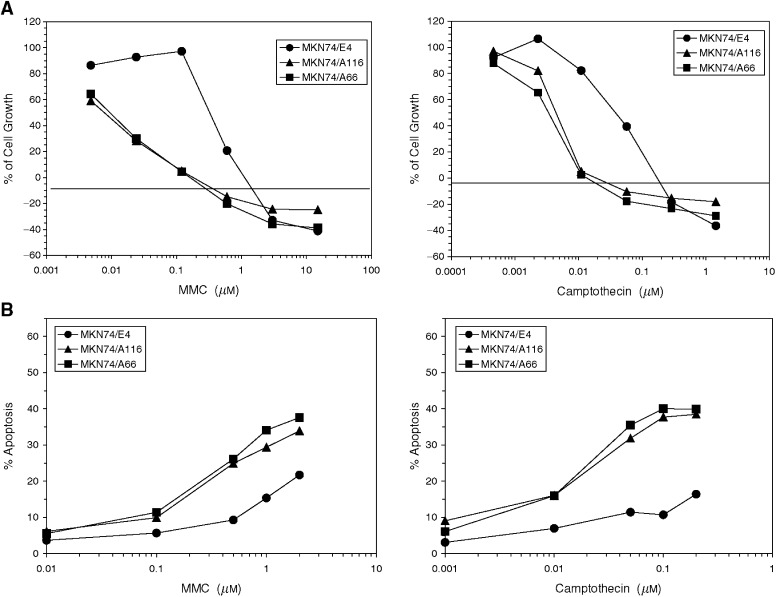
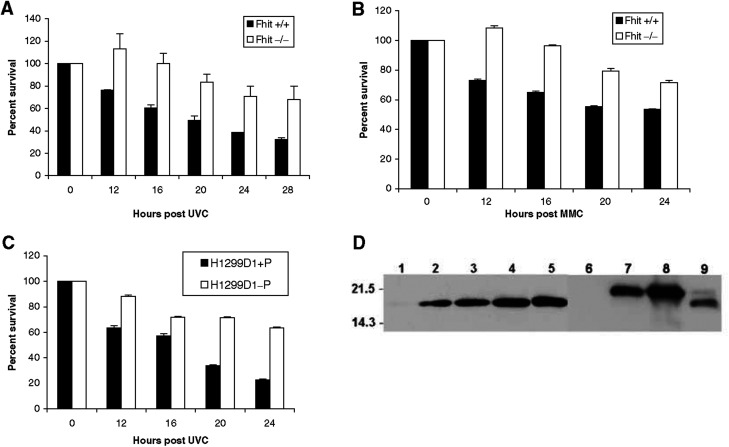
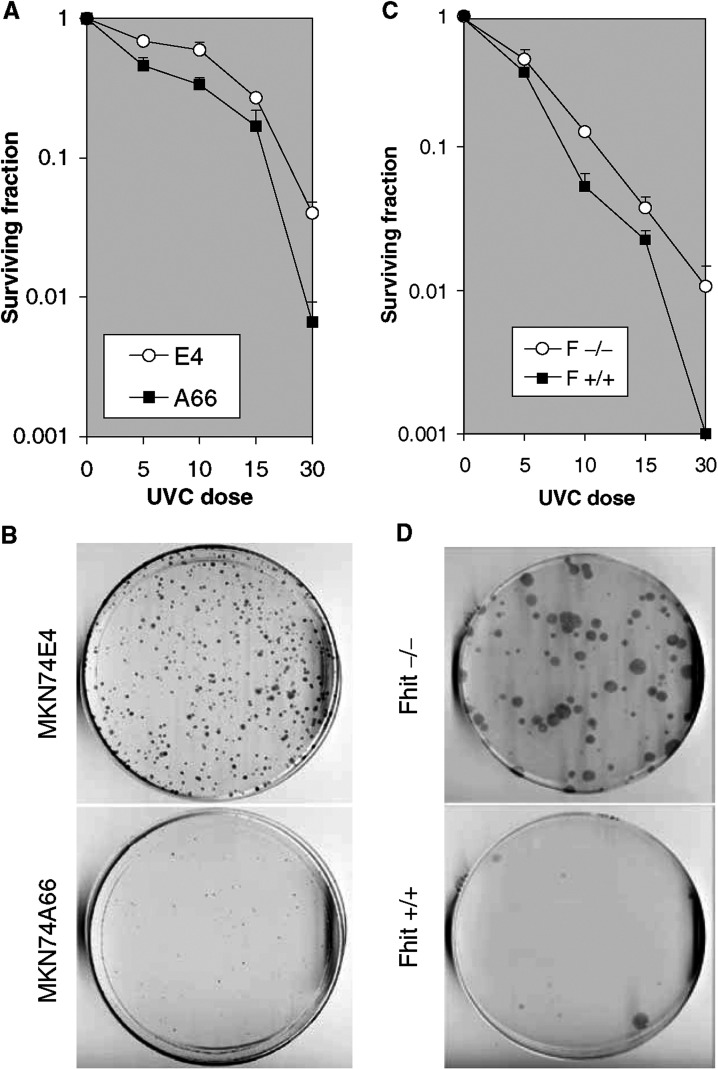
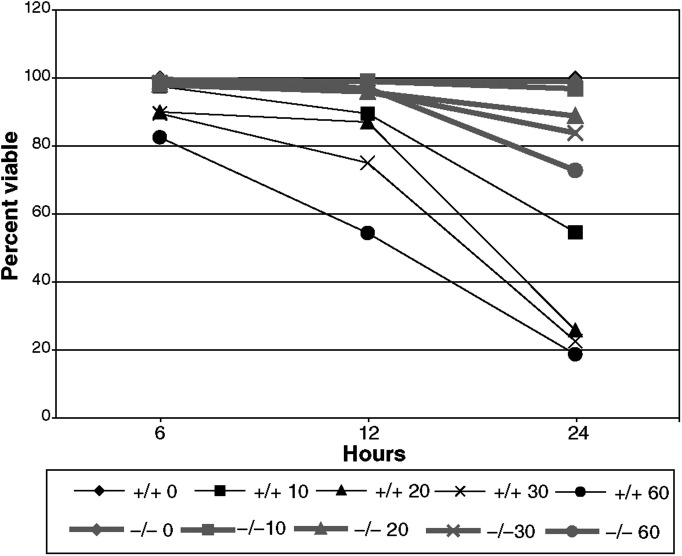
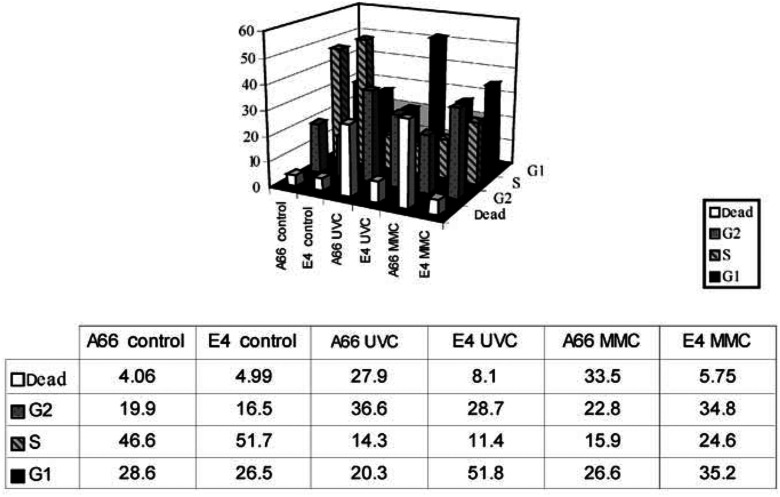
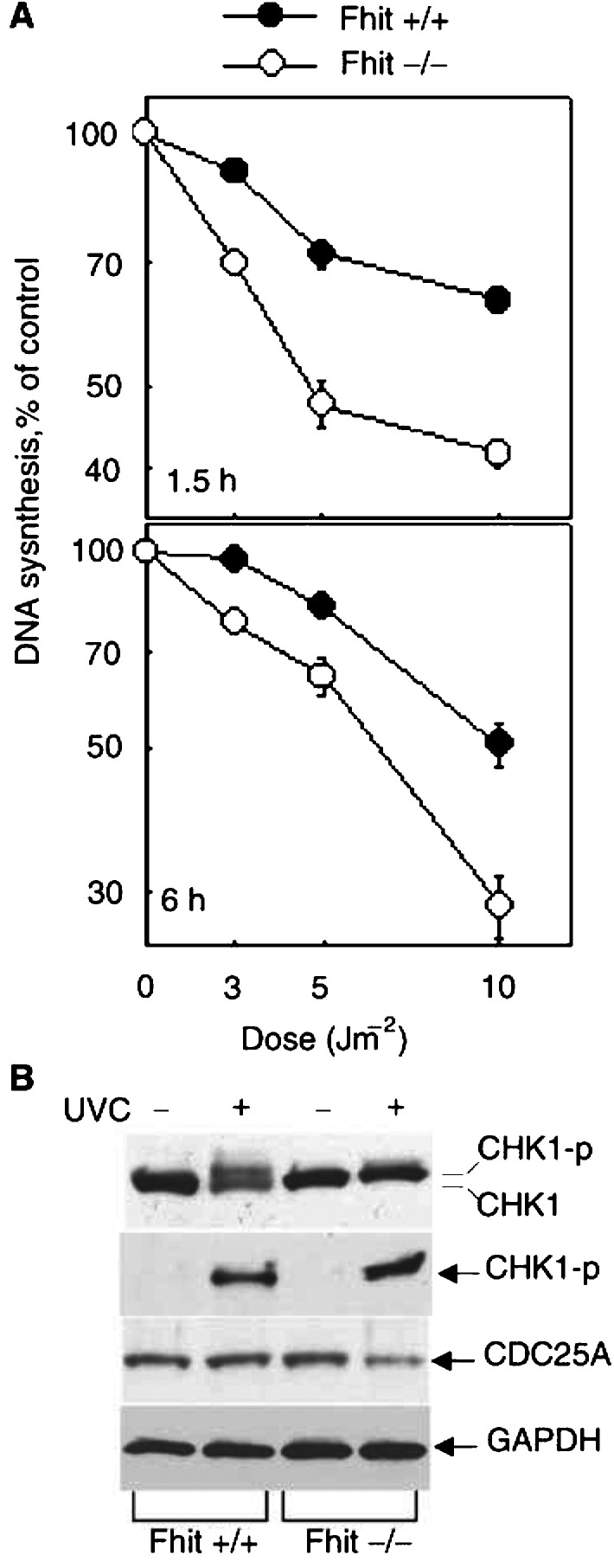
To identify functions of the fragile tumour suppressor gene, FHIT, matched pairs of Fhit-negative and -positive human cancer cell clones, and normal cell lines established from Fhit -/- and +/+ mice, were stressed and examined for differences in cell cycle kinetics and survival. A larger fraction of Fhit-negative human cancer cells and murine kidney cells survived treatment with mitomycin C or UVC light compared to matched Fhit-positive cells; approximately 10-fold more colonies of Fhit-deficient cells survived high UVC doses in clonigenic assays. The human cancer cells were synchronised in G1, released into S and treated with UVC or mitomycin C. At 18 h post mitomycin C treatment approximately 6-fold more Fhit-positive than -negative cells had died, and 18 h post UVC treatment 3.5-fold more Fhit-positive cells were dead. Similar results were obtained for the murine -/- cells. After low UVC doses, the rate of DNA synthesis in -/- cells decreased more rapidly and steeply than in +/+ cells, although the Atr-Chk1 pathway appeared intact in both cell types. UVC surviving Fhit -/- cells appear transformed and exhibit >5-fold increased mutation frequency. This increased mutation burden could explain the susceptibility of Fhit-deficient cells in vivo to malignant transformation.
Figures
References
-
- Hu B, Han SY, Wang X, Ottey M, Potoczek MB, Dicker A, Huebner K, Wang Y (2004) Involvement of the Fhit gene in the ionizing radiation-activated ATR/CHK1 pathway. J Cell Physiol, in press - PubMed
Publication types
MeSH terms
Substances
Grants and funding
LinkOut - more resources
Full Text Sources
Medical
Miscellaneous
