


The infecting dose of Chlamydia muridarum modulates the innate immune response and ascending infection
- PMID: 15501762
- PMCID: PMC523032
- DOI: 10.1128/IAI.72.11.6330-6340.2004
The infecting dose of Chlamydia muridarum modulates the innate immune response and ascending infection
Abstract
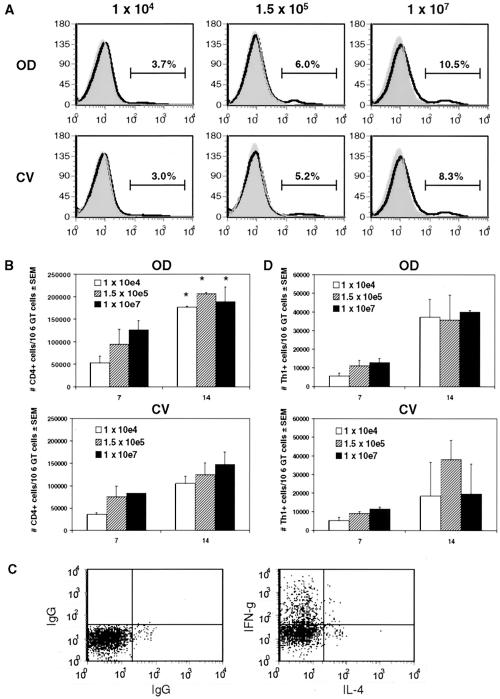
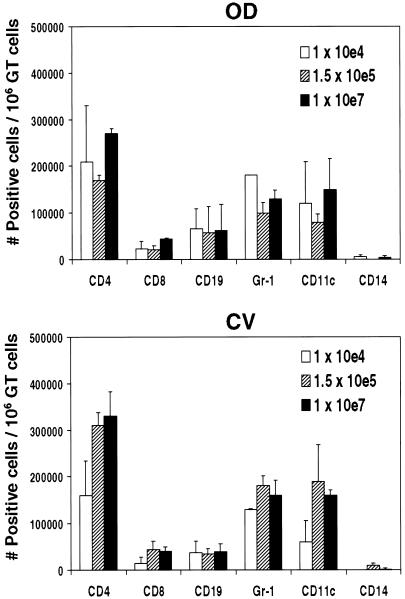
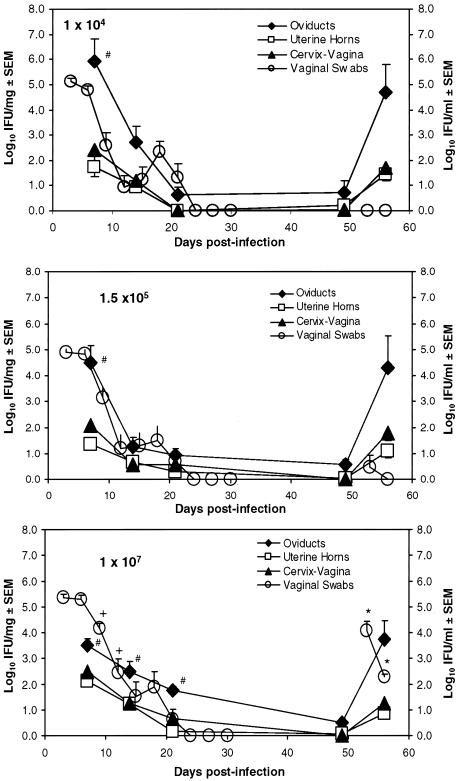
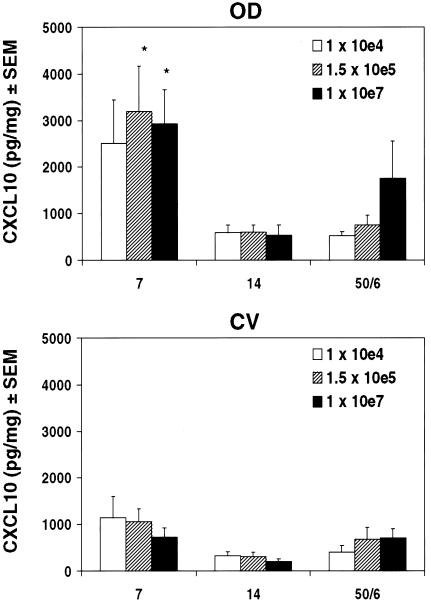
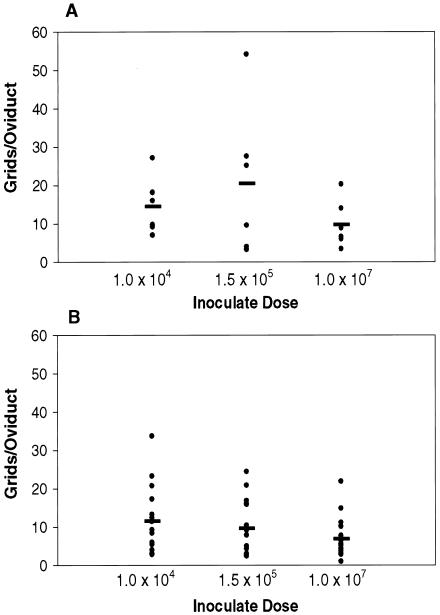
Murine vaginal infection with the obligate intracellular bacterium Chlamydia muridarum is commonly used as a model for ascending Chlamydia infections of the human female genital tract. Gamma interferon-producing Th1 cells, in concert with other mononuclear infiltrates, primarily mediate antichlamydial immunity. However, many factors modify this response, including the bacterial load. To investigate the manner in which the inoculating dose of C. muridarum modulates a genital infection, we measured innate and adaptive cell numbers, CD4+ lymphocyte cytokine profile, chemokine expression, course of infection, and pathological sequelae in genital tracts of BALB/c mice infected with doses of C. muridarum ranging from 10(4) to 10(7) inclusion-forming units. We found that the influx of both innate and adaptive immune cells responded similarly in the lower genital tract (cervical-vaginal tissues) and upper genital tract (oviduct tissues) to increasing inoculating doses. However, cells expressing the innate markers Gr-1 and CD11c were affected to a greater degree by increasing dose than lymphocytes of the adaptive immune response (Th1, CD4+, CD8+, CD19+), resulting in a change in the balance of innate and adaptive cell numbers to favor innate cells at higher infecting doses. Surprisingly, we detected greater numbers of viable chlamydiae in the oviducts at lower inoculating doses, and the number of organisms appeared to directly correlate with hydrosalpinx formation after both primary infection and repeat infection. Taken together, these data suggest that innate immune cells contribute to control of ascending infection.
Figures
References
-
- Anttila, T., P. Saikku, P. Koskela, A. Bloigu, J. Dillner, I. Ikaheimo, E. Jellum, M. Lehtinen, P. Lenner, T. Hakulinen, A. Narvanen, E. Pukkala, S. Thoresen, L. Youngman, and J. Paavonen. 2001. Serotypes of Chlamydia trachomatis and risk for development of cervical squamous cell carcinoma. JAMA 285:47-51. - PubMed
-
- Beatty, W. L., G. I. Byrne, and R. P. Morrison. 1994. Repeated and persistent infection with Chlamydia and the development of chronic inflammation and disease. Trends Microbiol. 2:94-98. - PubMed
Publication types
MeSH terms
Substances
Grants and funding
LinkOut - more resources
Full Text Sources
Other Literature Sources
Medical
Research Materials
