


Molecular physiological analysis of the two plastidic ATP/ADP transporters from Arabidopsis
- PMID: 15516503
- PMCID: PMC527152
- DOI: 10.1104/pp.104.049502
Molecular physiological analysis of the two plastidic ATP/ADP transporters from Arabidopsis
Abstract
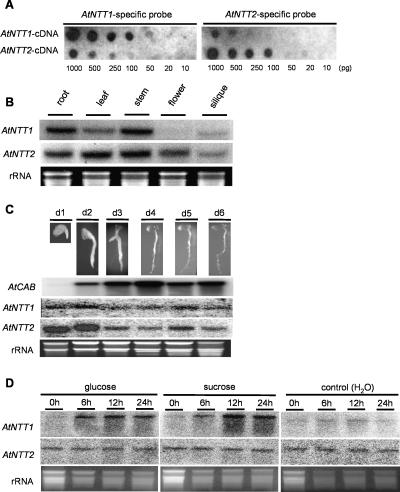
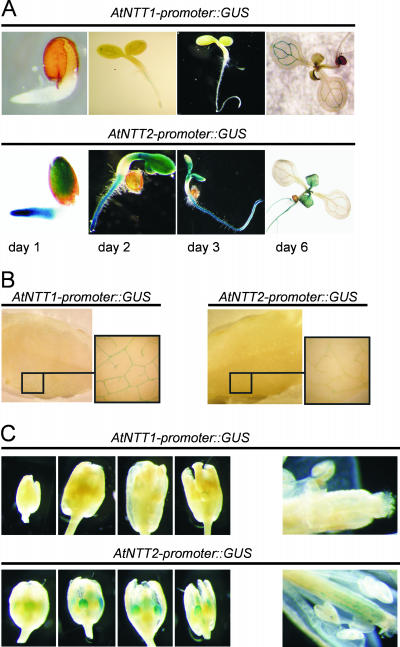
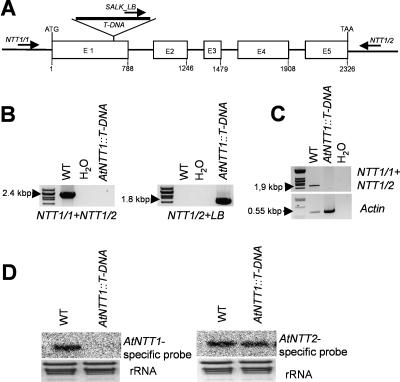
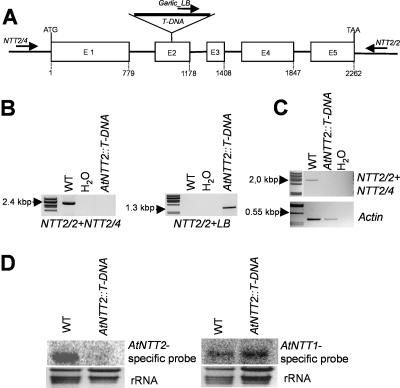
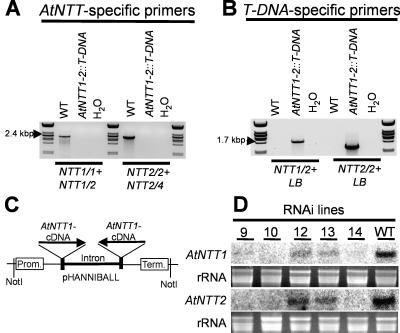
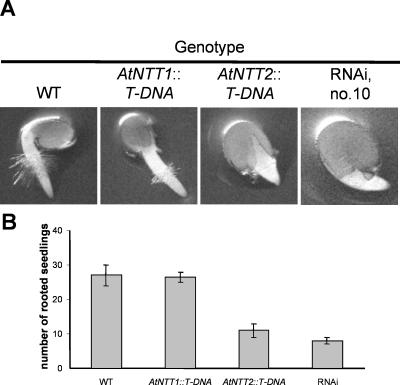
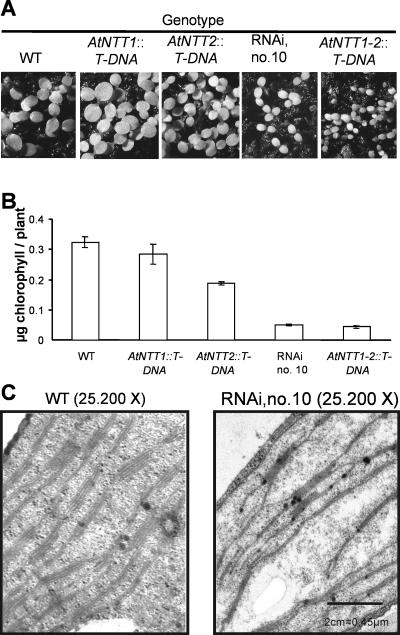
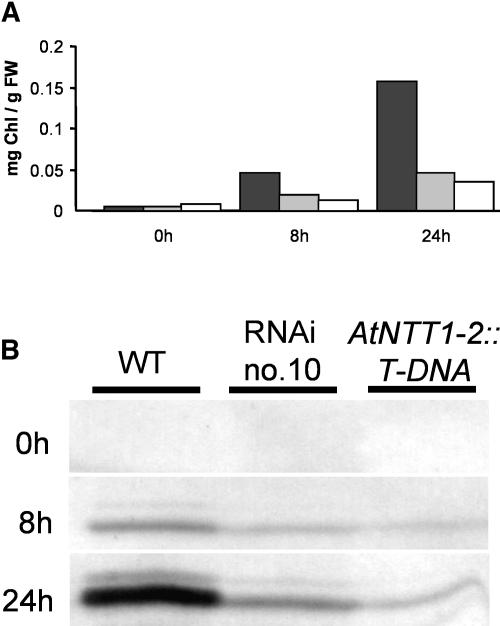
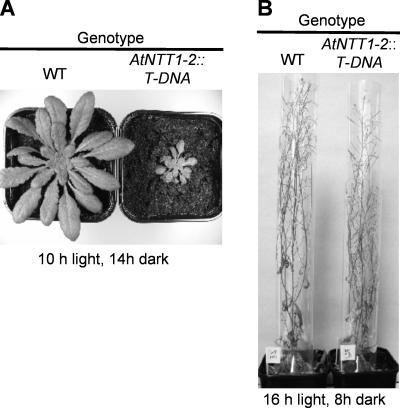
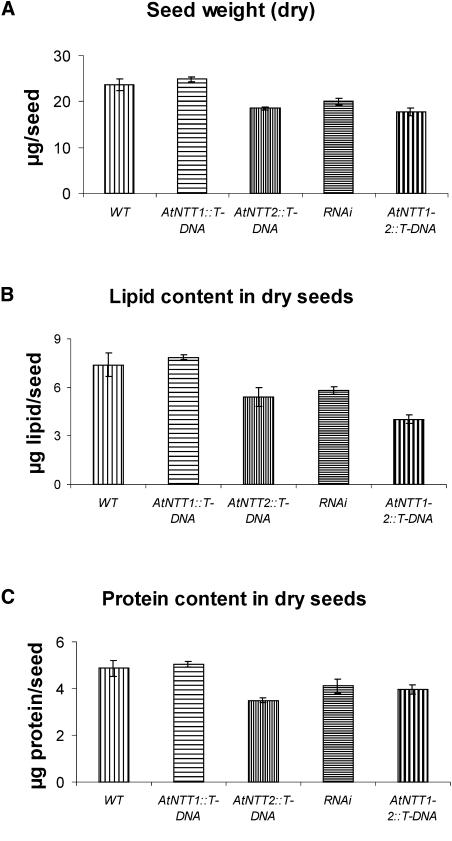
Arabidopsis (Arabidopsis thaliana) possesses two isoforms of plastidic ATP/ADP transporters (AtNTT1 and AtNTT2) exhibiting similar biochemical properties. To analyze the function of both isoforms on the molecular level, we examined the expression pattern of both genes by northern-blot analysis and promoter-beta-glucuronidase fusions. AtNTT1 represents a sugar-induced gene mainly expressed in stem and roots, whereas AtNTT2 is expressed in several Arabidopsis tissues with highest accumulation in developing roots and young cotyledons. Developing lipid-storing seeds hardly contained AtNTT1 or -2 transcripts. The absence of a functional AtNTT1 gene affected plant development only slightly, whereas AtNTT2T-DNA, AtNTT1-2T-DNA, and RNA interference (RNAi) plants showed retarded plant development, mainly characterized by a reduced ability to generate primary roots and a delayed chlorophyll accumulation in seedlings. Electron microscopic examination of chloroplast substructure also revealed an impaired formation of thylakoids in RNAi seedlings. Moreover, RNAi- and AtNTT1-2T-DNA plants showed reduced accumulation of the nuclear-encoded protein CP24 during deetiolation. Under short-day conditions reduced plastidic ATP import capacity correlates with a substantially reduced plant growth rate. This effect is absent under long-day conditions, strikingly indicating that nocturnal ATP import into chloroplasts is important. Plastidic ATP/ADP transport activity exerts significant control on lipid synthesis in developing Arabidopsis seeds. In total we made the surprising observation that plastidic ATP/ADP transport activity is not required to pass through the complete plant life cycle. However, plastidic ATP/ADP-transporter activity is required for both an undisturbed development of young tissues and a controlled cellular metabolism in mature leaves.
Figures
References
-
- Becker D, Kemper E, Schell J, Masterson R (1992) New plant binary vectors with selectable markers located proximal to the left T-DNA border. Plant Mol Biol 20: 1195–1197 - PubMed
-
- Buchanan BB, Gruissem W, Jones RL (2000) Biochemistry & Molecular Biology of Plants. American Society of Plant Physiologists, Rockville, MD
-
- Drgon T, Sabova L, Nelson N, Kolarov J (1991) ADP/ATP translocator is essential only for anaerobic growth of yeast Saccharomyces cerevisiae. FEBS Lett 289: 159–162 - PubMed
MeSH terms
Substances
LinkOut - more resources
Full Text Sources
Other Literature Sources
Molecular Biology Databases
