


Inorganic polyphosphate in the origin and survival of species
- PMID: 15520374
- PMCID: PMC528972
- DOI: 10.1073/pnas.0406909101
Inorganic polyphosphate in the origin and survival of species
Abstract
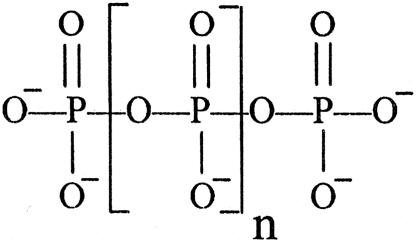
Inorganic polyphosphate (poly P), in chains of tens to hundreds of phosphate residues, linked by high-energy bonds, is environmentally ubiquitous and abundant. In prebiotic evolution it could have provided a flexible, polyanionic scaffold to assemble macromolecules. It has been conserved in every cell in nature. In prokaryotes, a major poly P synthetic enzyme is poly P kinase 1 (PPK1), which is found in 100 bacterial genomes, including numerous pathogens. Null mutants of PPK1, with low poly P levels, are defective in survival: namely, they show defective responses to physical/chemical stresses and predation. Pathogens with a PPK1 deletion are defective in biofilm formation, quorum sensing, general stress and stringent responses, motility, and other virulence properties. With the exception of Dictyostelium, PPK1 is absent in eukaryotes and provides a novel target for chemotherapy that would affect both virulence and susceptibility to antibacterial compounds. Remarkably, another PPK in Dictyostelium discoideum (PPK2) is an actin-related protein (Arp) complex that is polymerized into an actin-like filament, concurrent with its reversible synthesis of a poly P chain from ATP.
References
-
- Kulaev, I. S. & Vagabov, V. M. (1983) Adv. Microb. Physiol. 24, 83-171. - PubMed
-
- Kornberg, A., Rao, N. N. & Ault-Riché, D. (1999) Annu. Rev. Biochem. 68, 89-125. - PubMed
-
- Cashel, M., Gentry, D. R., Hernandez, V. J. & Vinella, D. (1996) in Escherichia coli and Salmonella typhimurium, eds. Neidhardt, F. C., Curtiss, R., III, Ingraham, J. L., Lin, E. C. C., Low, K. B., Magasanik, B., Reznikoff, W. S., Riley, M., Schaechter, M. & Umbarger, H. E. (Am. Soc. Microbiol., Washington, DC), pp. 1458-1496.
Publication types
MeSH terms
Substances
LinkOut - more resources
Full Text Sources
Other Literature Sources
Miscellaneous
